Walk into almost any nursery today and you’ll see plants labeled “native”—often with improved colors, compact forms, or extended bloom times. Many of these are nativars: cultivated varieties of native species that have been selectively bred for ornamental traits. They sit in a sometimes-contentious middle ground. They’re not non-native—but they’re not truly wild-type natives either. And that distinction matters more than it might seem.
What Is a Nativar?
A nativar is a cultivar (cultivated-variety) derived from a native species. It has been intentionally selected or bred for specific characteristics such as:
- Larger or more numerous flowers
- Altered flower color (e.g., white, red, or double forms)
- Compact or uniform growth habit
- Disease resistance or longer bloom period
These traits are typically maintained through cloning (cuttings) or controlled breeding, meaning the plant is genetically uniform rather than naturally variable.
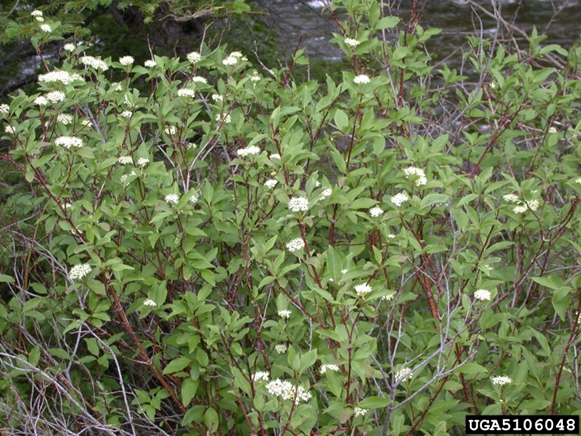
Photo Credit: Mary Ellen (Mel) Harte, Bugwood.org

Photo Credit: Krzysztof Ziarnek, Kenraiz, CC BY-SA 4.0
The Core Issue: Function vs. Form
Native plant communities are built on co-evolved relationships between plants, insects, fungi, and wildlife. When you alter plant traits—even slightly—you may disrupt those relationships.
Pollinators
Changes in flower structure, color, or nectar production can affect:
- Accessibility of nectar and pollen
- Pollinator attraction (color and UV patterns matter)
- Timing and duration of bloom
For example, double-flowered cultivars may produce little to no nectar, making them essentially useless to pollinators.
Insects (especially specialists)
Many native insects rely on very specific plant chemistry and structure. Even small genetic changes can:
- Reduce host plant recognition
- Lower larval survival
- Disrupt feeding cues
Generalist insects may still use nativars—but specialists sometimes won’t.
Genetic Integrity
Nativars can impact the genetic health of wild populations.
If nativars cross with wild populations, they can:
- Dilute locally adapted genetics
- Introduce traits that are maladaptive in natural systems
- Reduce resilience over time
For example, pollen from a nativar that is smaller in stature than the native plant can be carried to a native population by pollinators. The resulting seeds may also grow plants which are smaller in stature than the native populations. If the plant needs to grow big to reach sunlight or provide shade to streams, the smaller nativar-crossed plants may be unable to thrive or to offer the same habitat value.
Genetic Diversity
Genetic diversity is what allows plant populations to persist, adapt, and continue functioning over time. In wild systems, individuals of the same species are generally not identical—they vary in traits like drought tolerance, flood tolerance, pest resistance, and timing of growth and flowering. This variation spreads risk across a population. When conditions change—as they increasingly are with shifting climate patterns—some individuals are more likely to survive and reproduce, maintaining the system as a whole.
Nativars, by contrast, are often genetically uniform or drawn from a very narrow gene pool. This reduces adaptive capacity and can create populations that perform well under ideal conditions but fail under stress. In natural areas, maintaining genetic diversity is not just a best practice—it is foundational to long-term resilience, ecological stability, and the ability of plant communities to respond to disturbance.
When Nativars Might Make Sense
Not all use of nativars is inappropriate. Context matters.
They can be useful in:
- Highly managed urban landscapes
- Spaces where aesthetics drive plant selection
- Sites with constraints (size, visibility, maintenance expectations)
In these cases, nativars may still offer some ecological value, particularly compared to non-native ornamentals.
But they should not be treated as equivalent to wild-type natives—especially in or adjacent to natural areas.
When to Avoid Nativars
Avoid using nativars in:
- Areas adjacent to natural populations of the same species
- Habitat restoration projects
- Riparian and wetland plantings
- Conservation areas and natural areas management
- Any site where ecological function is the primary goal
In these settings, straight species (wild-type natives) are the standard for a reason. They support more insects, more complex food webs, and more resilient systems.
A Practical Guideline
If your goal is ecological function, prioritize:
- Local or regionally adapted genetics
- Seed-grown plants (not clones)
- Species with known wildlife value
If your goal is ornamental landscaping with some ecological benefit, nativars can be part of the palette—but choose carefully:
- Avoid double flowers
- Avoid extreme color changes
- Favor forms that closely resemble the wild type
The Bottom Line
Nativars are not inherently “bad,” but they are often oversold. They represent a tradeoff: aesthetic control in exchange for reduced ecological reliability.
For land managers, restoration practitioners, and anyone working to support native ecosystems, the safest and most effective choice remains clear—use true native species, as close to their natural form as possible.
About the Author
About the Author
A passion for nature has been a driving force throughout my life, thanks in part to a childhood of camping, hiking, and exploring the Pacific Northwest and beyond. I believe a healthy natural environment supports healthy individuals, families, and communities.