Garlic mustard (Alliaria petiolata) is one of the most disruptive invasive plants in temperate forests across North America. Originally introduced from Europe for culinary and medicinal use, it has since spread aggressively through woodlands, riparian corridors, and disturbed edges—often out competing native vegetation and altering ecosystem processes in ways that are difficult to reverse.
Why It’s a Problem
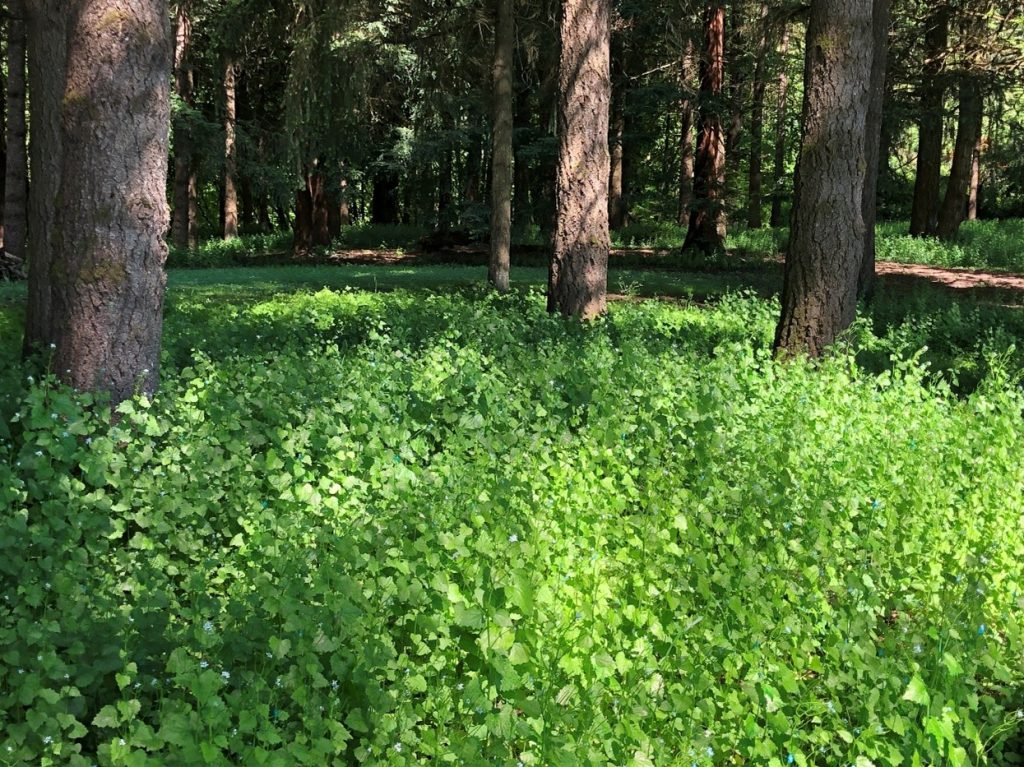
Garlic mustard is not just another aggressive weed—it fundamentally changes how forest ecosystems function. Unlike many invasive plants, it tolerates deep shade and establishes readily in intact forest understories. Once present, it can form dense monocultures that displace native wildflowers, grasses, and tree seedlings.
Its most significant impact is chemical. Garlic mustard releases compounds into the soil that interfere with mycorrhizal fungi—symbiotic organisms that native plants rely on for nutrient uptake. This disruption gives garlic mustard a competitive advantage while actively suppressing native plant growth and regeneration. The result is a simplified understory with reduced biodiversity, limited tree recruitment, and altered nutrient cycling.
Identification
First year (rosette stage):
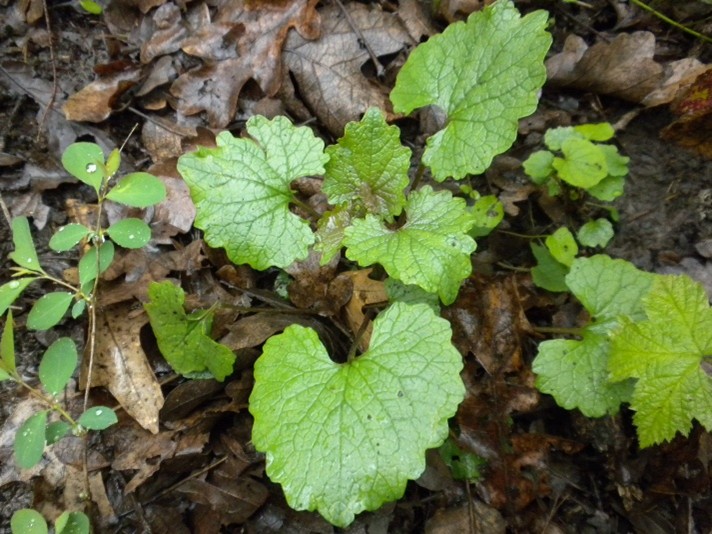
- Low-growing rosette of rounded, kidney-shaped leaves
- Leaves have scalloped edges and a distinct garlic odor when crushed
Second year (flowering stage):
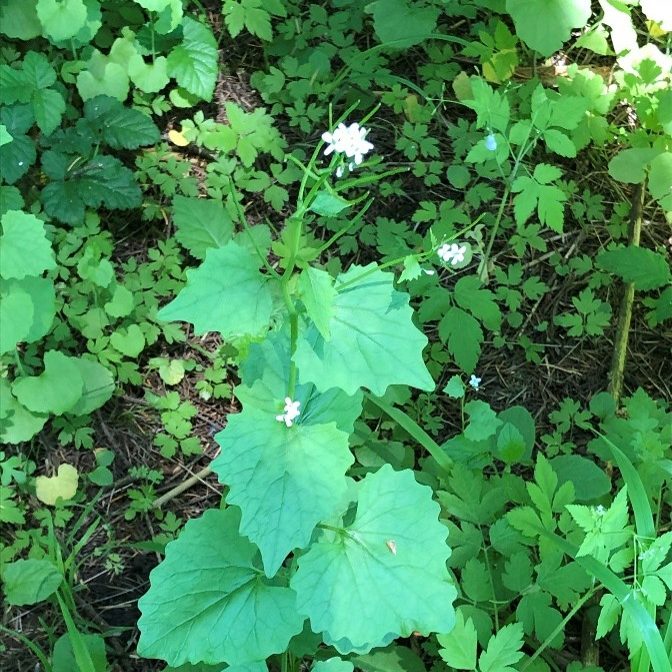
- Upright stems 1–3 feet tall
- Triangular, sharply toothed leaves
- Small white flowers with four petals arranged in a cross shape
- Long, slender seed pods (siliques) that develop by late spring
A single plant can produce hundreds to thousands of seeds, which remain viable in the soil for several years.
Where It Grows
Garlic mustard thrives in:
- Forest understories
- Riparian areas and floodplains
- Trail edges and disturbed soils
It prefers moist, shaded environments but can tolerate a wide range of conditions. In Oregon, large infestations can be found around the western Columbia River Gorge and the Portland area. Only two infestations have been found in Marion County and are being actively controlled.
Ecological Impacts
Garlic mustard’s effects extend beyond plant competition:
- Loss of native understory diversity → early spring wildflowers are often the first to disappear
- Reduced tree regeneration → seedlings struggle in altered soil conditions
- Impacts to wildlife → native insects that depend on specific host plants decline
- Altered soil processes → disruption of fungal networks affects nutrient cycling
In heavily invaded sites, recovery can take years even after removal due to lingering seed banks and soil changes.
Reporting
If you think you have garlic mustard on your property, or if you see it while out hiking in natural areas, Report it to https://oregoninvasiveshotline.org.There is assistance available to help manage and prevent the spread of this noxious weed.By reporting it, you will notify area invasive plant specialists that can work with property owners and on public lands to manage this noxious weed.
Management Strategies
Control is possible, but it requires persistence and a multi-year approach.
Manual removal:
- Hand-pull plants in early spring before seed set
- Remove the entire root—plants can resprout if broken
- Bag and dispose of flowering plants; do not compost
Chemical control:
- Targeted herbicide application can be effective for large infestations
- Best used in combination with manual methods and careful timing
Because seeds remain viable in the soil for 5+ years, sites must be monitored and treated repeatedly. A single missed plant can reseed a site and lead to many more years of necessary control.
Prevention Is More Effective Than Control
Once garlic mustard is established, eradication becomes difficult. Early detection and rapid response are critical, as is preventing seed spread.
Prioritize:
- Cleaning boots and gear after hiking, biking, or visiting areas with garlic mustard or other weeds. Seeds can get lodged in the tread of shoes, then become dislodged in new locations. To prevent spreading invasive species, we recommend cleaning your shoes every time you return to your own property or walk through weed patches on your property..
- Monitoring high-risk areas (trails, riparian corridors, disturbed sites)
- Removing small populations before they expand
- Minimizing soil disturbance where infestations are present
A Management Reality
Garlic mustard is a long-term problem. It spreads easily, persists in the seed bank, and actively prevents the recovery of native species. That said, consistent management works. Sites that receive early, sustained attention can maintain or regain native plant communities and prevent harm to our forests, streams, and private lands.
About the Author

About the Author
A passion for nature has been a driving force throughout my life, thanks in part to a childhood of camping, hiking, and exploring the Pacific Northwest and beyond. I believe a healthy natural environment supports healthy individuals, families, and communities.