English Hawthorn
Crataegus monogyna
Plant Description
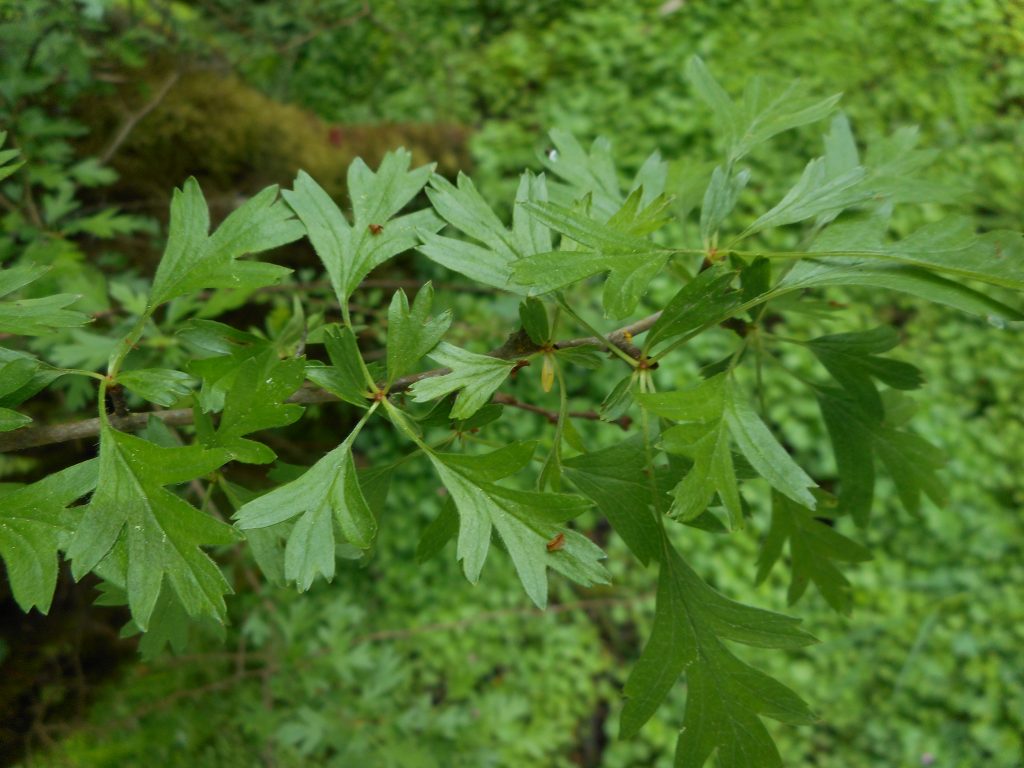
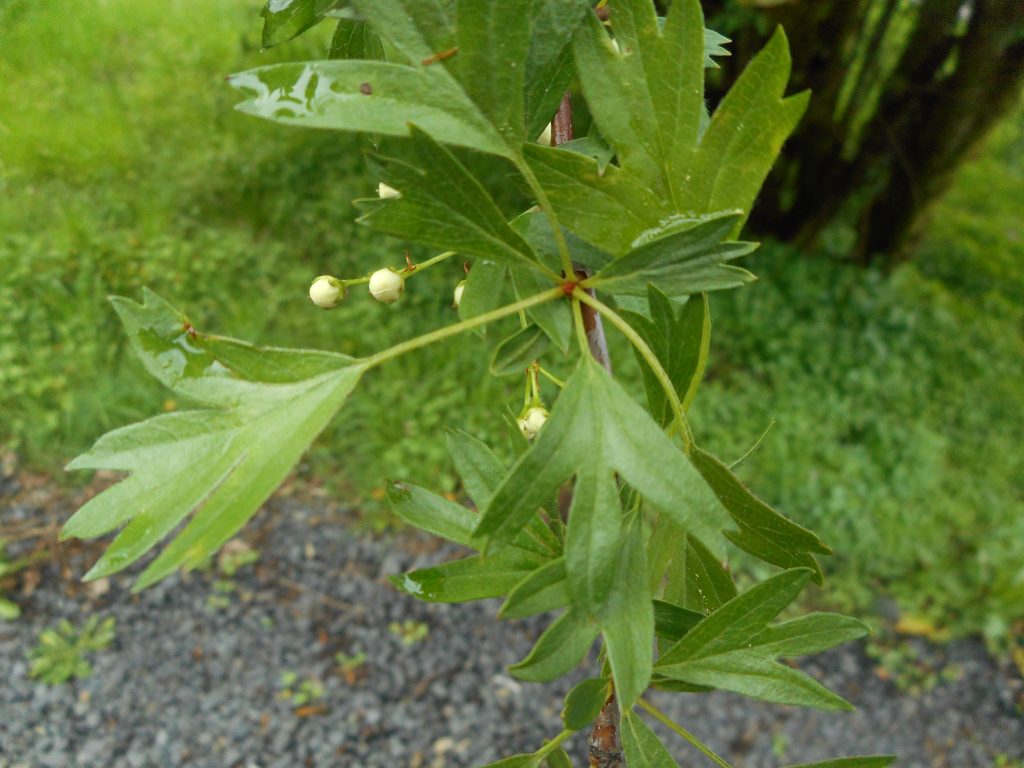
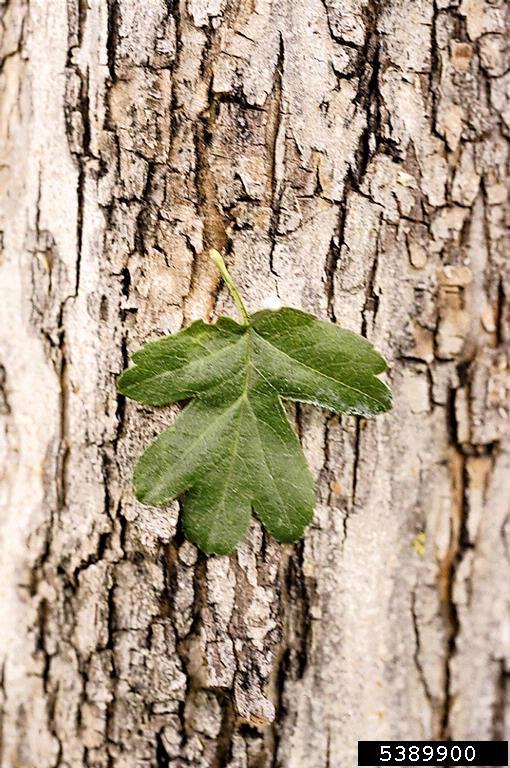
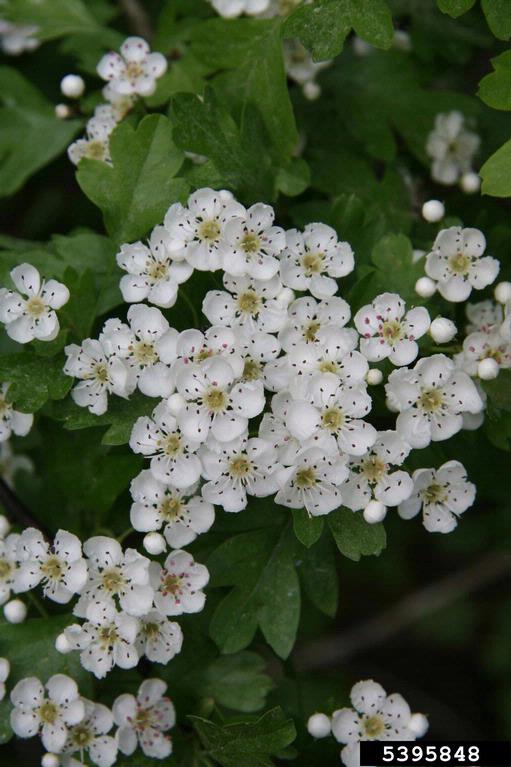
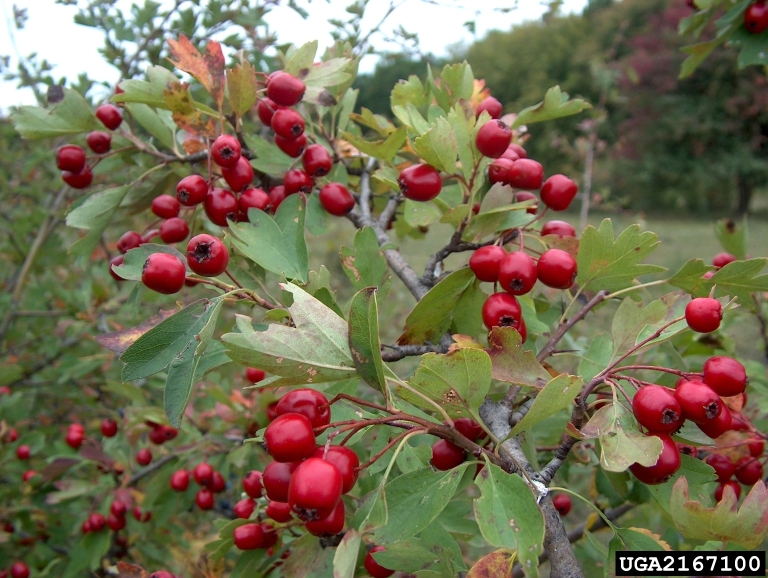
English hawthorn is a deciduous shrub or small tree native to Europe, western Asia, and North Africa that has become invasive in parts of the Pacific Northwest. It has deeply lobed leaves, sharp thorns, clusters of white spring flowers, and small red fruits that are readily eaten and dispersed by birds. English hawthorn can form dense thickets in prairies, oak woodlands, pastures, and forest edges, where it competes with native vegetation and can alter open habitats. It is particularly troublesome in Oregon’s Willamette Valley, where controlling mature, fruit-producing plants can help limit further spread.
Plant Details
| Life Forms | |
|---|---|
| ODA Listing | |
| Suggested Actions | |
| Shade Preference | |
| Mature Height | 6-30 ft |
| Distribution | This is a widely distributed tree. |
| Control | Dig up seedlings and saplings when soil is moist. Due to extensive roots and stump-sprouts, cutting is not effective. For information on using herbicides, visit the links below. Always follow the label when applying herbicides. |
| Reproduction and Spread | Birds and other aniamls spread the seeds. |
| Introduced | Introduced in the 1800s |
| Look Alikes | Other hawthorn species including native Douglas hawthorn. |
| Impact | The trees outcompete native species. Forms dense monocultures that large wildlife cannot move through. |
| More Info |