
Floating Primrose-Willow
Ludwigia peploides
Plant Description
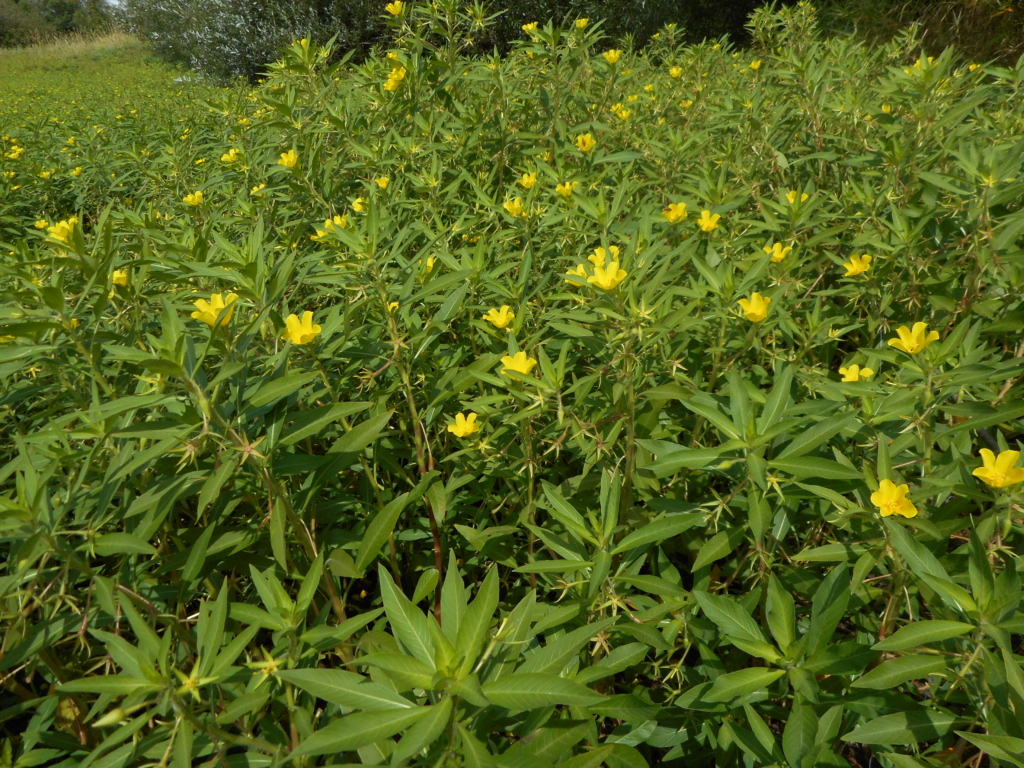
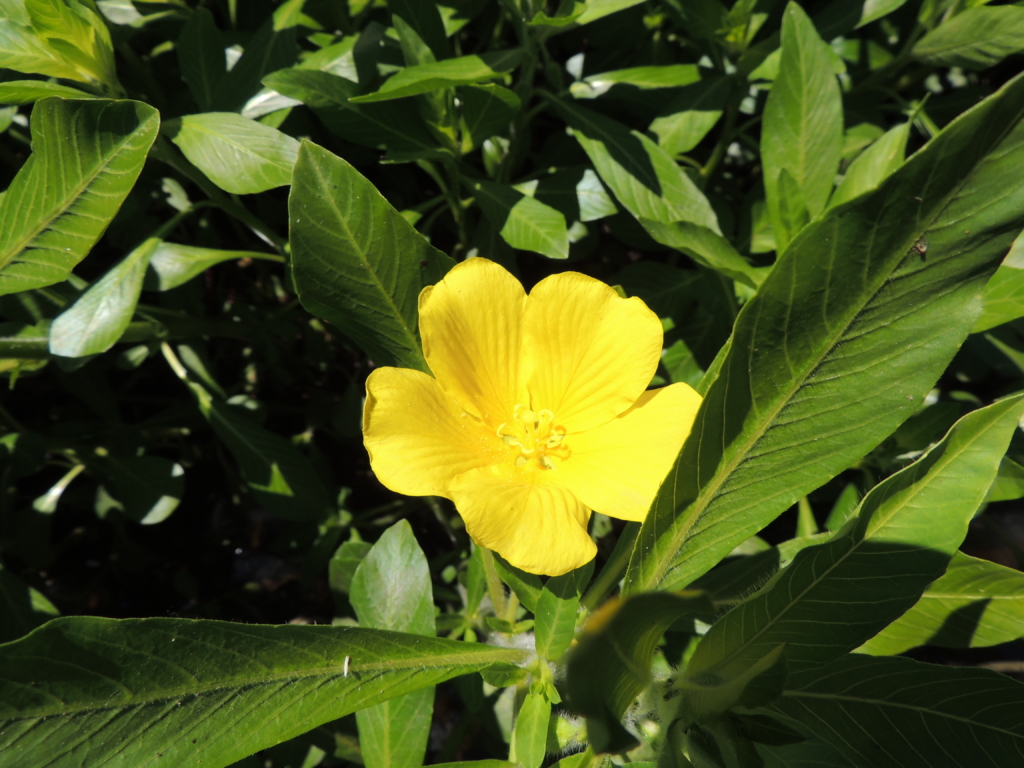
Floating primrose-willow is an aggressive aquatic plant native to parts of the Americas that has become highly invasive in the Pacific Northwest. It forms dense floating and emergent mats in slow-moving rivers, sloughs, ponds, and wetlands. Bright yellow, five-petaled flowers bloom in summer, while long trailing stems root at nodes and enable rapid spread. These mats reduce water flow, outcompete native aquatic plants, degrade fish and wildlife habitat, and interfere with recreation and water management, making floating primrose-willow a high-priority species for detection and control.
Plant Details
| Life Forms | |
|---|---|
| ODA Listing | |
| Soil and Moisture Conditions | |
| Suggested Actions | |
| Shade Preference | |
| Mature Height | up to 10 feet deep |
| Distribution | In Oregon, floating primrose-willow is primarily established in western parts of the state, with significant infestations in the Willamette Valley, lower Columbia River system, and connected sloughs, backwaters, and slow-moving waterways. Populations are strongly associated with low-gradient rivers, irrigation channels, and managed wetlands where warm, shallow water persists through summer. It is also found in Washington, California, eastern and southern US, Mexico, South America, Western Europe, and Australia. |
| Control | Control of floating primrose-willow requires early intervention and sustained follow-up due to its ability to spread from small stem fragments. Small infestations can sometimes be managed by careful hand-pulling or mechanical removal, but all plant material must be fully contained and removed from the site to prevent reestablishment. Large or established populations typically require repeated treatments with aquatic-approved herbicides applied during active growth, often combined with mechanical removal. Long-term control depends on monitoring, retreatment, and restoring native aquatic vegetation to reduce available habitat for reinvasion. It is illegal to sell or move this species within Oregon. |
| Disposal Methods | Dispose of plants in the garbage in sealed plastic bags. Large amounts of hand-pulled plants can be hauled to sunny, dry areas away from streams and outside of floodplains. |
| Reproduction and Spread | Primrose-willow spreads through fragmentation and seed, and creates new populations as it floats downstream. |
| Introduced | This species is native to parts of the US, Mexico, Central America, and South America, but is invasive in Oregon and Washington. |
| Look Alikes | Invasive Uruguayan primrose-willow is difficult to tell from floating primrose-willow. Both are invasive and require similar control methods. |
| Impact | Floating primrose-willow has major ecological and hydrological impacts in invaded waterways. It forms dense mats that block sunlight, outcompeting native aquatic plants and reducing overall plant diversity. These mats slow water flow, trap sediment, and can alter wetland and river channel structure, which negatively affects fish, amphibians, and other aquatic wildlife. Additionally, thick infestations interfere with recreational activities, irrigation, and water management. |
| More Info |