
Palmer Amaranth
Amaranthus palmeri
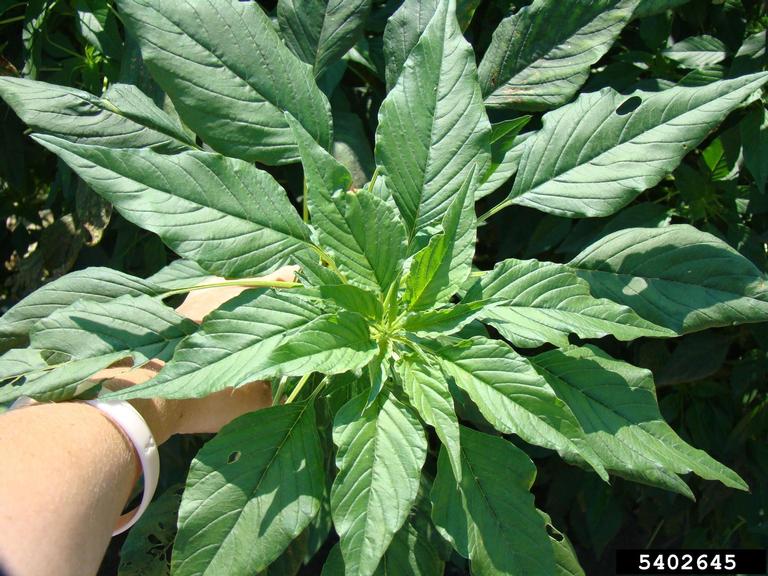
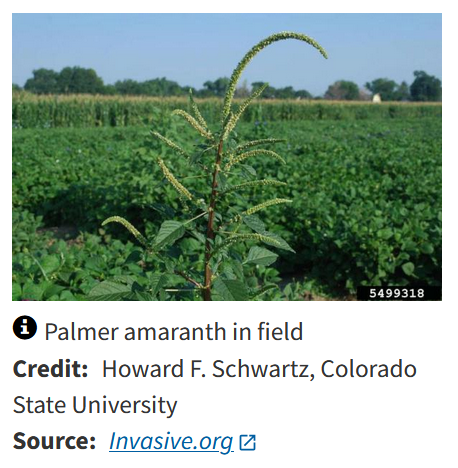
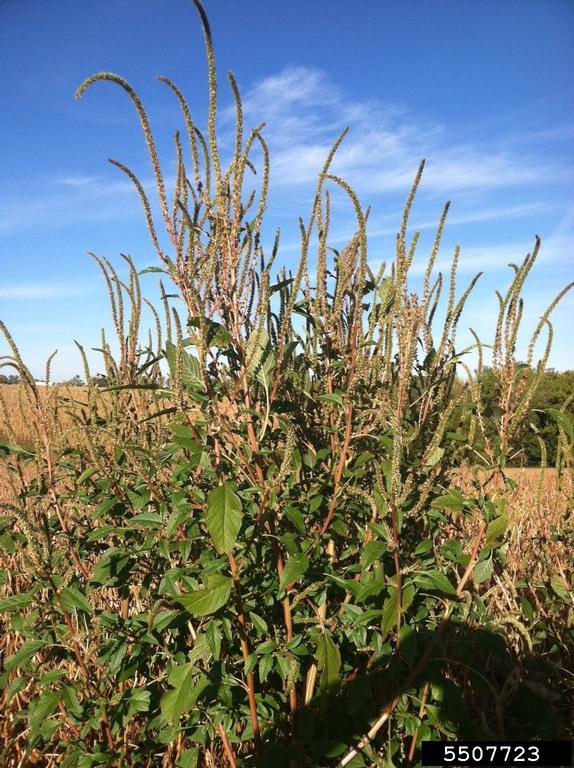
Plant Description
Palmer amaranth (Amaranthus palmeri) is an aggressive annual weed native to the southwestern United States that has become one of the most problematic invasive weeds in agriculture across North America. It grows rapidly, often reaching several feet tall, with smooth red, green, or brown stems, long petioles, and large, dense flowering spikes. The species reproduces only by seed, but a single female plant can produce hundreds of thousands of seeds, allowing populations to expand quickly. Palmer amaranth competes heavily with crops for light, water, and nutrients and has developed resistance to multiple herbicides, making it difficult and costly to control in agricultural systems.
It has become resistant to a number of herbicides, making it difficult to control and highly impactful, especially in agricultural settings.
Palmer amaranth seeds were found in bird seed mixes sold in Marion County in 2025. Keep an eye out for any unusual plants, especially around bird feeders.
Plant Details
| Life Forms | |
|---|---|
| ODA Listing | |
| Soil and Moisture Conditions | |
| Suggested Actions | |
| Special Uses | |
| Shade Preference | |
| Mature Height | 6-8' |
| Distribution | Palmer amaranth was first confirmed in Oregon in 2023 in Malheur County. In 2024, it was discovered in Marion County. In 2025, it was found as a contaminate in Signature Pet Care Songbird Blend, a wild bird food blend sold at Safeway, Albertsons, and Haggen stores. |
| Control | Palmer amaranth is an A-Listed species. Please report it to Oregon Invasives Hotline! Small infestations can be hand pulled, bagged, and disposed of in municipal waste (not composted!). Large infestations may require herbicide treatments. |
| Disposal Methods | Dispose of plants materials in trash bags in the municipal waste. Do not compost! |
| Reproduction and Spread | Palmer Amaranth has the potential to spread very quickly, as a single plant can produce thousands of seeds. It grows well in disturbed areas, and can thrive in agricultural fields as well. Pay close attention to any new or unusual plants sprouting near bird feeders, as Palmer Amaranth seeds were found in birdseed mixes in 2025. |
| Introduced | Originally from the southwestern United States. |
| Look Alikes | Redroot pigweed (Amaranthus retroflexus) looks similar, but stays much shorter than Palmer amaranth which typically grows 2-4' tall.. |
| Impact | Palmer amaranth is an aggressive, highly adaptable weed causing massive agricultural damage, with potential yield losses up to 91% in corn, 79% in soybeans, and 92% in cotton. It grows up to 2.5 inches daily, outcompeting crops for resources, and is widely resistant to multiple herbicides, including glyphosate. |