
Periwinkle
Vinca major / Vinca minor
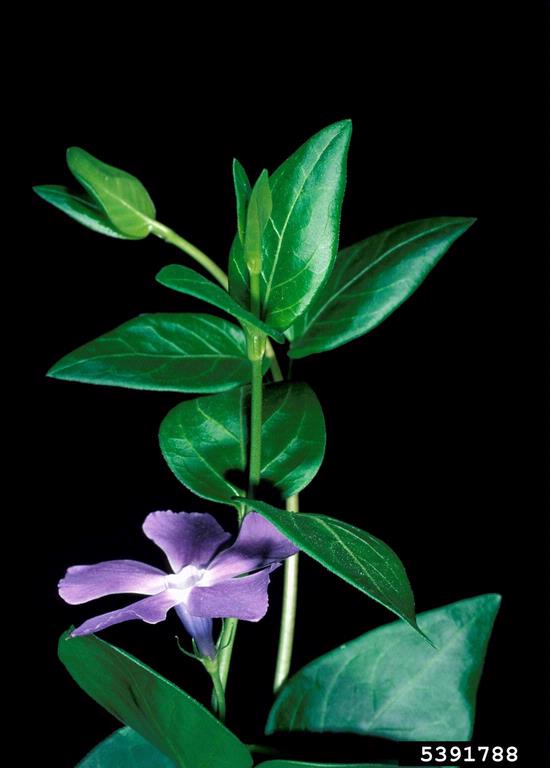
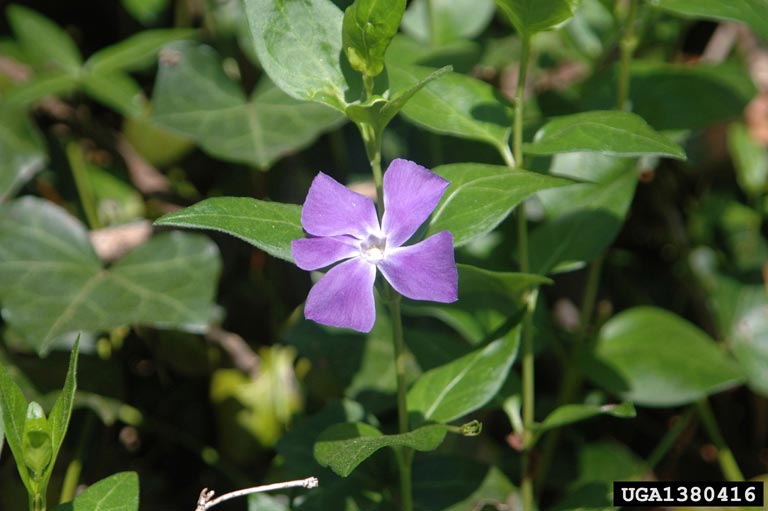
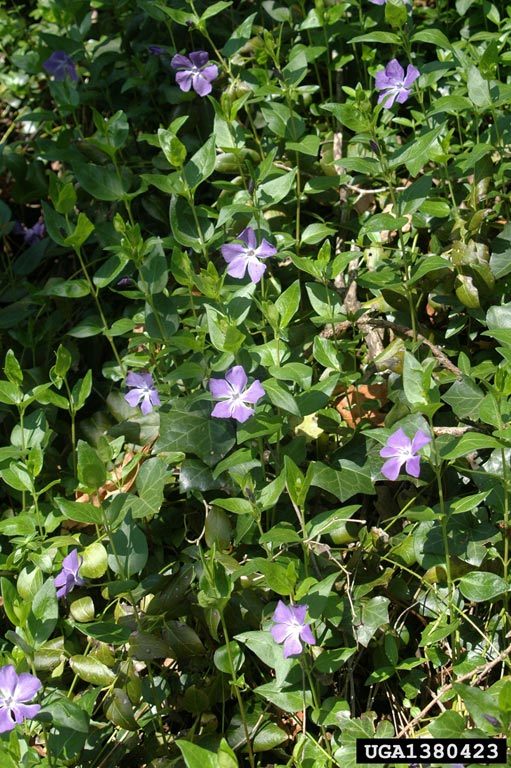
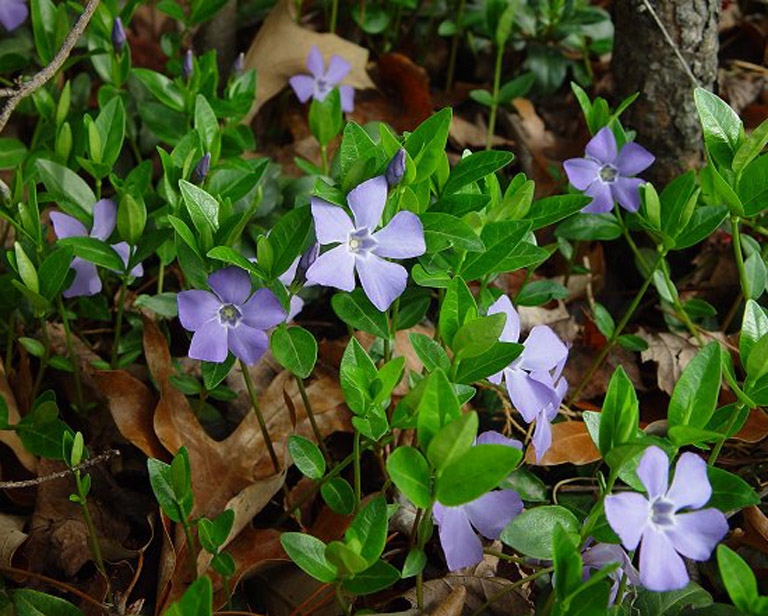
Plant Description
Both bigleaf periwinkle and common periwinkle are evergreen, trailing groundcovers native to Europe and surrounding regions that have escaped cultivation in the Pacific Northwest. Both spread by creeping stems that root at the nodes, forming dense mats that can smother native herbs and prevent establishment of other vegetation, particularly in forests and riparian areas. They have glossy, opposite leaves and showy blue-violet flowers. Bigleaf periwinkle generally has larger leaves and flowers and hairy leaf margins, while common periwinkle is smaller with mostly hairless leaf margins. Once established, both can be difficult to control because stem fragments and rooted nodes can readily regrow. They spread to natural areas from establish yards and illegally-dumped yard debris.
Plant Details
| Shade Preference | |
|---|---|
| Mature Height | 1.5-3' |
| Distribution | Commonly found where near old homesteads and in garden beds. Invading natural areas in the US. |
| Control | Prevention is best. Keep existing populations confined. Can be pulled by hand, dug or raked up, being sure to remove underground portions. |
| Disposal Methods | Dispose of trimmings in the trash. |
| Reproduction and Spread | Spreads rapidly by long trailing stems that root at their tips and leaf nodes. |
| Introduced | Introduced as an ornamental in the 1700s. |
| Impact | Forms mats that crowd out native species. |
| More Info |