
Roundleaf bittersweet
Celastrus orbiculatus

Plant Description
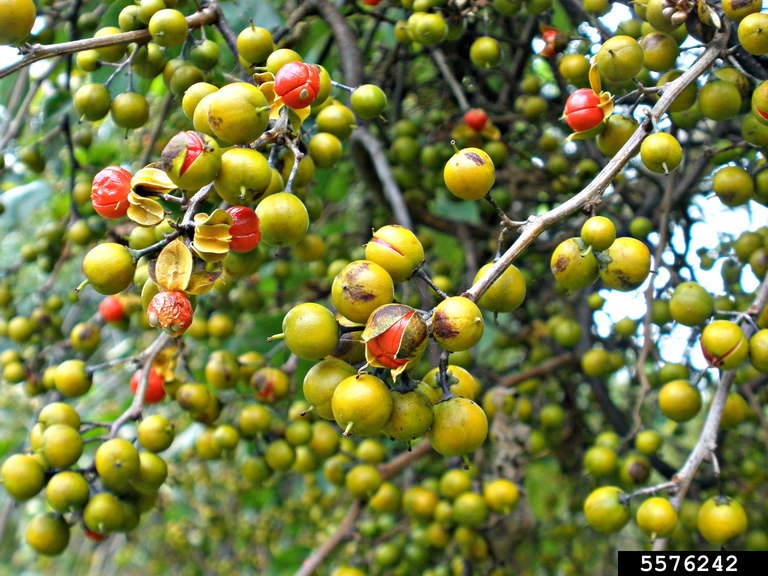
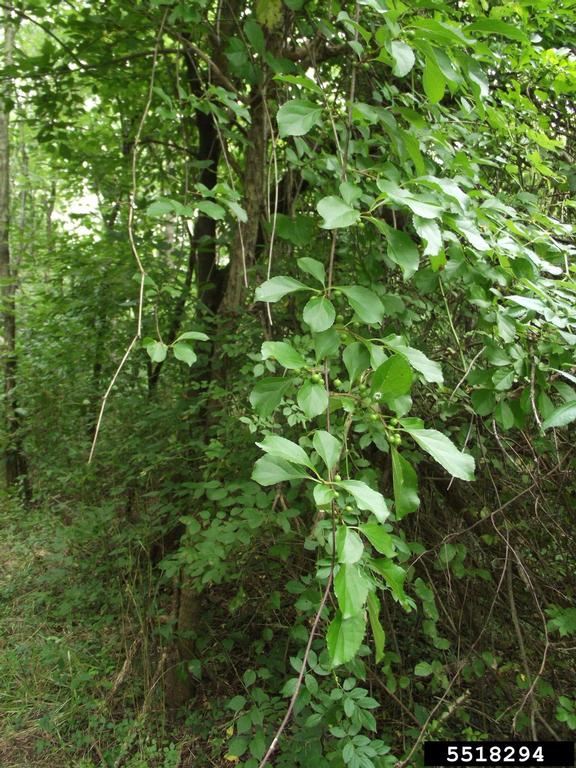
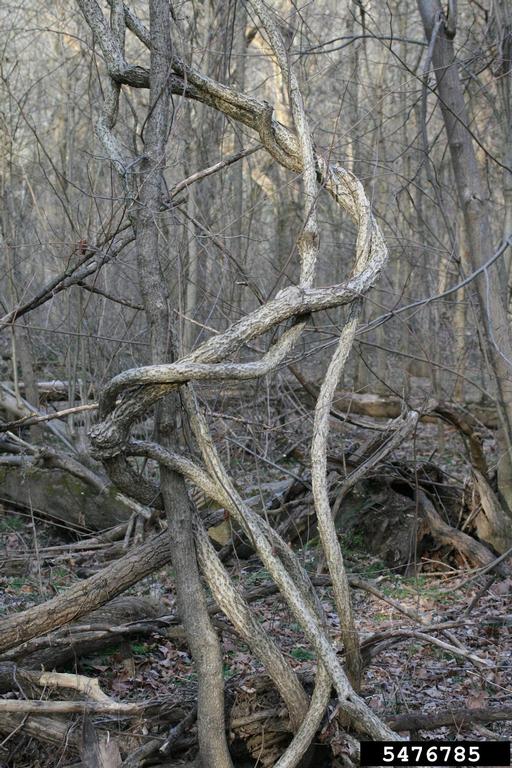
Roundleaf bittersweet is a woody deciduous vine native to East Asia and widely invasive in North America. It grows rapidly, climbing and girdling trees with twining stems and forming dense mats that smother understory vegetation. Female plants produce abundant orange-yellow fruits that are readily dispersed by birds, allowing the vine to spread far beyond planting sites. Once established, oriental bittersweet alters forest structure and regeneration and is difficult to control without repeated, long-term management. Roundleaf bittersweet is an A-listed noxious weed according to the Oregon Department of Agriculture (ODA). It is new to Oregon and was recently spotted in floral arrangements, where the seeds can be widely distributed.
Please report this weed to the OregonInvasivesHotline.org.
Plant Details
| Life Forms | |
|---|---|
| ODA Listing | |
| Soil and Moisture Conditions | |
| Suggested Actions | |
| Special Uses | |
| Shade Preference | |
| Mature Height | to 60' |
| Distribution | Roundleaf bittersweet is a widespread weed in Central and Eastern US. It has only recently been discovered in Clackamas County, Oregon, and it was recently spotted in floral arrangements sold locally. This means there are likely new and undocumented infestations in our region. |
| Control | There is assistance available to help control this noxious weed. Please report infestations to the Oregon Invasives Hotline. |
| Disposal Methods | Bag all berries and throw in the municipal waste to prevent spreading the weed. Cut vines can be composted in place, but be sure to check the pile regularly to prevent re-rooting. |
| Reproduction and Spread | Roundleaf bittersweet grows from seeds which are encased in berries and spread by birds. They also spread from the extensive root system. Small fragments of the roots left in the ground will grow into new plants. Humans contribute to the spread of this noxious weed by using the berries in decorations and wreaths, where the seeds can escape into the natural environment. |
| Introduced | Native to Eastern Asia and introduced to the Eastern US around 1860. |
| Impact | Roundleaf bittersweet negatively impacts native plants by smothering them, girdling trees (cutting off nutrient flow), competing for light, and causing tree damage or death due to extra weight on the branches. It displaces native species while also potentially altering soil chemistry and increasing tick populations. |