Plant a Patch of Willamette Valley Native Annual Wildflowers

Native annual wildflowers can bring color, pollinators, birds, and seasonal diversity to gardens while showcasing plants adapted to western Oregon’s wet winters and dry summers. Together, they can provide a succession of flowers from spring into summer, creating a changing display while supporting native bees and other wildlife.
About the Seed Mix
If you received a Marion SWCD native wildflower seed packet, this is the mix described here. The seed mix includes nine native annuals found in prairies, meadows, and other open habitats of the Willamette Valley. Each packet contains a blend of these wildflowers, selected to provide a variety of flower colors, bloom times, and plant forms while supporting pollinators and other wildlife.
The mix was selected to provide a succession of flowers from spring into summer, ranging from the bright orange flowers of fiddleneck to blue gilia, pink clarkias, and yellow tarweeds.
Not using this particular mix? The planting guidance and information about these species can still be useful for growing native annual wildflowers in western Oregon.
What’s in the Mix?
| Species | Common Name | Flower Color | Bloom Time | Height* | Preferred Site Conditions |
| Amsinckia menziesii | Menzies’ fiddleneck | Orange | Spring | 1–3 ft | Sun; dry–moist |
| Clarkia amoena | Farewell-to- spring | Pink | Late spring–summer | 1–3 ft | Sun; dry–moist |
| Clarkia purpurea ssp. quadrivulnera | Four-spot | Pink-purple | Spring–summer | 1–3 ft | Sun; dry–moist |
| Collomia grandiflora | Large-flowered collomia | Peach-pink | Late spring–summer | 1–3 ft | Sun; dry–moist |
| Epilobium densiflorum | Dense-flower spike-primrose | Pink-purple | Late spring–summer | 1–3 ft | Sun; moist, seasonally dry |
| Gilia capitata | Bluehead gilia | Blue-purple | Spring–summer | 1–3 ft | Sun; dry–moist |
| Madia elegans | Showy tarweed | Yellow | Summer | 2–5 ft | Sun; dry |
| Madia gracilis | Slender tarweed | Yellow | Late spring–summer | 1–3 ft | Sun; dry |
| Plagiobothrys figuratus | Fragrant popcorn flower | White | Spring | 0.5–2 ft | Sun; moist, seasonally dry |
*Height varies with soil, moisture, competition, and growing conditions.
Meet the Wildflowers
Curious about what’s growing in your patch? Learn more about each of the nine species in the mix, including their flowers, growing habits, and the wildlife they support.
Menzies’ Fiddleneck (Amsinckia menziesii)
Menzies’ fiddleneck is an early-season annual with distinctive coiled flower stalks covered in small yellow-orange flowers. Its leaves and stems are noticeably bristly. It grows in open grasslands and other sunny habitats and is an important early wildflower for newly emerged pollinators in spring.

Farewell-to-Spring (Clarkia amoena)
One of the showiest flowers in the mix, farewell-to-spring produces silky pink, purple, or white flowers, often with darker markings near the center. As its name suggests, it blooms as spring transitions into the warmer, drier days of summer. Native bees love this plant, especially the leafcutter bees that will clip circles out of the flower petals to make their nests. Leafcutter bees are important pollinators for late season fruits & vegetables, and circles cut out of your flower petals are a sign that the plant is supporting them! Once established, farwell-to-spring is well adapted to dry summer conditions and will return from seed each spring.
Four-Spot Clarkia (Clarkia purpurea ssp. quadrivulnera)
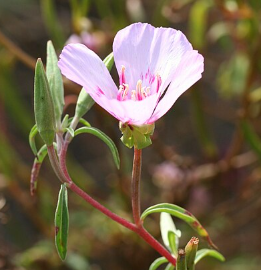
Four-spot clarkia produces large, showy pink to purple flowers, often with distinctive darker spots on the petals. These spots act as nectar guides, leading pollinators to the flower’s nectar. This annual flower occurs in open grasslands and meadows and adds another flush of color during late spring and early summer.

Large-Flowered Collomia (Collomia grandiflora)
Large-flowered collomia grows an upright stalk with a thick terminal cluster of slender, trumpet-shaped flowers that attract hummingbirds. Ranging from pale salmon to pink, the warm flower colors contrast nicely with bluehead gilia and pink clarkias in the mix.
Dense-Flower Spike-Primrose (Epilobium densiflorum)
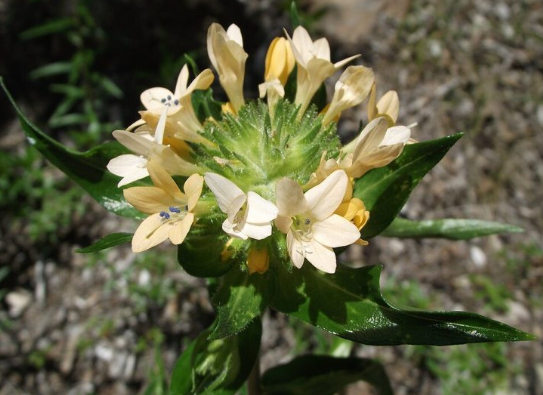
Dense-flower spike-primrose produces whorls of numerous small pink to purplish flowers along upright stems from July into fall. It is beloved by butterflies and other pollinators and provides an important nectar source in late summer. It is drought tolerant and easy to grow.
Bluehead Gilia (Gilia capitata)
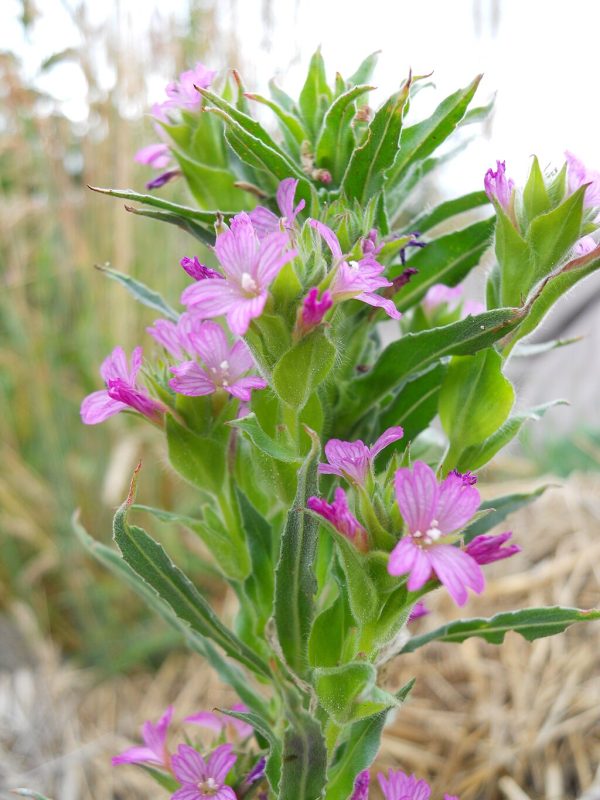
Bluehead gilia produces feathery, fine foliage and short, round clusters of lavender-blue flowers from spring into summer. The blue flowers stand out among the yellows, oranges, and pinks of other wildflowers and attract hummingbirds, bees, and other pollinators. It grows well in sun and prefers dry to moist sites.

Showy Tarweed (Madia elegans)
Showy tarweed is one of the later and taller flowers in the mix. Its yellow, daisy-like flowers often have darker markings near their centers and provide late-season resources for pollinators. The sticky, aromatic foliage gives tarweeds their name. This species has adapted to hot, dry summer conditions by closing its flowers during the hottest time of day and opening them again as temperatures cool. The seeds are eaten by many wildlife species and have also been traditionally roasted and ground into flour by Native Americans.

Slender Tarweed (Madia gracilis)
Slender tarweed is a smaller, more delicate relative of showy tarweed. Its yellow flowers appear from late spring into summer, providing another source of pollen and nectar as many spring annuals finish blooming. Both tarweeds readily reseed and thrive in hot, dry, nutrient-poor soils.

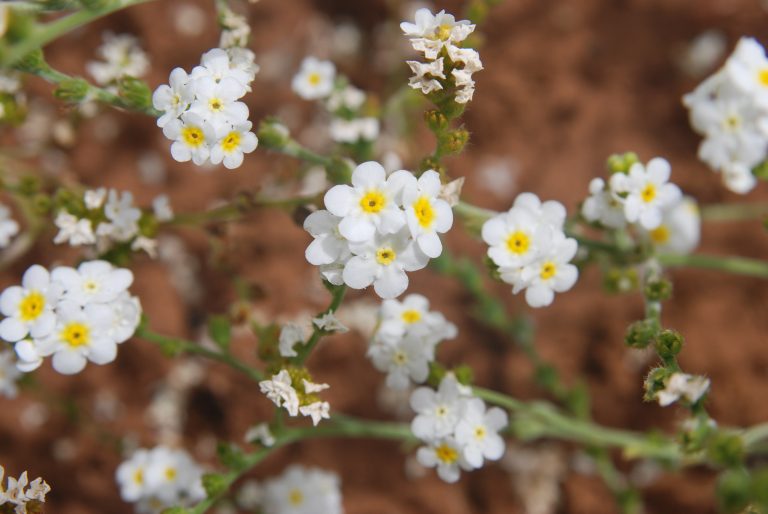
Fragrant Popcornflower (Plagiobothrys figuratus)
Fragrant popcornflower produces curling clusters of tiny white flowers. It favors seasonally moist open habitats, taking advantage of winter and spring moisture before the landscape dries in summer. The white flowers are prized in spring bouquets, and some Native American tribes traditionally used the roots to create a purple dye.
Planting Your Wildflower Seed Mix
For this mix, autumn is the preferred planting season, although early spring sowing can also be successful. If you are planting the seed from a Marion SWCD seed packet, use the instructions below to get the best results from this mix.
Regardless of when you plant, good site preparation is more important than adding fertilizer or improving the soil.
Site Preparation:
Choose a location with at least 6 hours of sun a day. Remove existing weeds, dense vegetation, mulch, and heavy thatch so the seed can contact bare soil. Lightly rake the surface, but avoid unnecessary deep tilling, which can bring additional weed seeds to the surface.
Because these species have relatively small seeds, do not bury them deeply. Broadcast the seed over the prepared surface and press it firmly against the soil by walking over the area, using a roller, or pressing it with a board. A very light covering of soil is fine.
Time of Year:
Autumn Planting — RECOMMENDED
Best general window: September through November
Autumn sowing closely follows the natural lifecycle of these annual wildflowers. Seeds experience cool, wet winter conditions and can germinate when conditions are favorable. Plants that establish during fall, winter, or early spring have more time to develop before summer drought.
If autumn rains are delayed and the seedbed becomes dry after the seeds start to grow, supplemental water may be helpful.

Spring Planting
Best general window: Late winter through early spring
If you miss the autumn planting season, sow as early in spring as practical. Early planting allows seedlings to take advantage of cool temperatures and natural soil moisture before the summer dry season.
Prepare and sow the seed in the same way as for autumn planting. After sowing, water gently and keep the upper soil surface moist during germination and early establishment.
As spring rainfall declines, seedlings may need supplemental water. Spring-sown plants may remain smaller or flower later than fall-sown plants because they have less time to establish before summer.

How to plant:
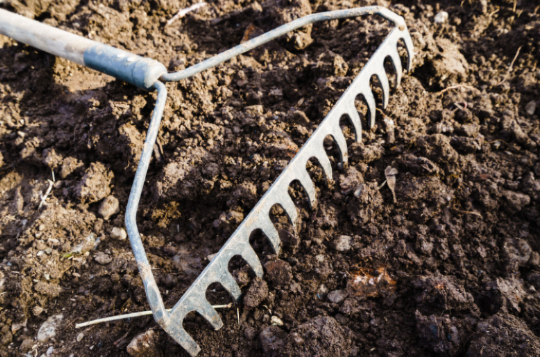
- Remove weeds and expose bare soil.
- Lightly rake the surface.
- Broadcast the seed evenly.
- Press the seed firmly into the soil without deeply covering it.
- Allow autumn and winter rainfall to provide moisture.
Tip for Even Seeding Dispersal:
For easier and more even distribution, mix the seed with slightly damp sand or another fine, dry carrier (such as seed hulls) before broadcasting. This can help you spread small seeds more evenly across the planting area.
If autumn rains are delayed and the seedbed becomes dry after the seeds start to grow, supplemental water may be helpful.
After the Flowers Bloom
These are annual wildflowers, so allowing them to produce seed is important if you want them to return.
Leave spent plants and seed heads in place to allow them to return the following year. This will also provide important food for birds and winter habitat for native pollinators that overwinter in hollow stems, leaf litter, or the soil beneath the annuals. To protect overwintering pollinators, wait until spring, when grasses are actively growing and need to be mowed, to clean up your flowerbeds.
Expect the mix to change from year to year. Rainfall, temperature, competition, soil moisture, and seed production will favor different species in different seasons. Some variation is a normal part of growing native annuals.
With good preparation and a little patience, this mix can provide a changing display of Willamette Valley native wildflowers from spring into summer while supporting native bees and other beneficial insects.
Want to Grow More Natives?
Interested in adding more native plants to your garden, landscape, or restoration project? Explore these resources for plant identification, growing information, and ideas for selecting Oregon native plants.
- Marion SWCD Plant Database — Explore information about native and invasive plants found in Marion County.
- OregonFlora — Explore Oregon’s native and introduced plants, identify plants, view species profiles and maps, and use the Grow Natives tool to find plants suited to gardens and landscapes.
- OSU Extension: Native Plant Gardening — Find Oregon-specific guidance and additional resources for gardening with native plants and supporting wildlife.