
Mouse-Ear Hawkweed
Pilosella officinarum
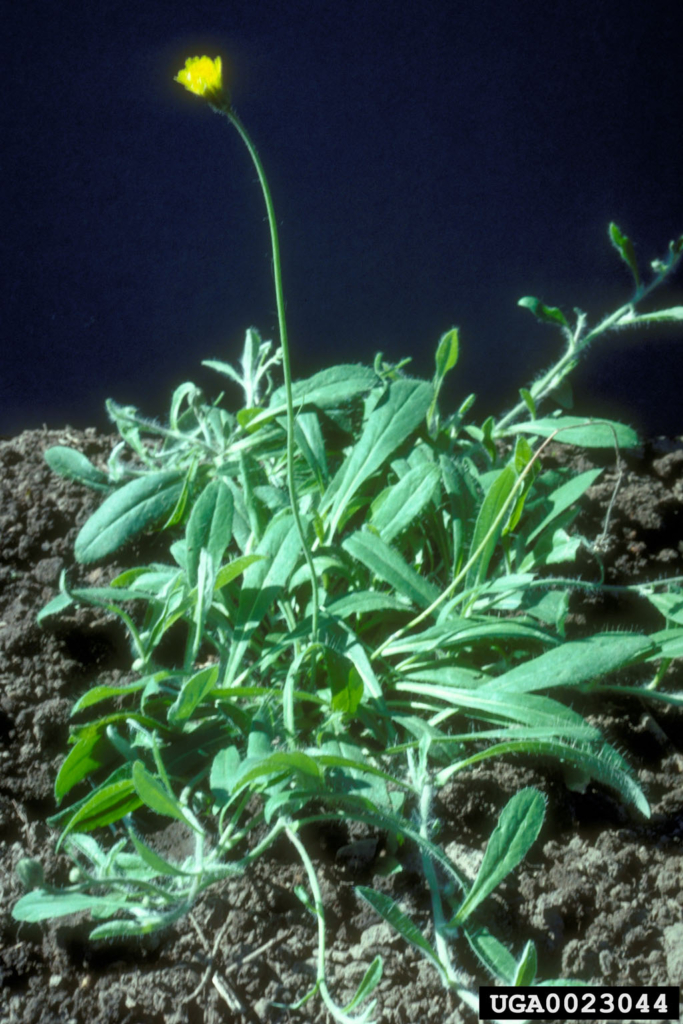
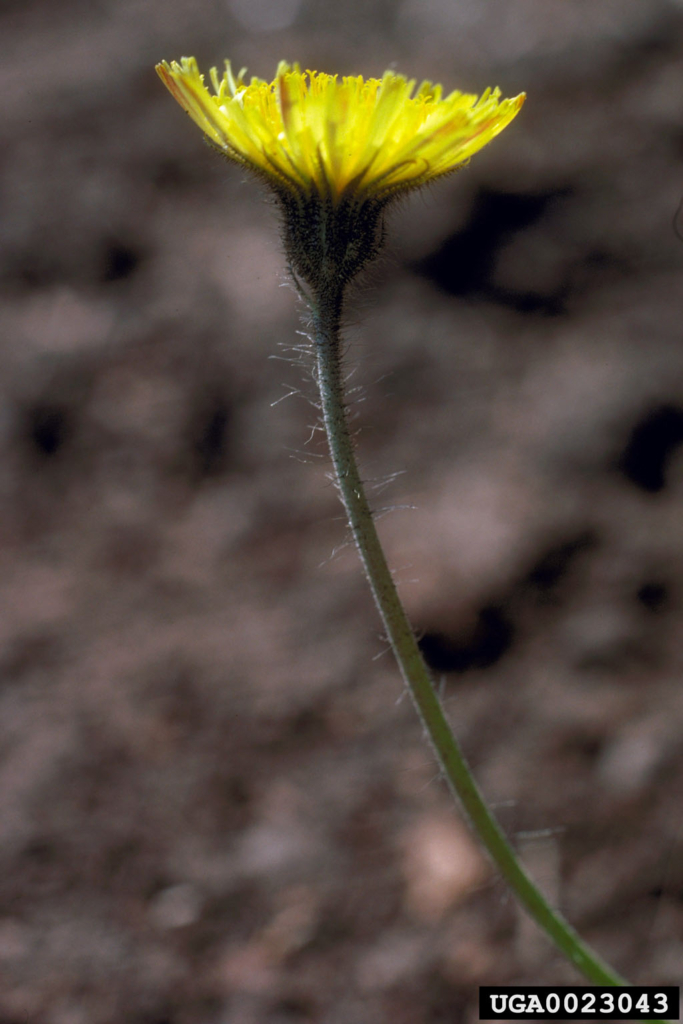
Plant Description
A low-growing perennial with yellow-white dandelion-like flowers and leafless stalks covered in stiff hairs. (Also known as Hieracium pilosella.)
Plant Details
| Life Forms | |
|---|---|
| ODA Listing | |
| Suggested Actions | |
| Shade Preference | |
| Mature Height | 3-10" |
| Distribution | Found in North East and North West US. Very limited distribution in Oregon's Willamette Valley. |
| Control | Do not mow. Hand dig if only a few plants. Fertilize the soil to help keep mouse ear hawkweed from establishing in lawns or pastures. |
| Disposal Methods | Seal plant material in a plastic bag and throw away in the trash. |
| Reproduction and Spread | Spreads by stolons that form dense mats and by wind-borne seeds. |
| Introduced | Introduced from Europe to US as an ornamental or agricultural seed contaminant. |
| Look Alikes | dandelions; other nonnative yellow flowered hawkweeds- they hybridize and are difficult to tell apart. |
| Impact | Produces thick mats of rosettes that prevent other plants from establishing. Reduces desirable pasture forage production. |
| More Info |