
Why Provide a Nest Box for Birds?
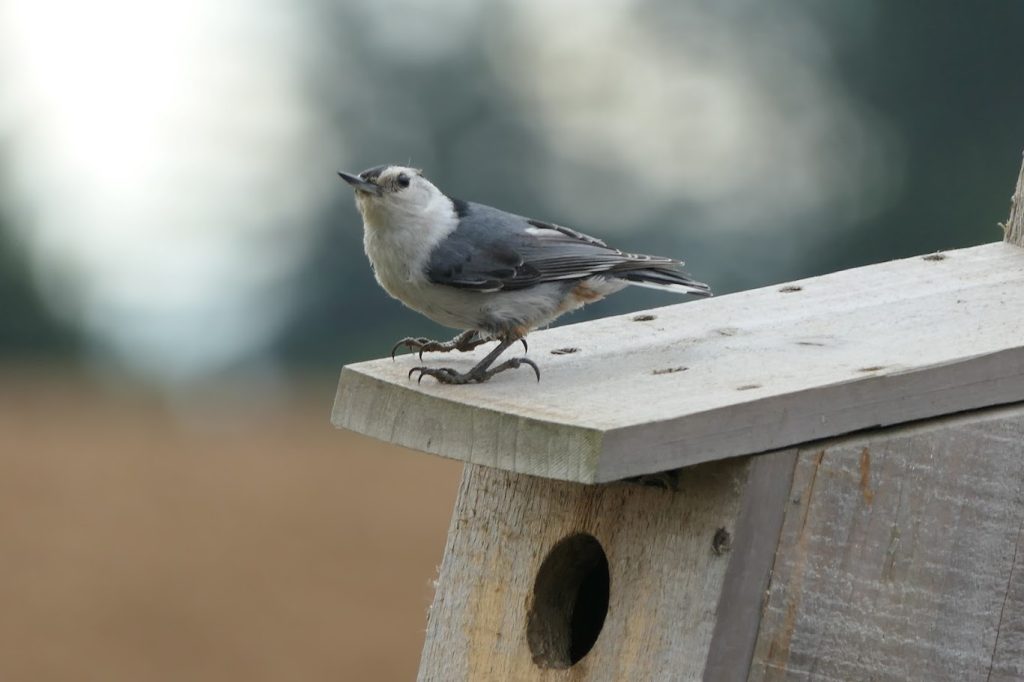
Birds use a wide range of spots to build their nests; trees, shrubs, buildings, and even the ground. But a special group of birds nests only in tree cavities. These include swallows, bluebirds, chickadees, nuthatches, kestrels, woodpeckers, some owls, and wrens. Many of these birds eat insects and will gladly use artificial cavities in constructed nest boxes if provided.
Woodpeckers and chickadees are the only ones that make their own cavities, but their work benefits many other birds. That’s why woodpeckers are considered keystone species since their nesting holes are essential to the ecosystem. Natural cavities form in dead trees (snags), but logging and development have removed many of these.
A quick note on wildlife trees: You can help cavity-nesters by shortening dead or unwanted trees rather than removing them completely. If you leave stubs and limbs for woodpeckers to work on, over time natural cavities will form.
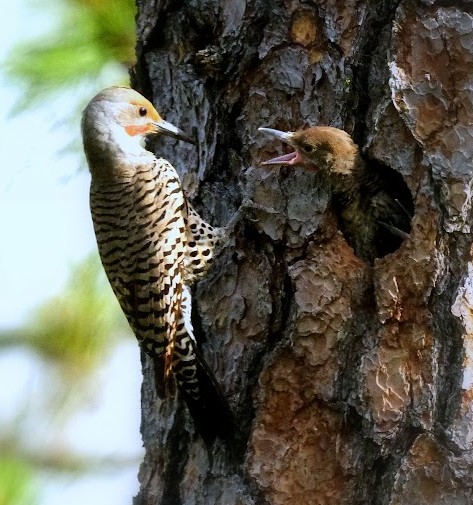
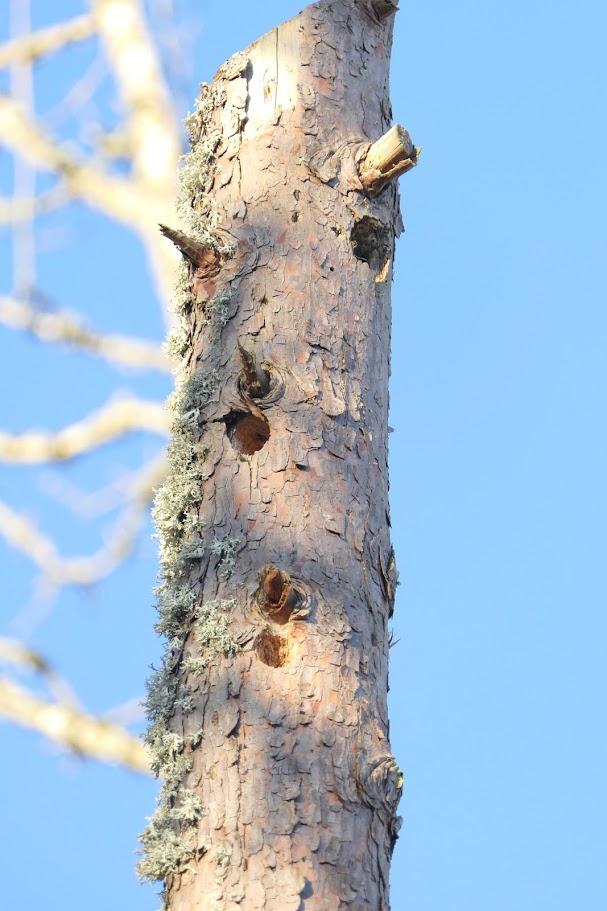
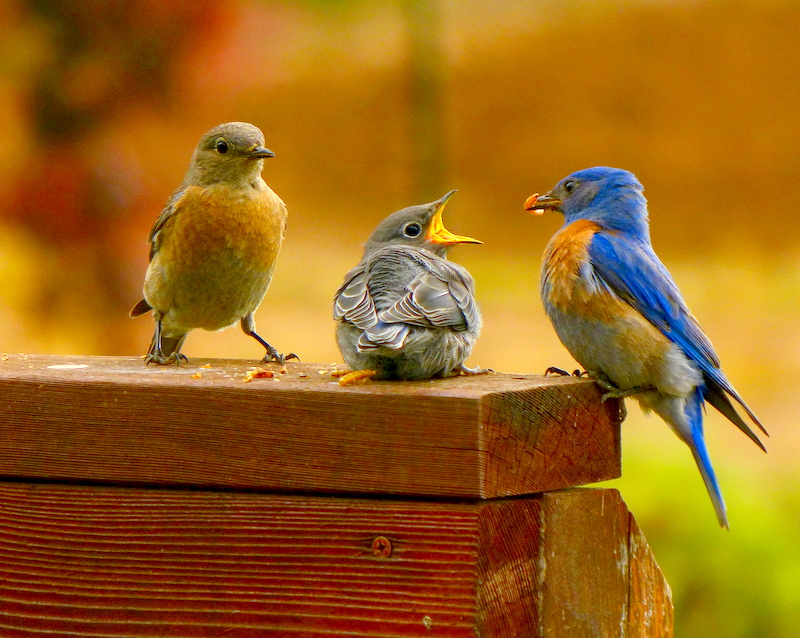
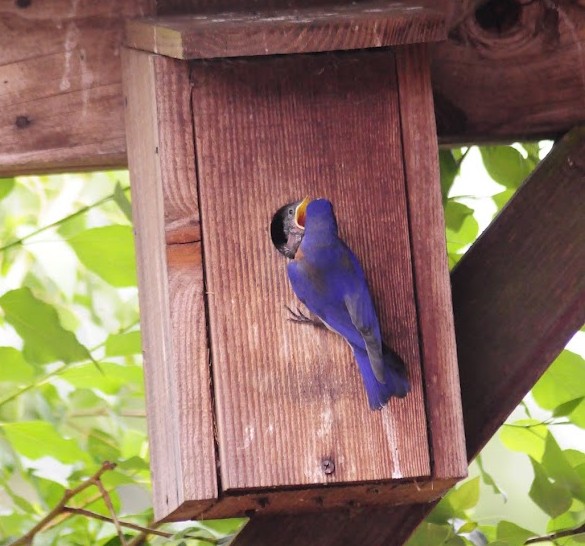
Nest boxes can help fill the decline of natural nesting cavities if they’re placed and maintained well. Bluebird numbers dropped for decades due to competition from invasive species like house sparrows and European starlings, plus habitat loss and pesticide use. But thanks to citizen conservation efforts and the creation of bluebird trails with boxes that excluded starlings, their populations have rebounded.
The Oregon Conservation Strategy recommends continuing nest box programs while working to restore natural habitat for species like the Western bluebird. Even if other native birds use the boxes, it’s still a win for conservation.
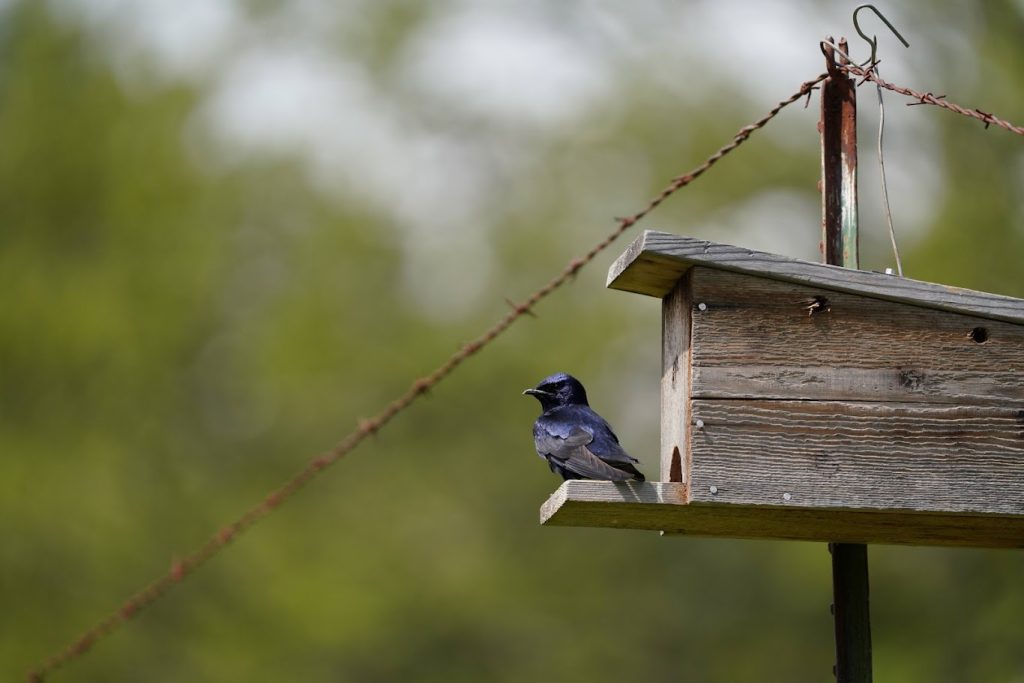
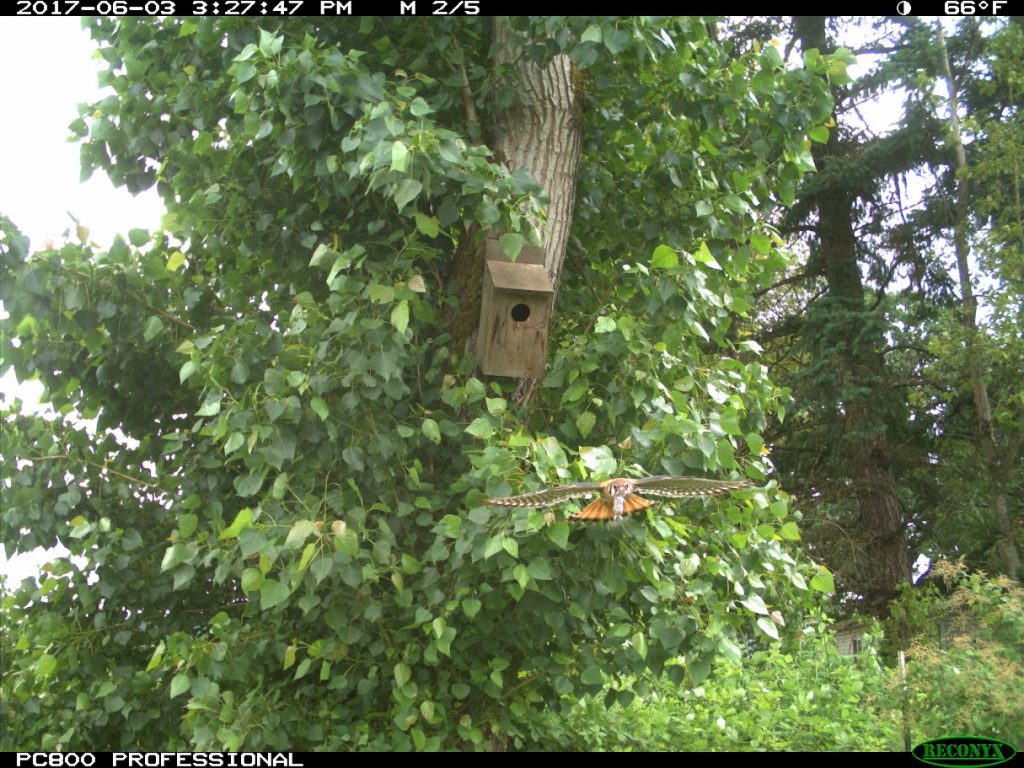
And let’s not forget: birds are magical. Nest boxes bring bird behavior up close, offering moments of discovery for the whole family, like the time we watched a kestrel pair raise chicks in one of our boxes, or the ten days we shared our deck with screech owl fledglings.
Types of Nest Boxes
Nest boxes (including swallow and robin ledges and winter roosts) come in all shapes and sizes. Most follow a simple design: a rectangular body with a roof, floor, and a door.
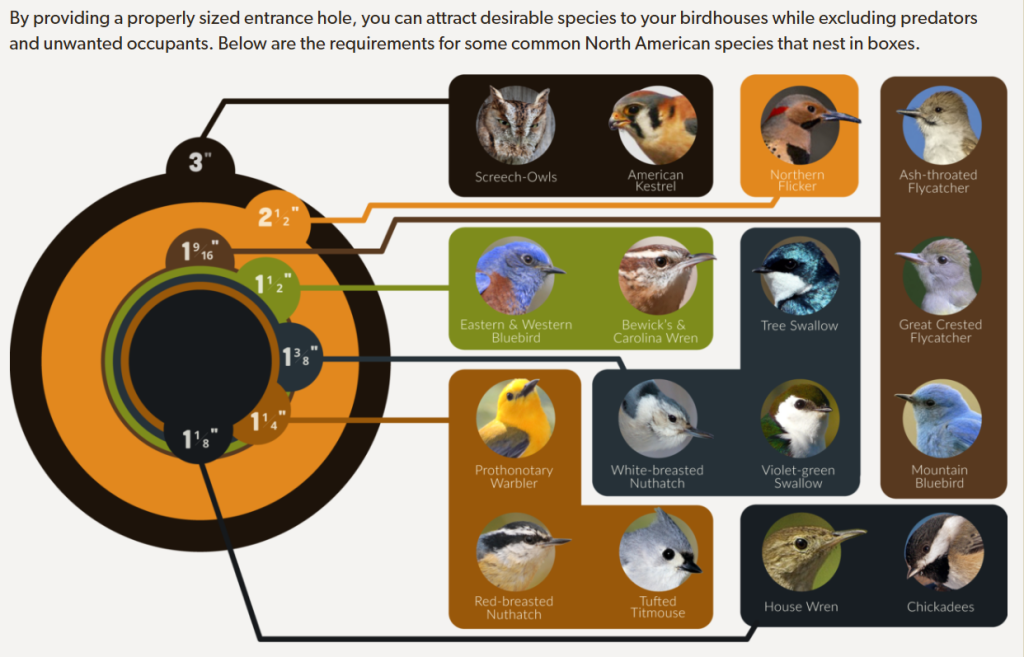
Common designs are tailored by bird species, the differences are mostly in box size and hole diameter:
- Wrens, chickadees, nuthatches: 1¼” holes
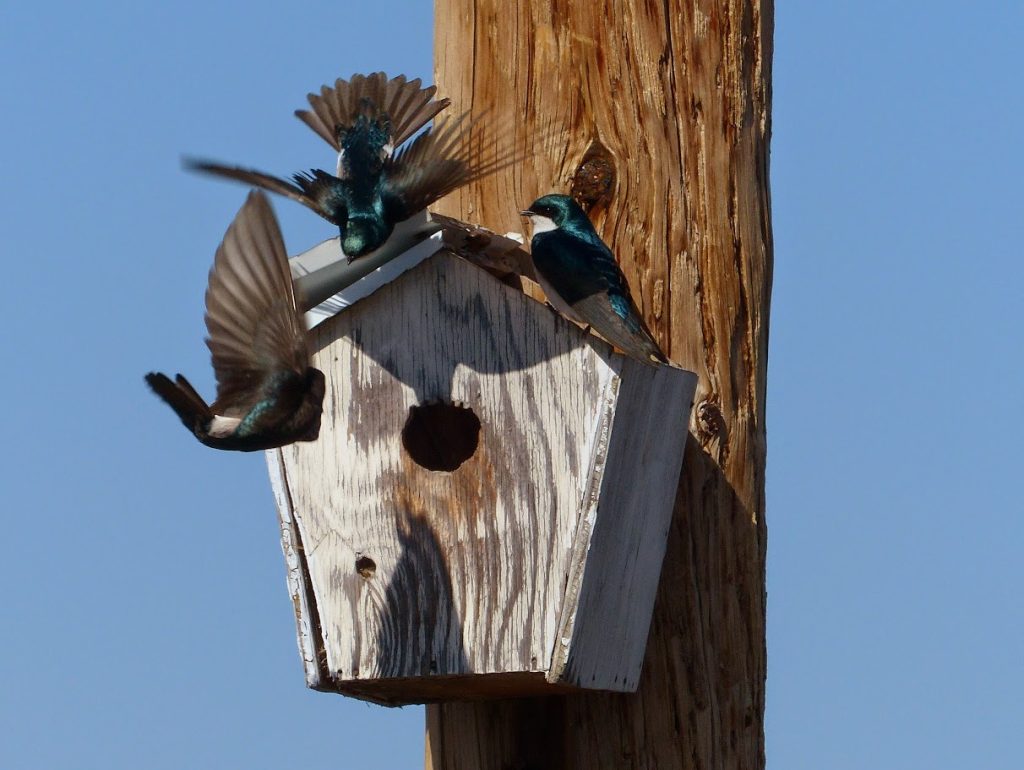
- Bluebirds, swallows: 1½” holes
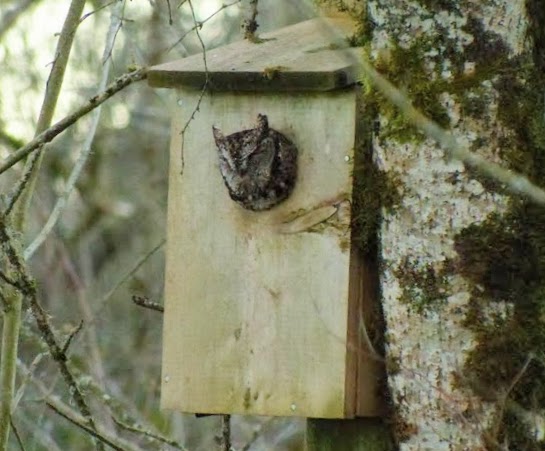
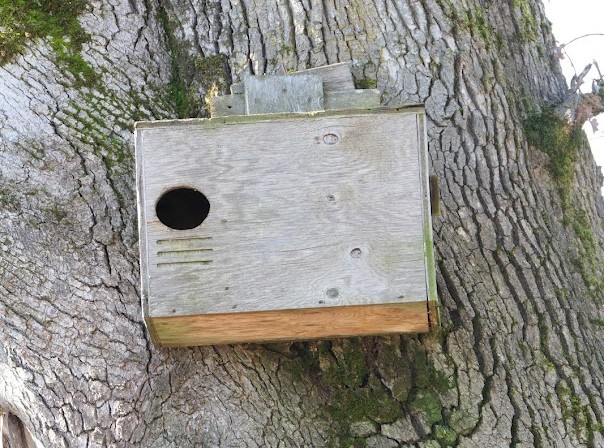
- Kestrels, screech owls, flickers: 3″ holes
Some birds need special setups:
- Chickadees and flickers will excavate soft wood or pine shavings placed inside deep boxes.
- Barn owls prefer boxes with a separate entry chamber to keep chicks safer from predators.
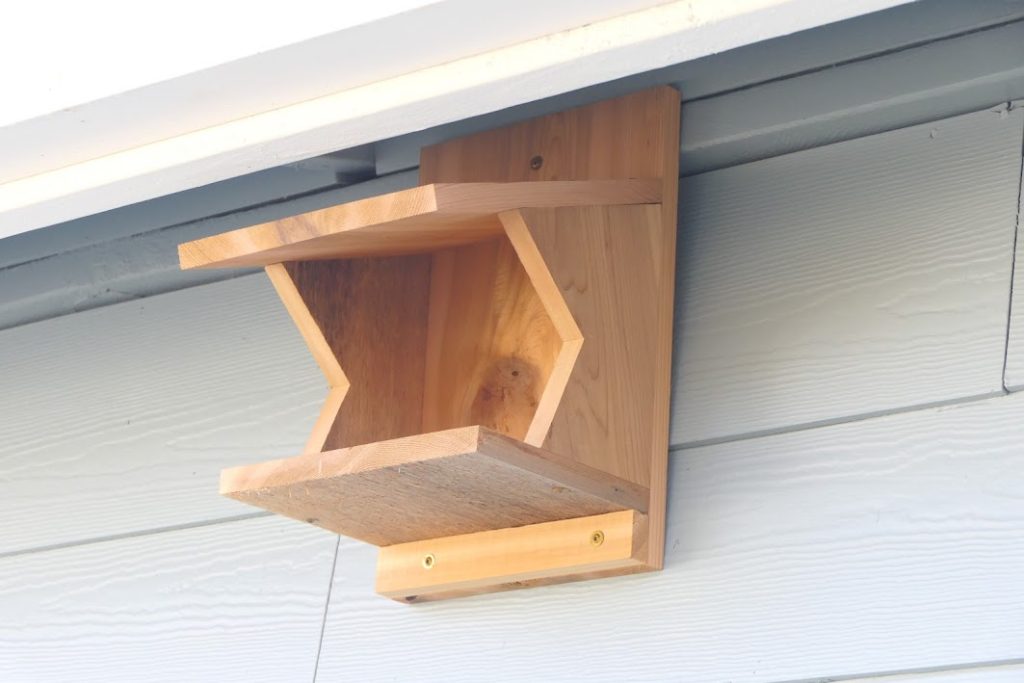
- Barn swallows and robins use ledges more than enclosed boxes.
Building or Buying a Nest Box: What to Look For
- Size and Entry Hole: Match the box to the bird; both space inside and entry hole size.
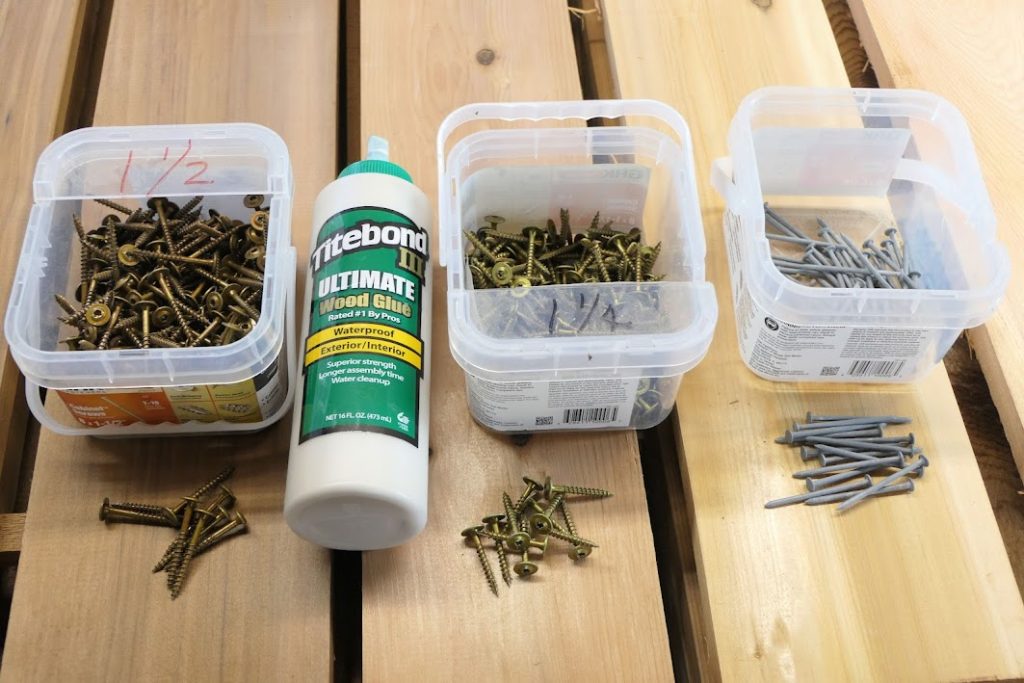
- Materials: Use cedar for weather resistance. Avoid gaps that let in rain. Roofs should overhang and slope. Use galvanized nails or outdoor screws; brad nails and staples won’t last. If gluing, use weatherproof glue.
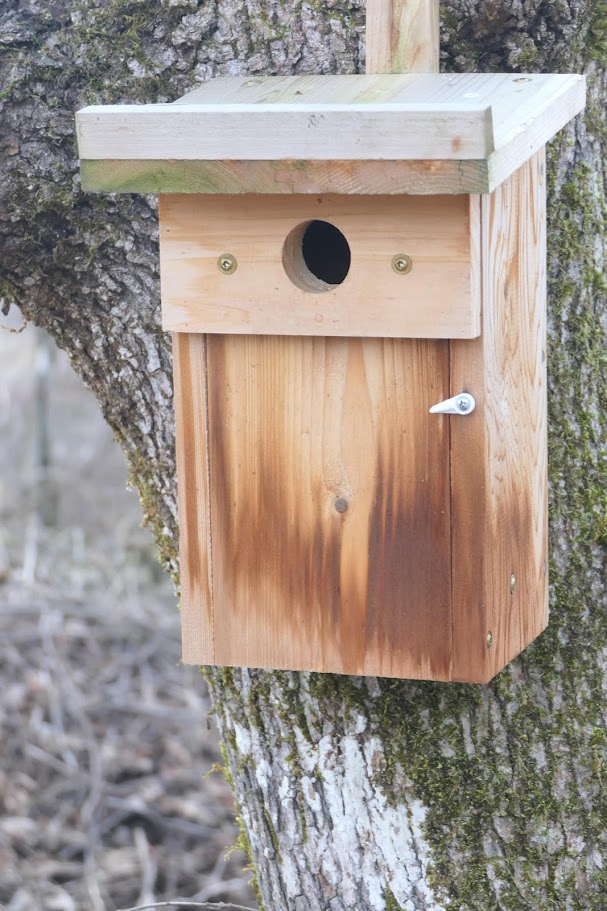
- Predator Guard: Drilling the entry hole through both the door and a wooden block on the outside of the door will prevent raccoons or cats from reaching inside.
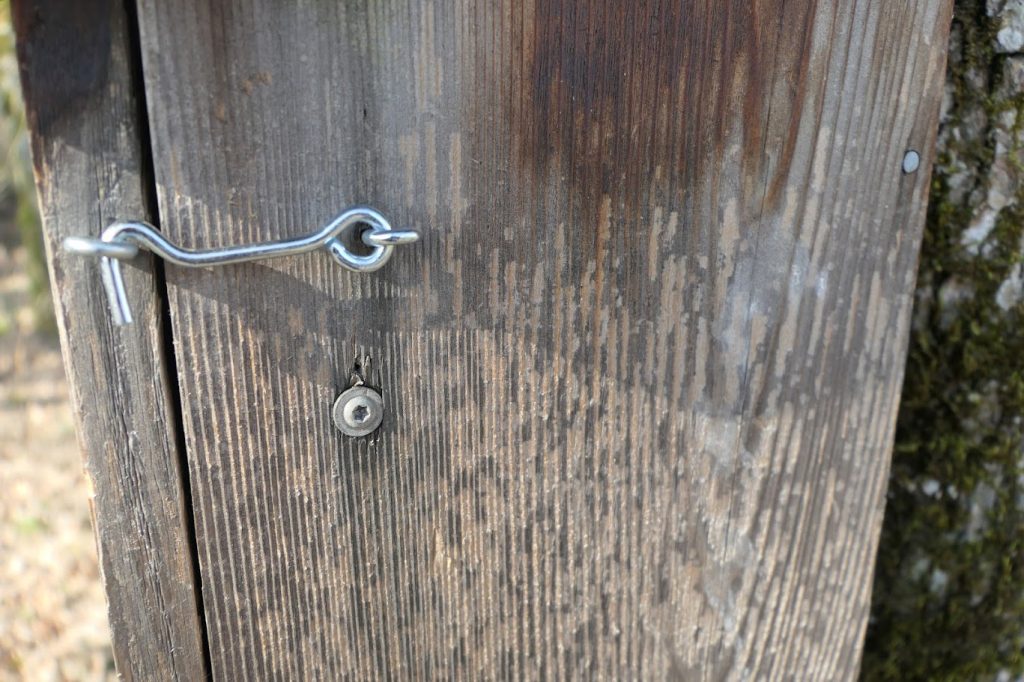
- Doors and Latches: Boxes must open for cleaning. Latches should keep them closed during use. Nails used as latches are easy to lose.
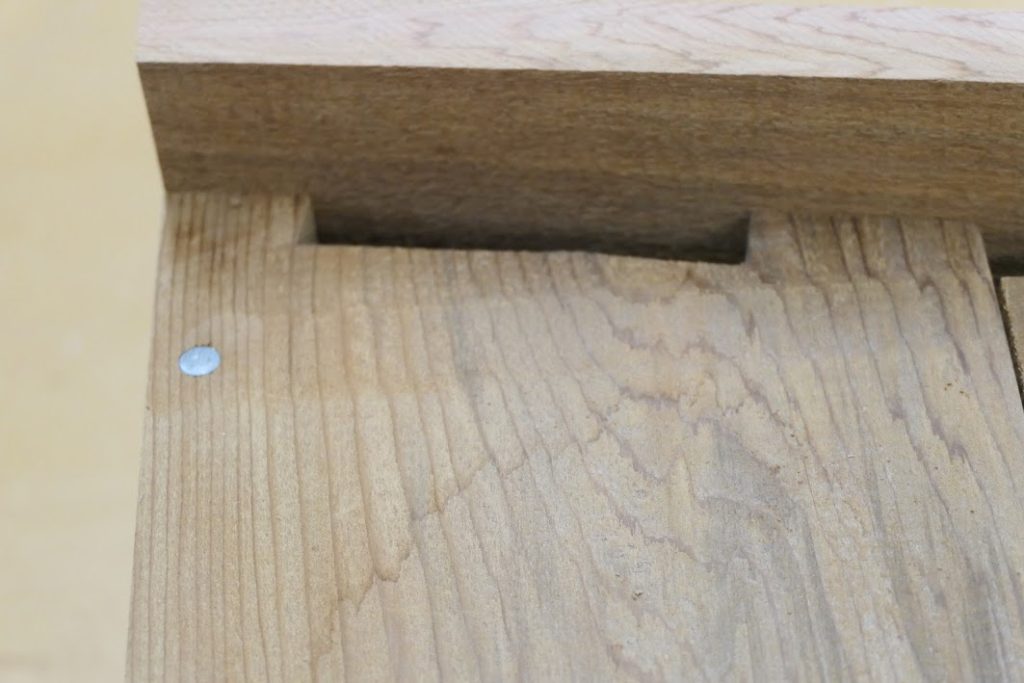
- Ventilation: Add vents on side walls under roof overhangs or above the door. Make sure they’re not large enough for chicks to escape or predators to reach in.
- Smooth Entry Holes: Rough or sharp edges can injure birds.
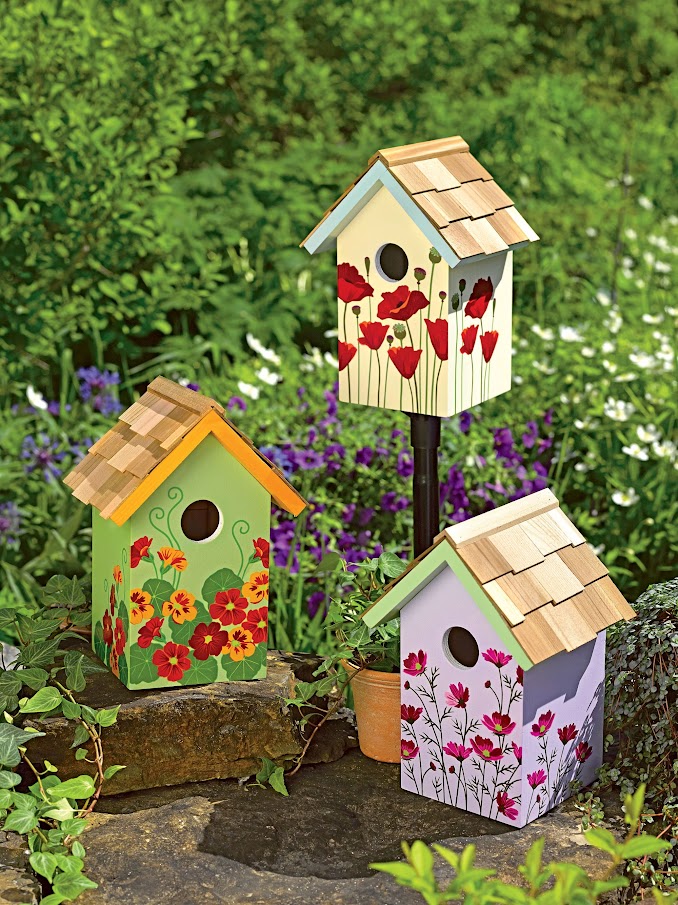
- Avoid “Decorative” Boxes: Many cute boxes sold in stores aren’t suitable for birds. Decorative nest boxes should only be used if they are made of wood with doors that open and latch, vents, good roofs, and appropriate entry holes. Don’t use metal boxes; they are prone to overheating.
Siting Your Nesting Box
Once you have a nest box, where and how you hang it matters just as much as the design.
- Install as soon as you have it. Even if it’s not used right away, it’ll be ready when the birds need it.
- Know your bird’s habitat:
- Swallows like wide-open areas near ponds, fields, or yards.
- Bluebirds also prefer open or partly open land.
- Chickadees, wrens, and nuthatches prefer edges of brushy or treed areas.
- Shade is important. Natural shade and ventilation help keep the box cool, especially in summer.
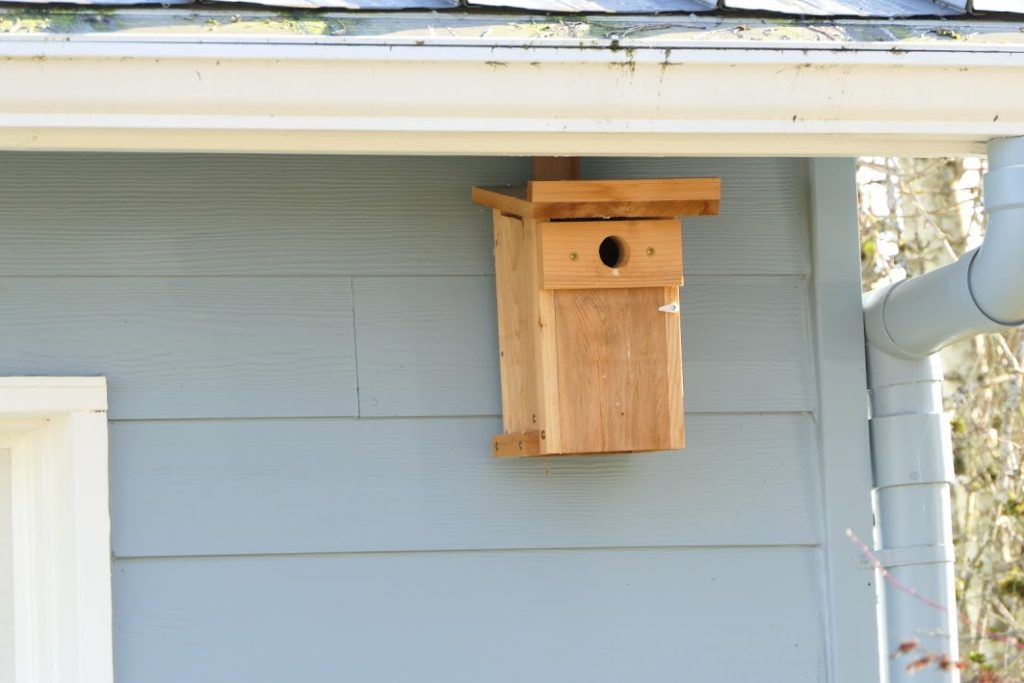
- Hang it low. Eye-level is great for cleaning and monitoring. Nest boxes set at convenient heights can be easily and safely cleaned. Nest boxes that require ladders are less likely to get the maintenance they need.
- Avoid checking inside during nesting. Opening a box too early can lead to nest abandonment or chicks jumping too soon.
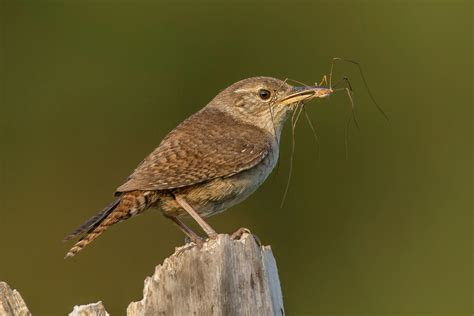
- House wrens can be territorial. If wrens take over, it’s best to either move the box out of their habitat after nesting or accept it as a wren box.
- Learn more at: Nest Box Placement – NestWatch
Remember: All native birds are protected by state and federal laws.
Cleaning and Maintenance
Good maintenance helps ensure your box is used year after year.
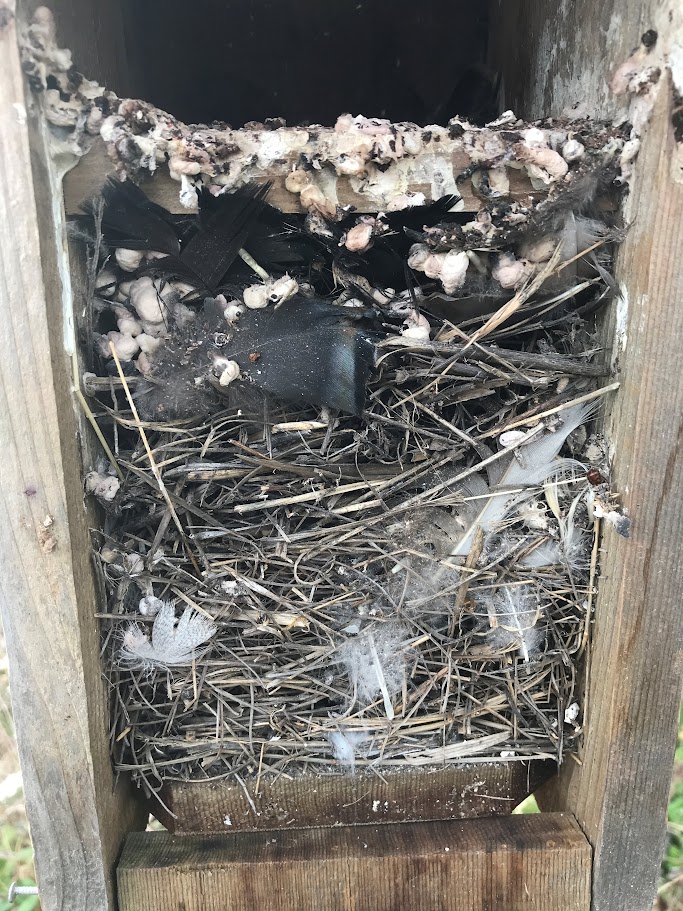
- Clean out boxes after nesting (once vacant) and again in late winter.
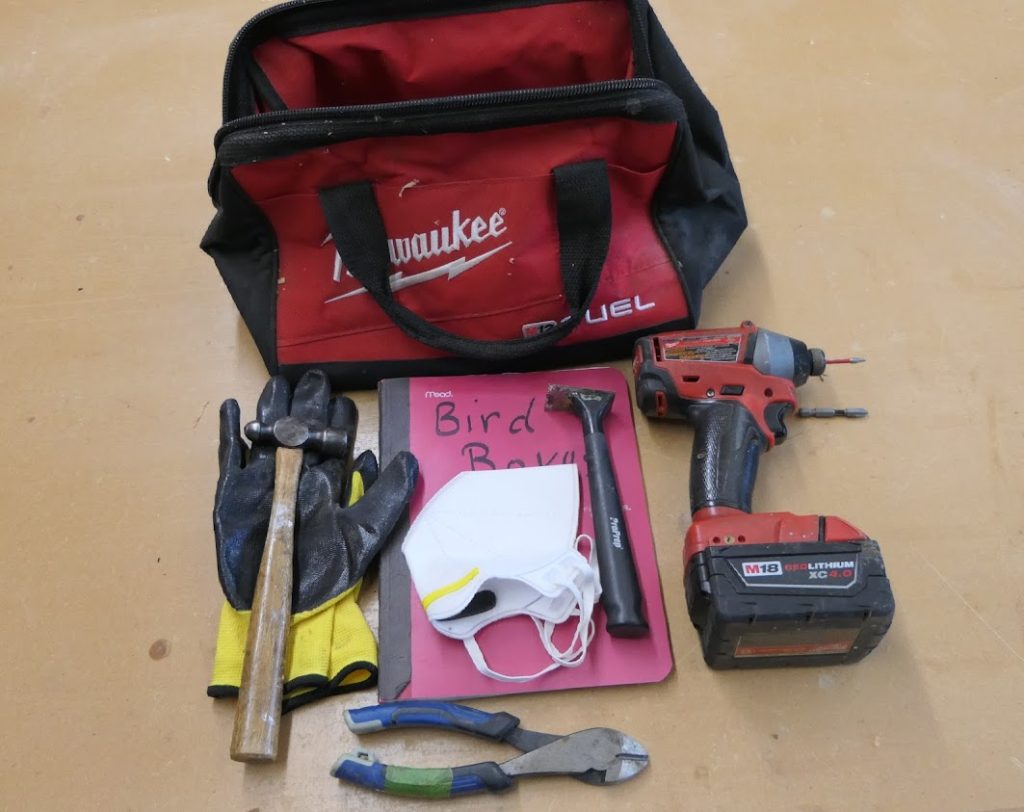
- Remove nests, droppings, and debris. Swallow nests can leave a lot of powdered droppings—wear gloves, goggles, and a mask.
- Leave boxes up for winter. Birds often use them for shelter.
- Expect surprises:
- We’ve had chipmunks take over.
- Swallows built on top of chickadee moss.
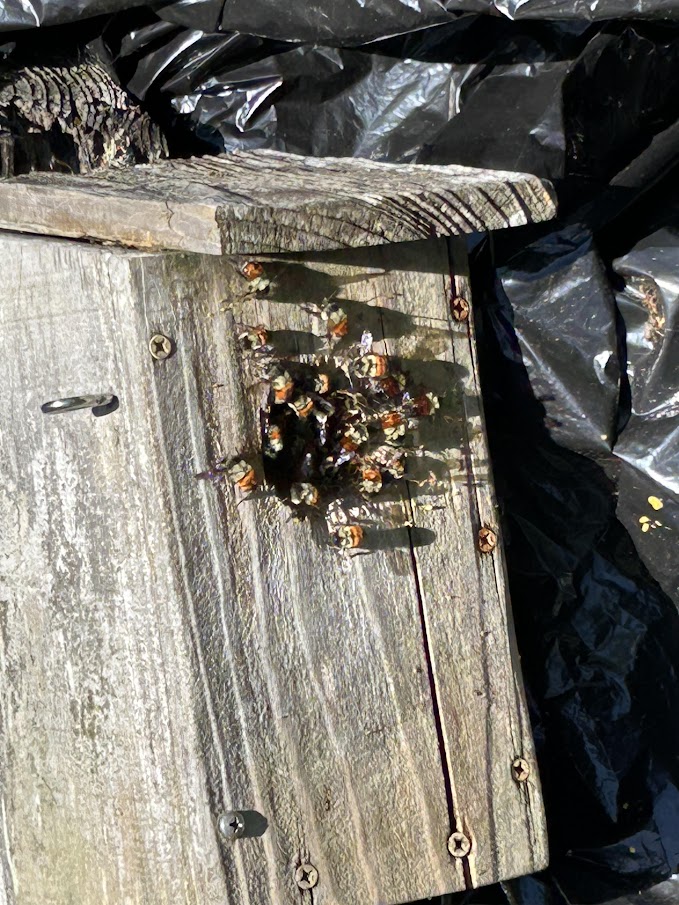
- Bumble bees moved into a cleaned box.
- Use the cleaning season to repair, replace, or relocate boxes as needed.
When Things Don’t Go as Planned
- No birds use your box? Be patient. Check your local habitat and bird presence. Some species, like kestrels, may only use boxes occasionally.
- House wrens move in? They’re protected. Do nothing. Move the box after the season if needed.
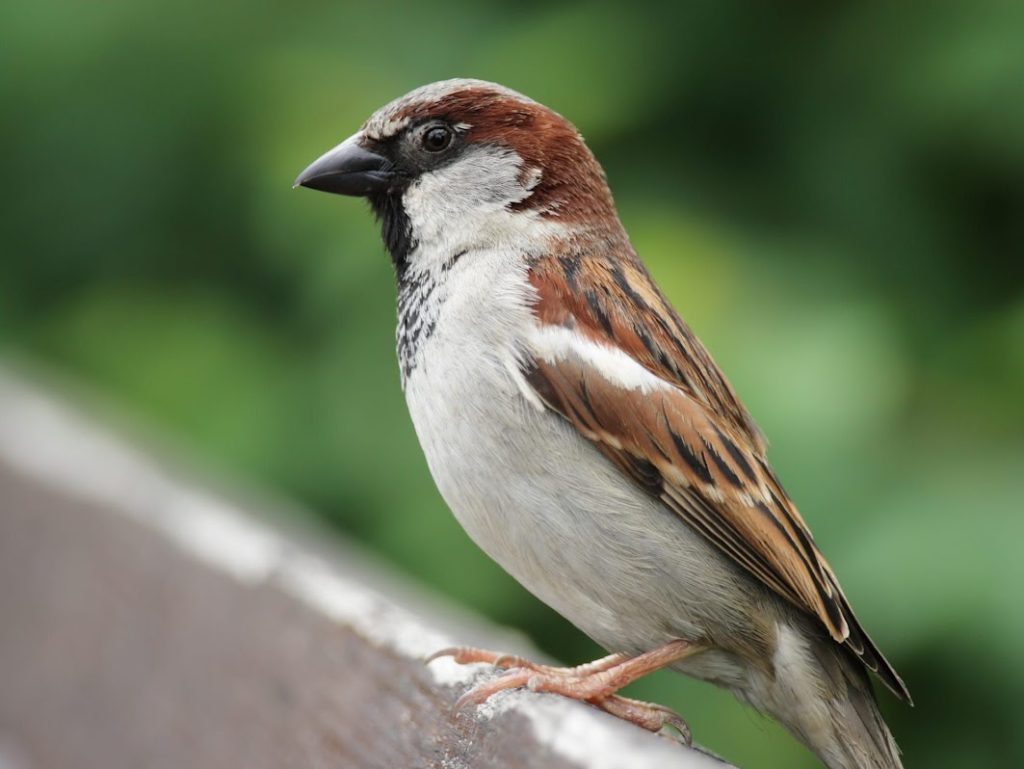
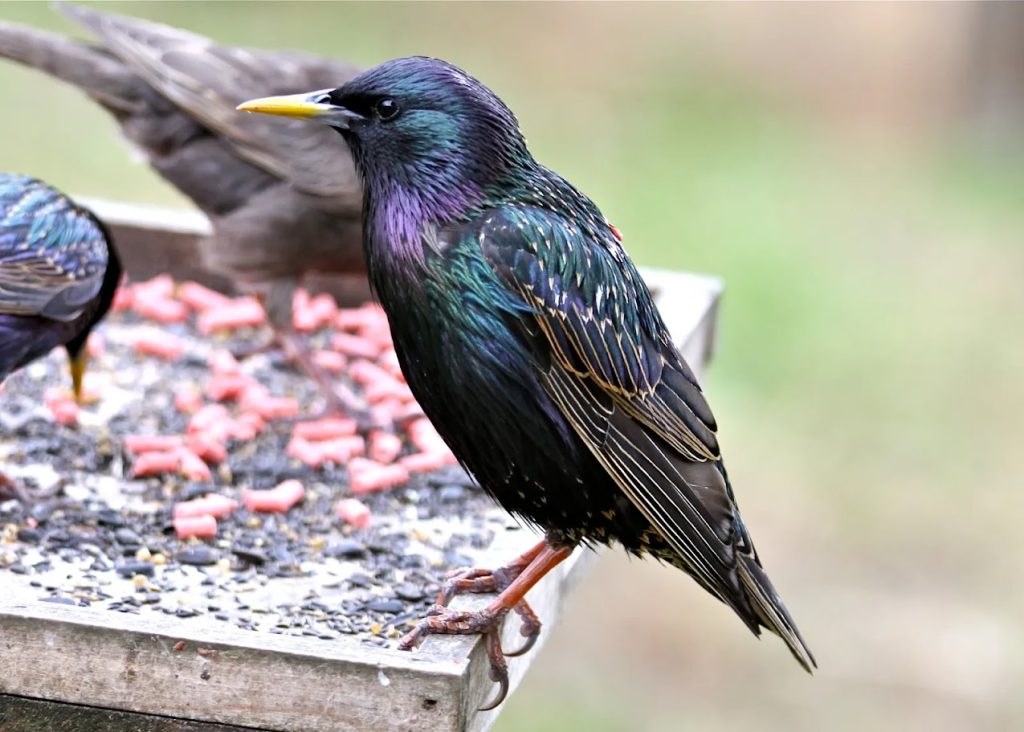
- House sparrows or starlings take over? These non-native birds are not protected. You may legally remove nests and eggs to protect native species.
- Learn more about: Managing House Sparrows and European Starlings – NestWatch
- Bumble bees take over? Congratulations, you’re helping native bees. Keep your distance. They’ll move on by late summer.
Final Thoughts
Watching birds use a nest box you’ve provided is one of the great joys of backyard nature. You’re giving wildlife a safe place to raise their young, and that’s something to be proud of.
So, hang your nest box, clean it each year, and enjoy the amazing birds that come to call it home.
Resources
For Nest Box Buyers:
- Wild Birds Unlimited is a commercial vendor of nestboxes and other bird supplies in downtown Salem. Call 503-363-9744
- The Salem Audubon Society has a wood shop where volunteers construct many kinds of nesting boxes.
- Email Laurie at laurie@salemaudubon.org to see what can be provided.
- Marion SWCD Spring Native Plant Sale
For Nest Box Builders:
Books:
- Audubon Nest Box Book. Cool Springs Press, 2021
- Landscaping for Wildlife in the Pacific Northwest. University of Washington Press, 1999
- Woodworking for Wildlife. MN Dept of Natural Resources, 2009