Two Paths to Creating Habitat: Margaret Hill and Karen Viste Sparkman Share Their Little Habitat Journeys
Margaret Hill
Margaret H. is a certified Little Habitat Project participant who reimagined her entire front yard as a native habitat haven. What began as a desire to move beyond turf grass became a year-long transformation into a landscape filled with native plants, pollinator habitat, and inspiration for her neighbors.
What inspired you to join the Little Habitat Project?
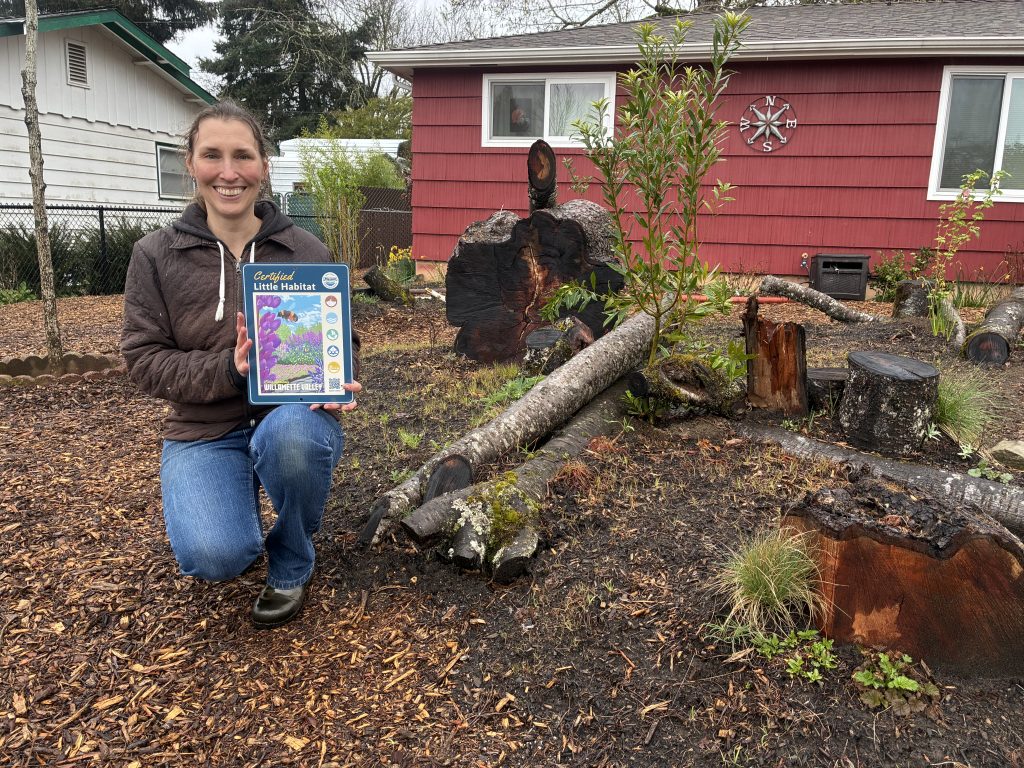
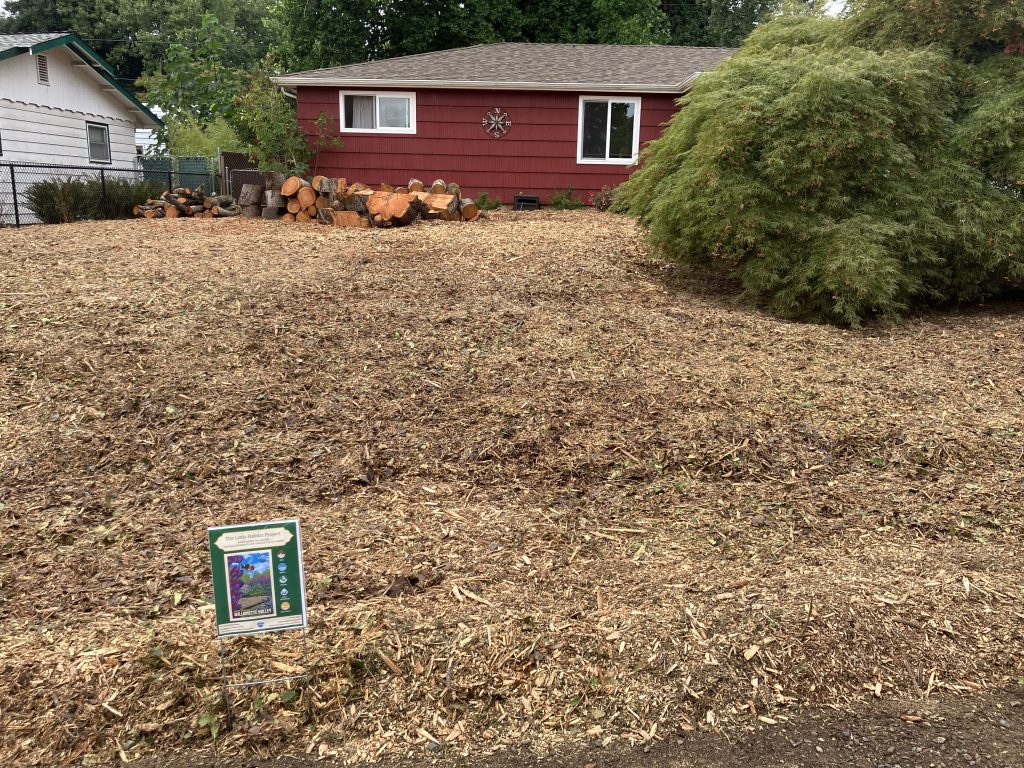
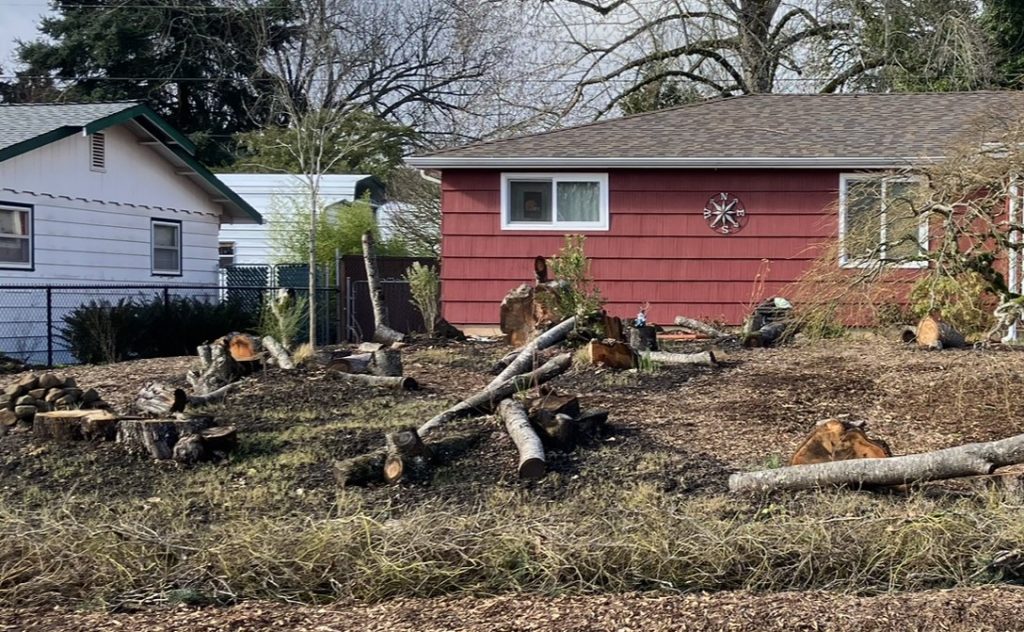
I had been wanting to landscape my front yard for several years, away from the turf grass (and moss and weeds!). At the time I was thinking primarily herbs and herb shrubs along with some drought tolerant species. Then two years ago at the Marion County Master Gardner annual plant sale, I heard about the Little Habitat Program and the need for native plants for pollinators. I immediately was intrigued. After doing a little more research, I reached out to Kassi. She came for a site visit and we talked possibilities. After that meeting, I knew I wanted to make a Little Habitat out of my front yard. I started in August 2025 and got the majority up and running at the end of October 2025. It’s early in its first summer right now (2026).
What changes or impacts have you seen in your space since starting?
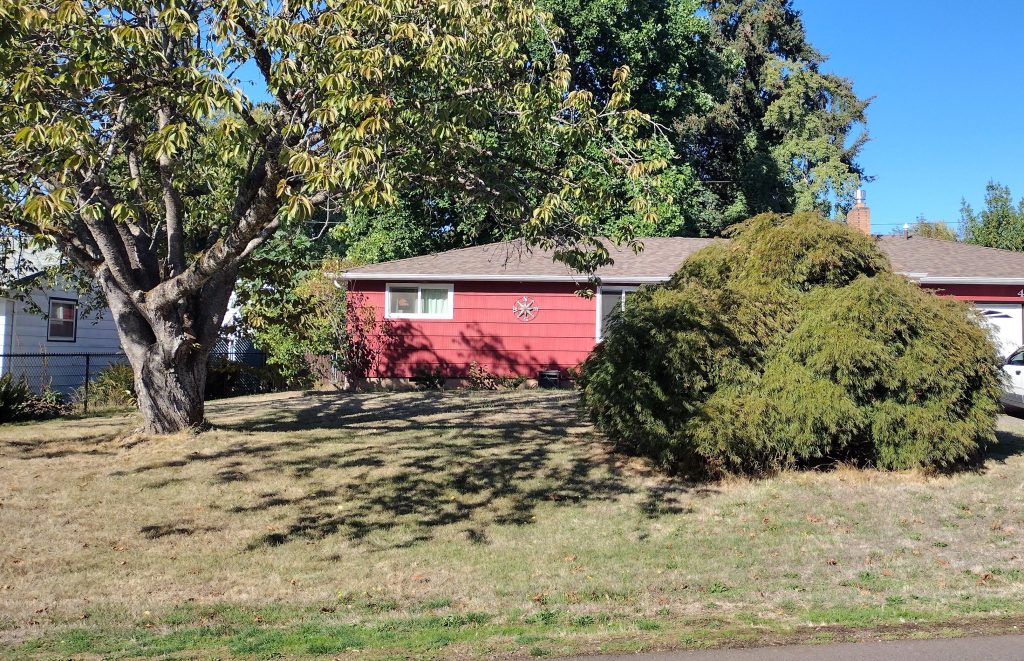
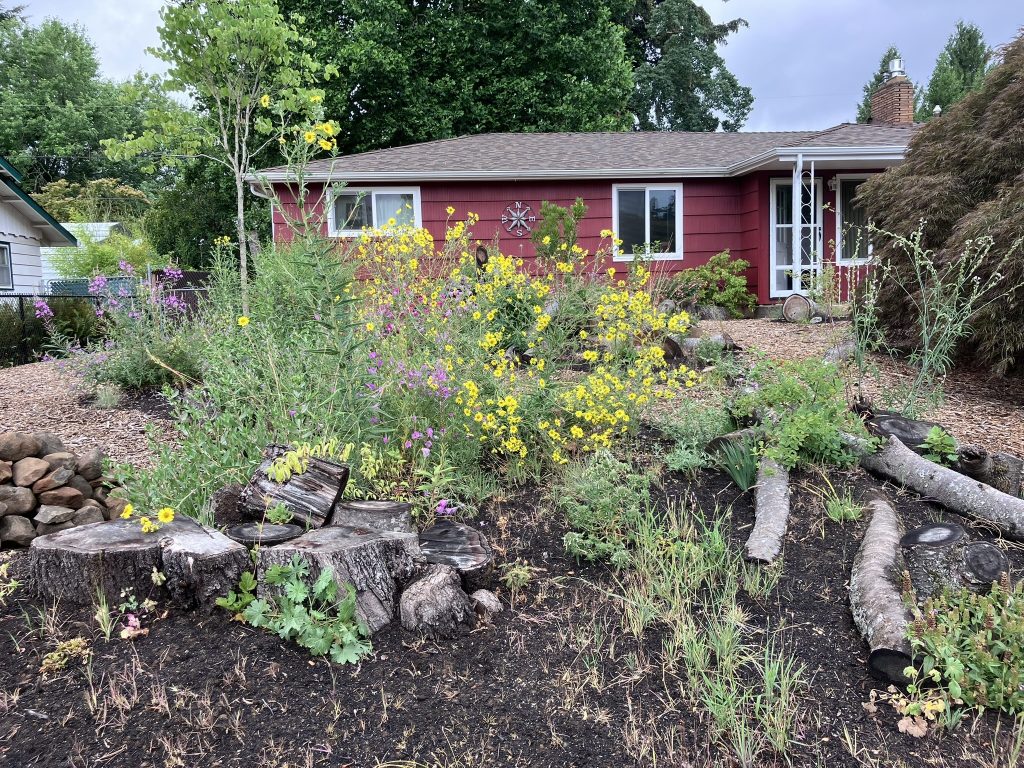
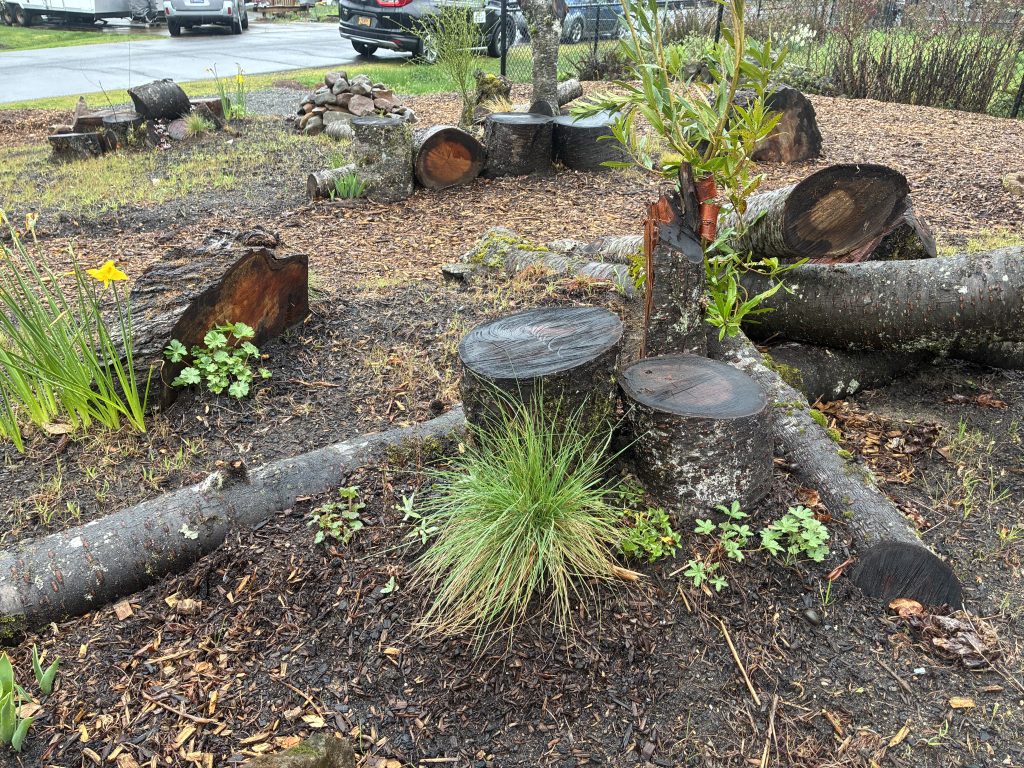
My front yard has been completely transformed (I went all in). What once was a turf grass lawn full of weeds and moss is now multiple islands of native plants and pollinator habitat with paths between them. I’ve noticed an increase in native pollinators among the flowers; caterpillars and leaf-cutter bees on the checkermallows/checkerblooms; ants (lots of ants) and dragonflies; Birds are frequenting the bird bath (when the crows aren’t dominating it). Lots of neighbors are curious and encouraging. As I went about the process, many of them stopped and asked questions while I worked. They still do.
What did you learn while creating your Little Habitat?
I’ve learned SO. MUCH.
I’m still learning.
- *I learned what I would do the same and what I would do differently if I were to do it again, and it’s still in its first year (planted October 2025).
- *Using the summer drought to dry out the lawn was probably the ideal time for me to do this.
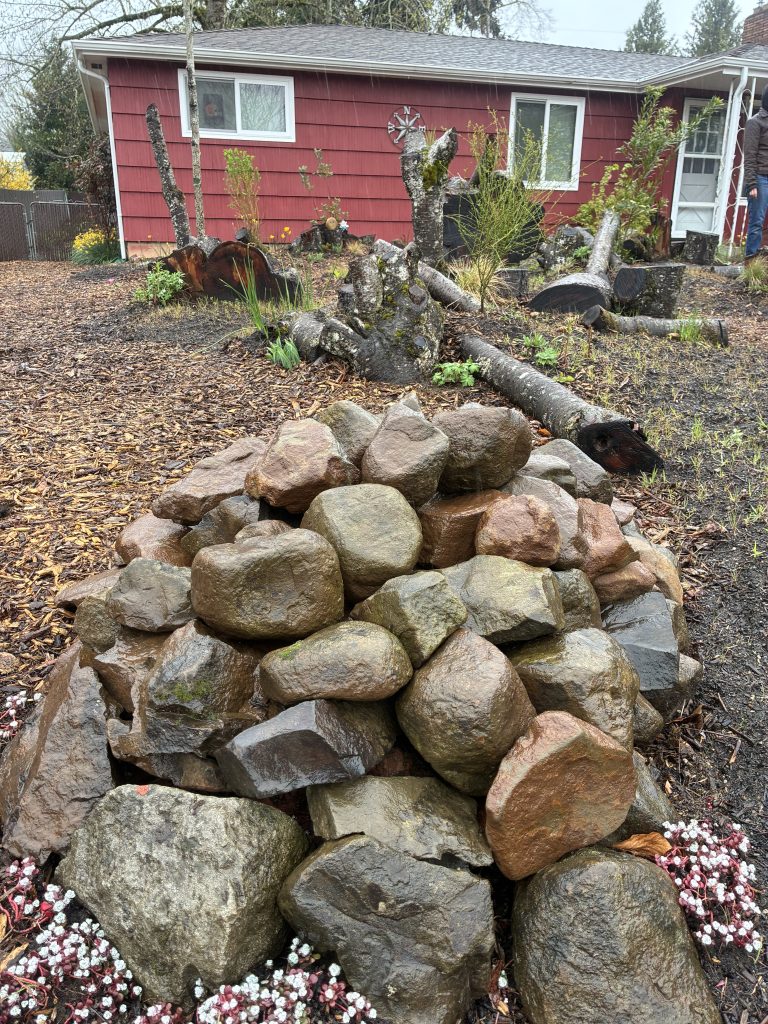
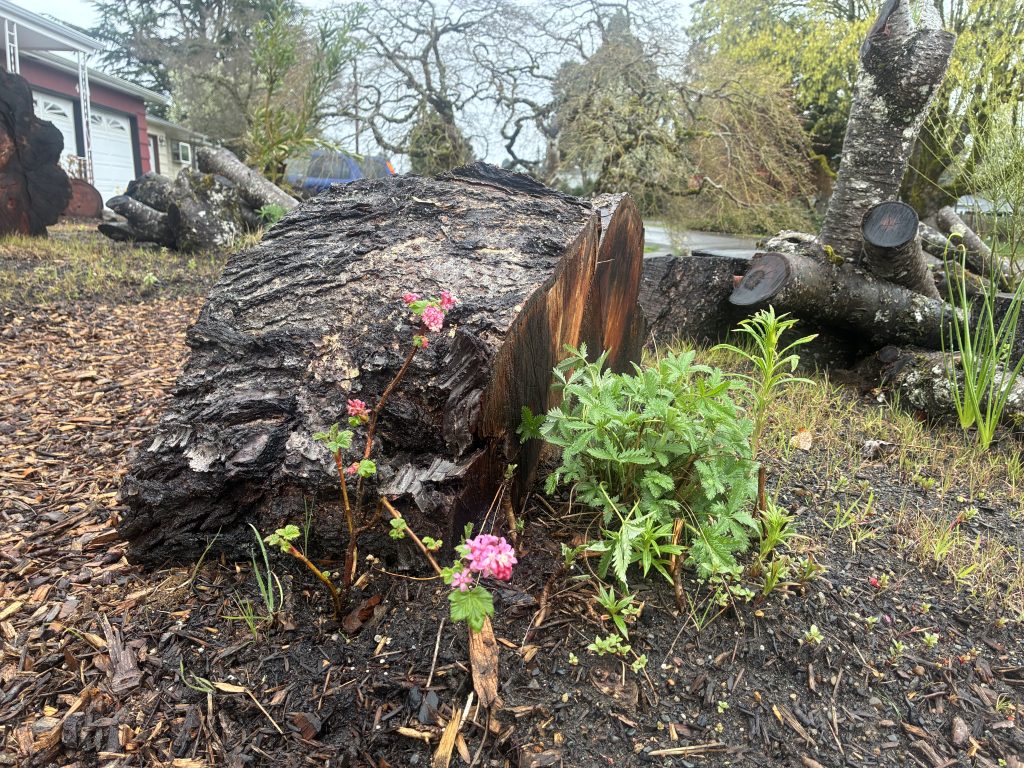
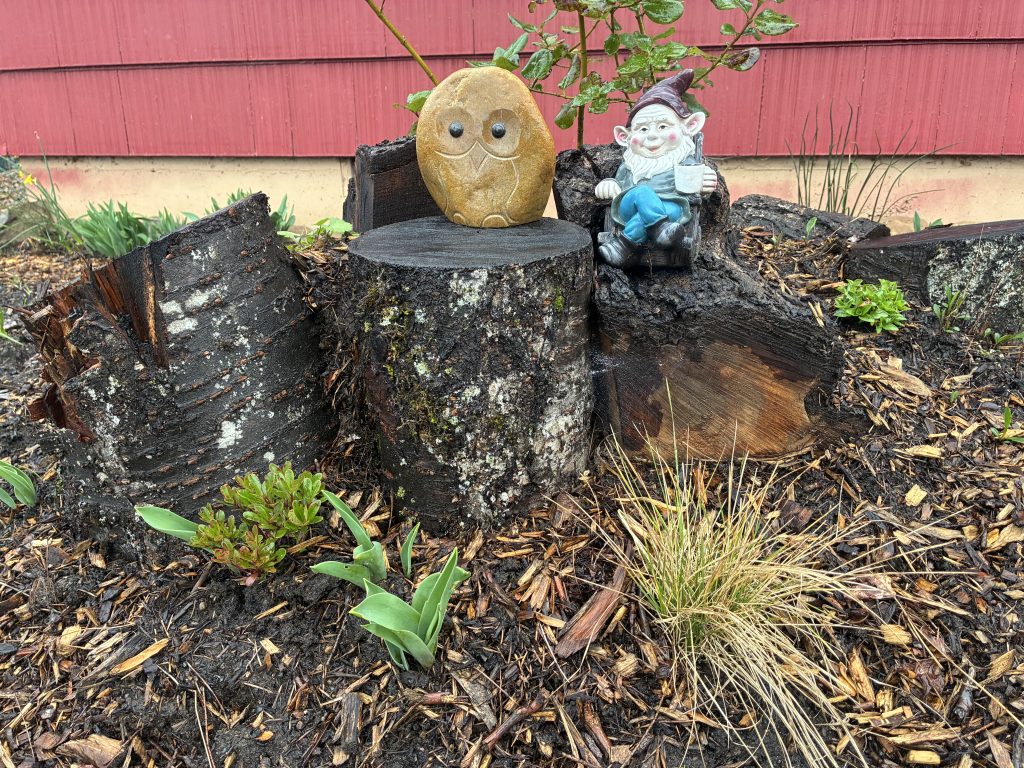
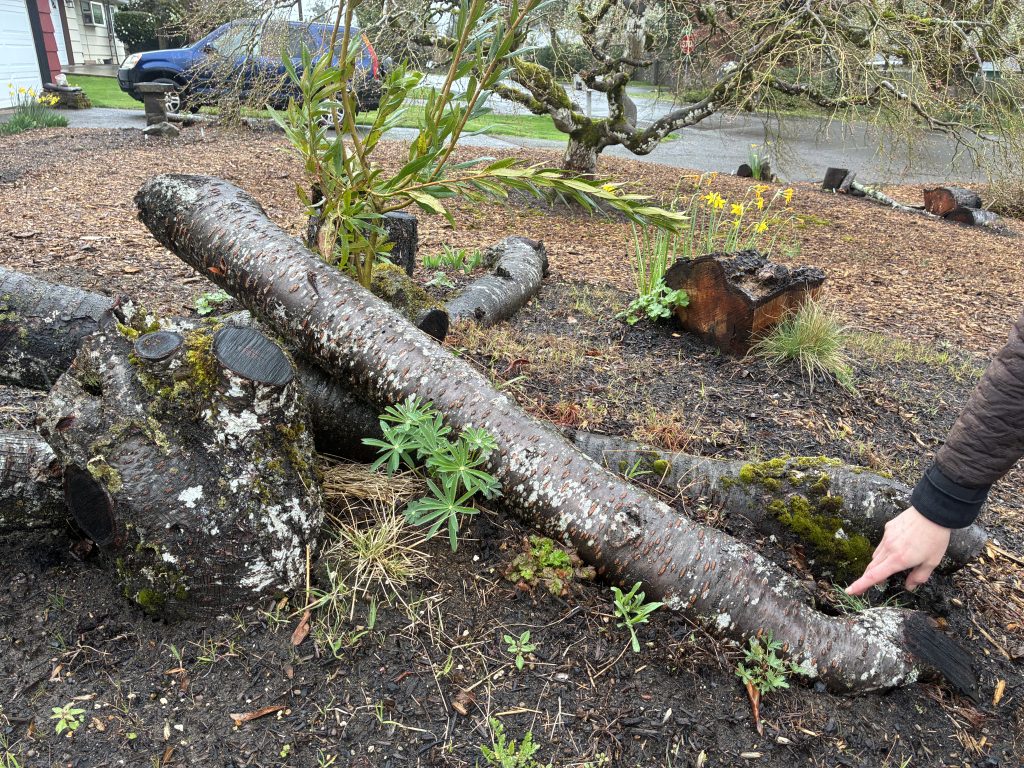
- *Logs create excellent hardscaping that adds layers/texture to the design as well as habitat features for critters; rock piles too.
- *I’ve learned how to identify a couple dozen native plants I didn’t know before, as well as a few native bunchgrasses (which has been way harder).
- *I’ve learned this project requires consistent observation/maintenance in the first year (at least).
- *I’ve learned I can do more than I thought I could to make a difference.
What advice would you give to someone just getting started?
- Pay attention to plant growth heights, widths and habits, and determine your plantings relative to your space accordingly. Are the plants happy seeders? Do they spread aggressively? The Meadowscaping Handbook by West Multnomah SWCD is very helpful and inspirational. It’s free online.
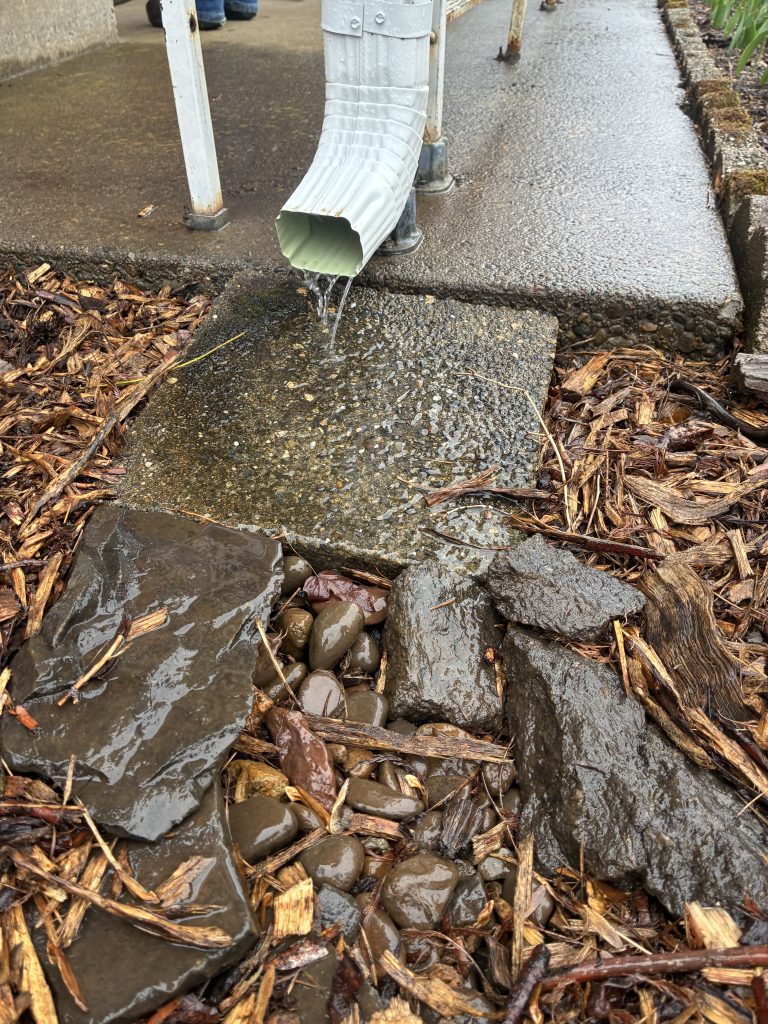
- *You can save money if you look for free items online. The rocks for my piles came free from Marketplace.
- *See if you have family, friends or neighbors who have native plants who can share seeds or starts.
- *You can get arborist chips and logs through Chip Drop.
- *If you’re using arborist chips to smother, be sure you make the layer thick enough to really suppress the weeds. It’ll look huge at first, but it’ll all break down to 2-3 inches over the next few years.
- *Using a layer of burlap underneath the arborist chips helps suppress the weeds for that first year and biodegrades within a couple years.
- If you get a seed mix, be aware that some Plant ID apps do not identify grasses well. It can add a layer of anxiety/stress if you get an ID back of an invasive, when it’s just a bad identification. If you want grasses, consider using a single-grass source or plugs so you can immediately know what’s seeded where.
- Whether you go big or small, it’s going to take some ongoing maintenance, especially early on. Even if you go all in like I did and do the entire front yard, neighbors still have weeds that will make their way in to your habitat.
Did you have any background in conservation, restoration, or native plants before joining?
Not specifically. I have a minor in plant biology and an undergrad certificate in environmental studies, and I am a Marion County Master Gardener (MCMGA). I spent the first 15+ years as a master gardener working with herbs; in the past two years (since learning about this program) I’ve been learning more about natives primarily through MCMGA volunteering and OSU Extension articles and webinars.
What resources have helped you along the way?
- The Little Habitat resources and site visit from Kassi at the Marion County SWCD
- “The Meadowscaping Handbook,” by West Multnomah SWCD;
- Blog post and site visit by Urban Rewilding Project of Portland
Karen Viste-Sparkman
Karen V.S. is a certified Little Habitat Project participant and wildlife biologist who has spent her career restoring and studying natural habitats. Through the Little Habitat Project, she has brought that knowledge home—creating a wildlife-friendly yard while continuing to learn from the plants and species that call it home.
What inspired you to join the Little Habitat Project?
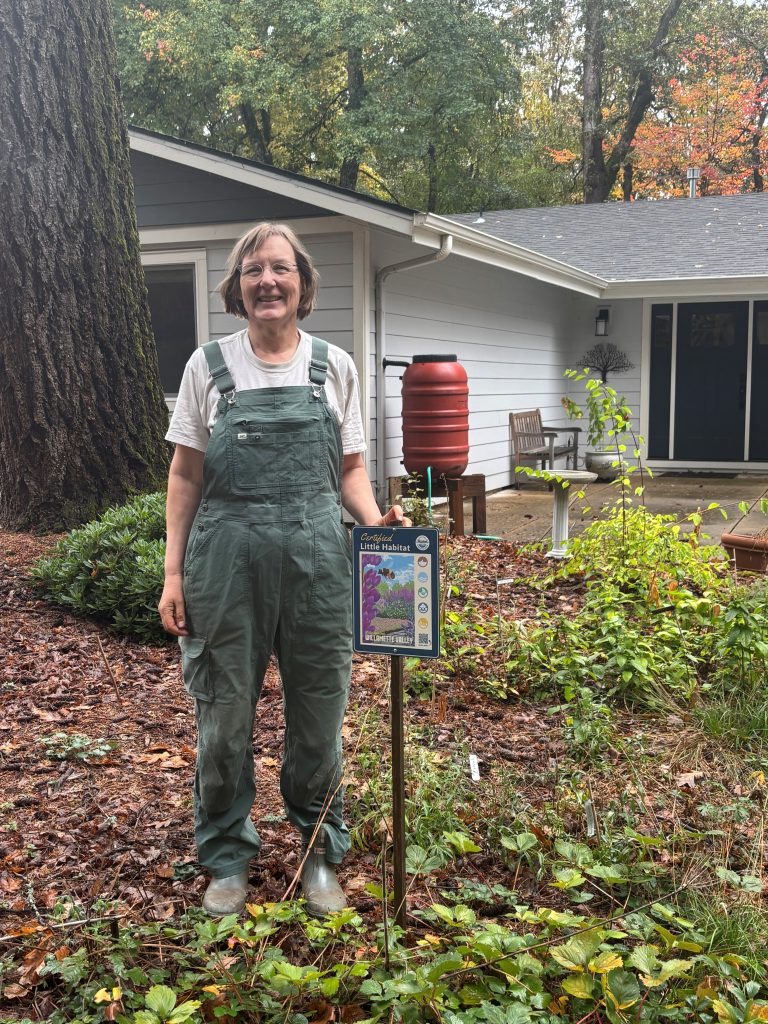
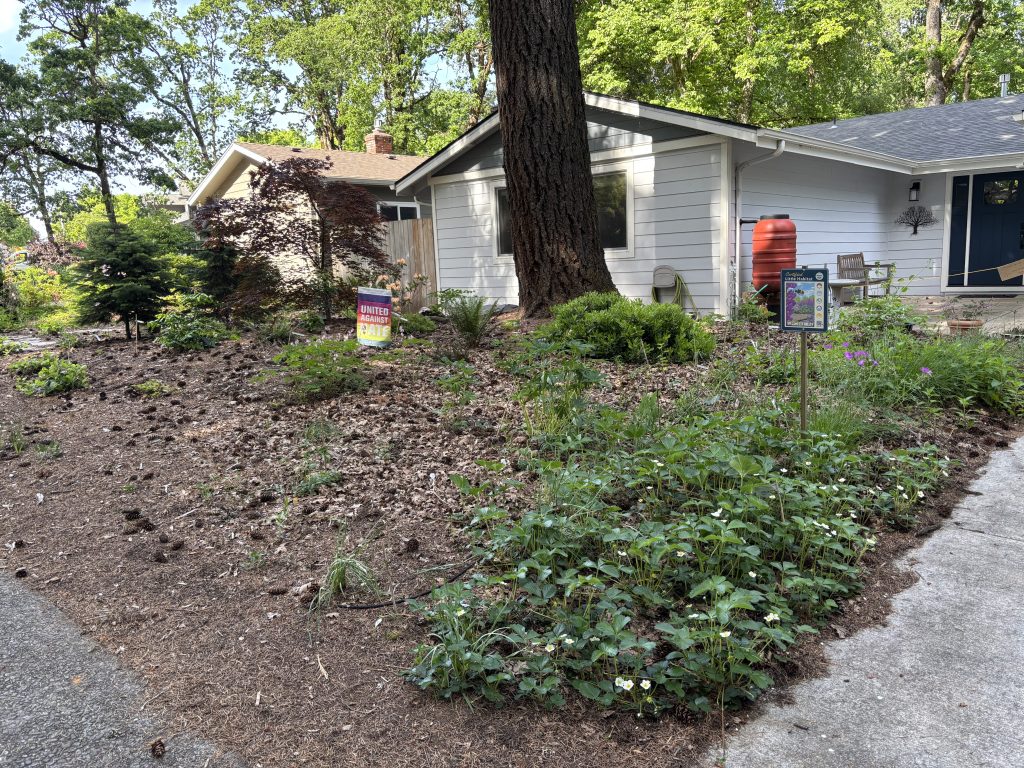
I had just moved into our new home and also recently retired, and I wanted to work on making our yard more hospitable to wildlife. The previous owners had recently redone the landscaping, so there was lots of space that wasn’t filled in and was heavily mulched. There were few flowering plants other than rhododendrons, mostly just shrubs, ferns, and bamboo. I immediately ordered native plants from Marion SWCD during the fall plant sale, and when I heard about the program I wanted to learn more.
What changes or impacts have you seen in your space since starting?
My first year I saw very few insects. I’m definitely noticing more bees and butterflies now that I have nectar and pollen sources for them! I’m also happy to see more birds using the yard. Another thing that I really didn’t expect was how many of our neighbors are interested in what I’m doing. We live just down the street from a park, and there is lots of foot traffic past our house. Whenever I work in the front yard I get lots of positive comments and questions from people passing by. I have shared plants and information with people, and have met lots of my neighbors because of our yard.
What did you learn while creating your Little Habitat?
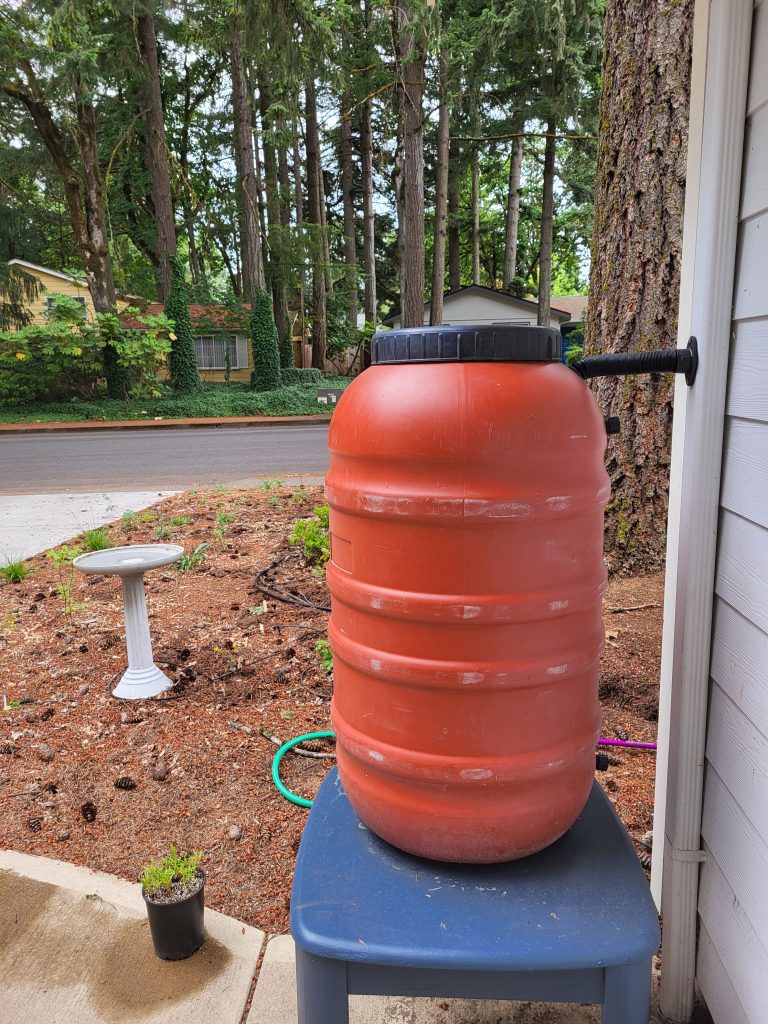
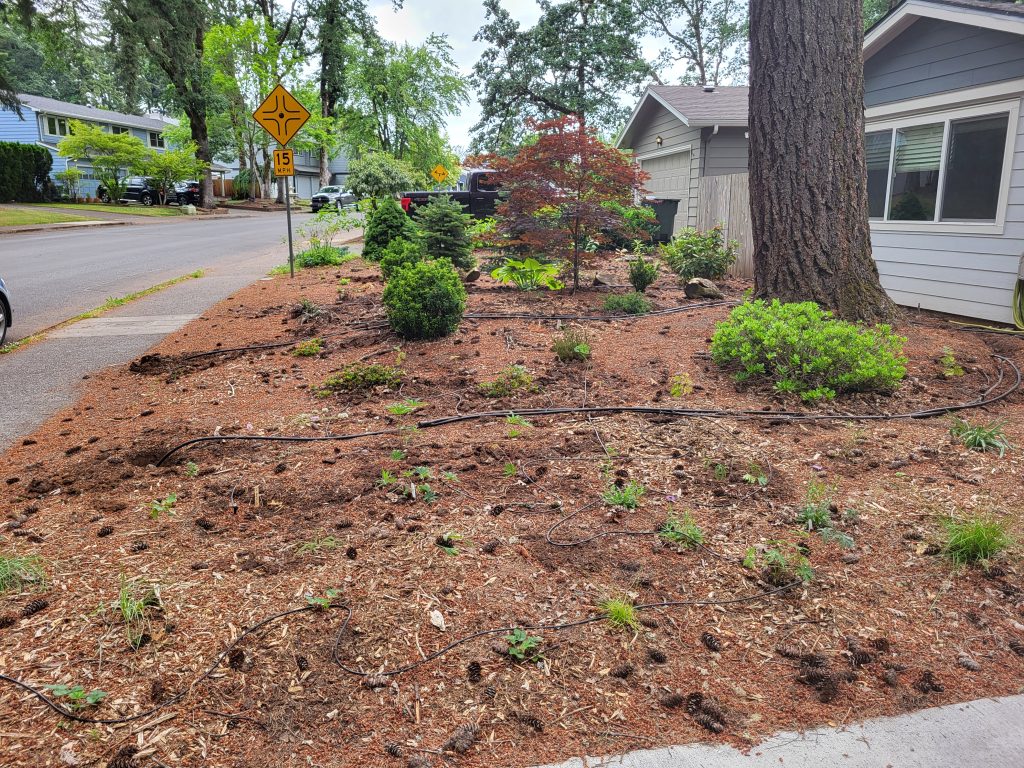
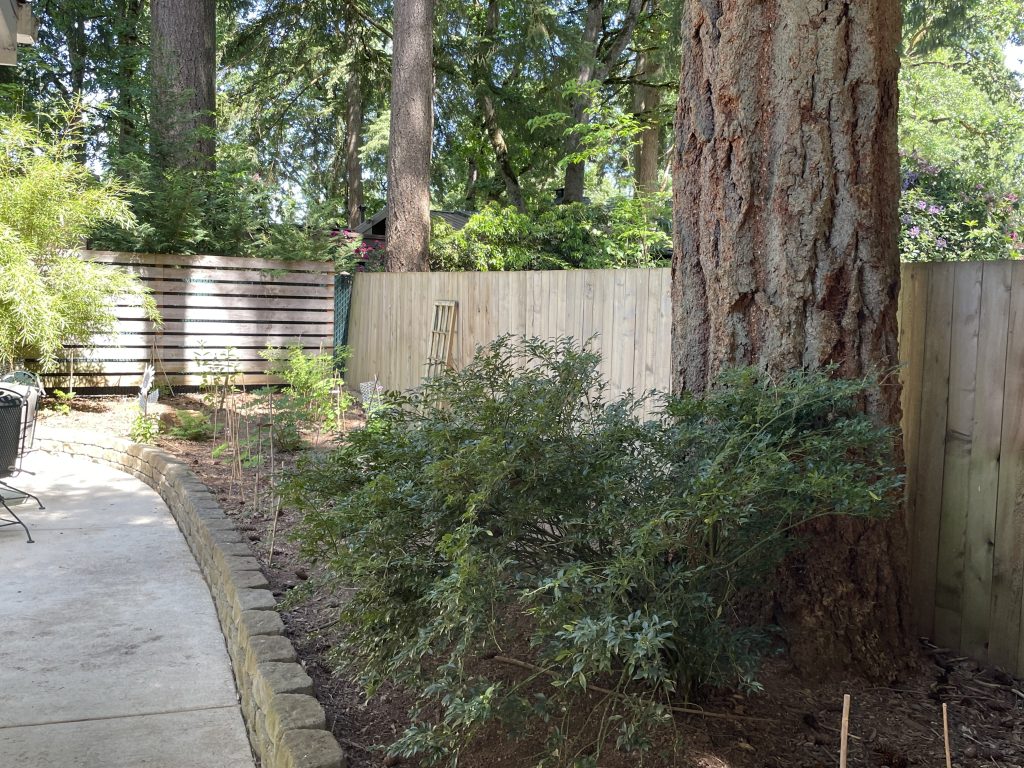
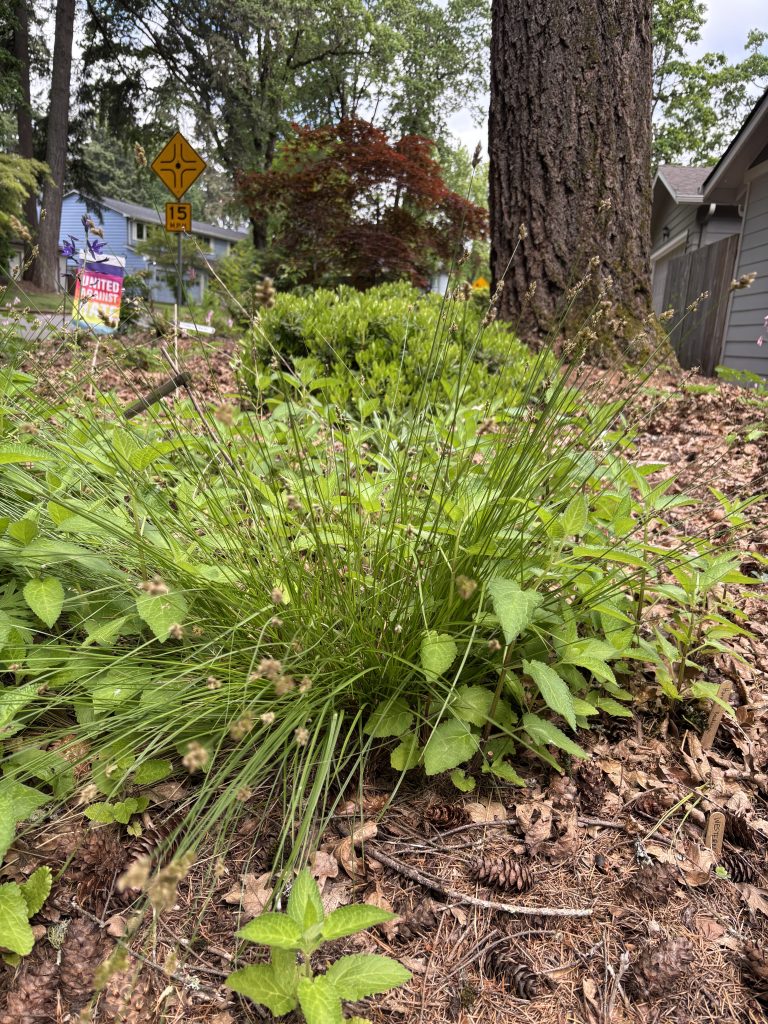
I am still learning! I already wanted to plant native plants, but the Little Habitat Project helped me think about timing of blooms, flower colors, and different resources that native plants could survive. My yard is mostly shady, so I keep trying out plants to see which ones will make it in our conditions. Of course I am also paying a lot of attention to when each area gets sun and for how long. Although I have a small yard, the soils are quite different in different areas. A raised bed area has the richest soil, an area around the patio has lots of gravel, and the front yard under a Douglas fir tree has a few inches of decayed wood mulch over clay soil. There is a lot of trial and error in my gardening. I’ve been getting native plant seeds and growing them in containers, which is much easier than I expected. Just plant outside in the fall. But I do have better luck planting in some sort of planter than directly in the ground, where I think they get eaten or don’t have soil that is as easy to grow in.
What advice would you give to someone just getting started?
Ask for help and for plants. I got plants from friends to get started, and am happy to share plants with others. There is so much information on the internet, books, videos, and other resources. Pay attention to the sun and the soil. I also learn a lot by going out in nature and seeing where plants grow in the wild to get an idea of what conditions they like and what plants are associated with each other.
Did you have a background in conservation, restoration, or native plants before joining?
Yes, I retired from a job as a wildlife biologist doing ecological restoration in the Midwest. Before I moved to Iowa for that job, I was involved in restoration work in the Willamette Valley, mostly with prairie plants. I did native plant surveys as part of my work in restoration as well as habitat work for bird surveys.
What resources helped you along the way?
- The Marion SWCD plant database is great!
- Also, the OregonFlora website, especially the Gardening with Natives section
- Selecting Plants for Pollinators at pollinator.org
- The Xerces Society for invertebrate conservation
- Less Lawn, More Life
- OSU extension
- Oregon Bee Atlas Melittoflora page
- And of course the Salem/Keizer Native Plant Gardening Facebook group has been a great way to share information with others in our community and find out about local events.
- The book Real Gardens Grow Natives by Eileen M. Stark is full of information tailored to PNW gardens.
- Doug Tallamy’s books and videos are very informative and helped me think in a different way about native plants.
About the Author
Please feel free to reach out with any questions or collaboration opportunities related to environmental education. I’m also happy to support you in creating wildlife habitat through the Little Habitat Project.