Old Man’s Beard
Clematis vitalba
Plant Description
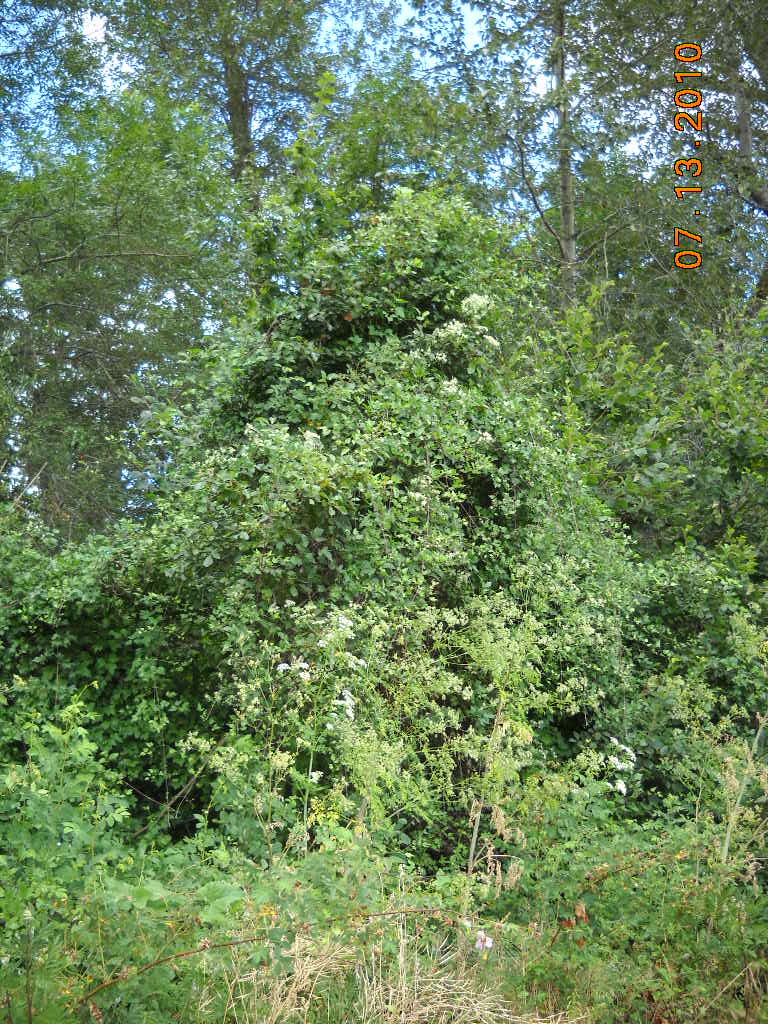
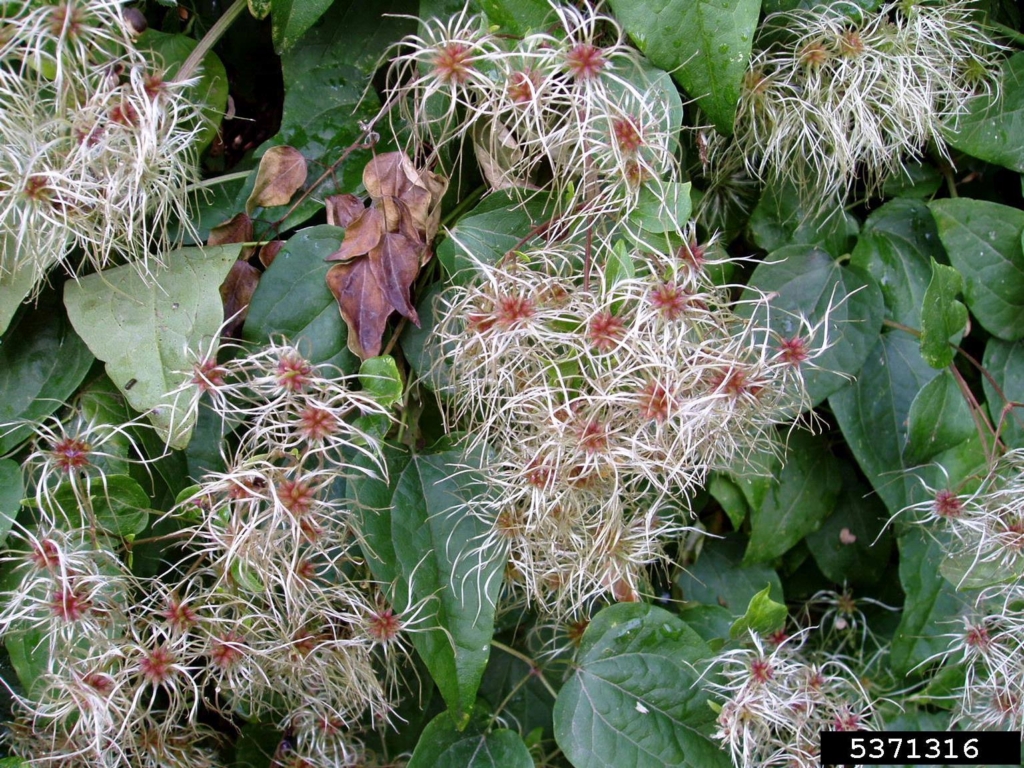
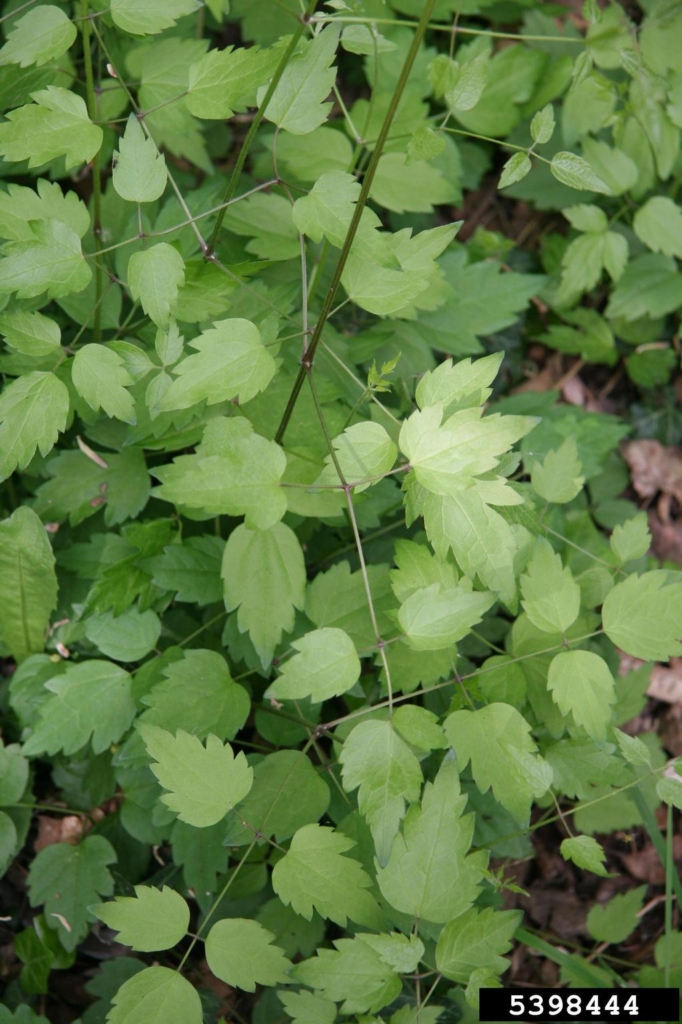
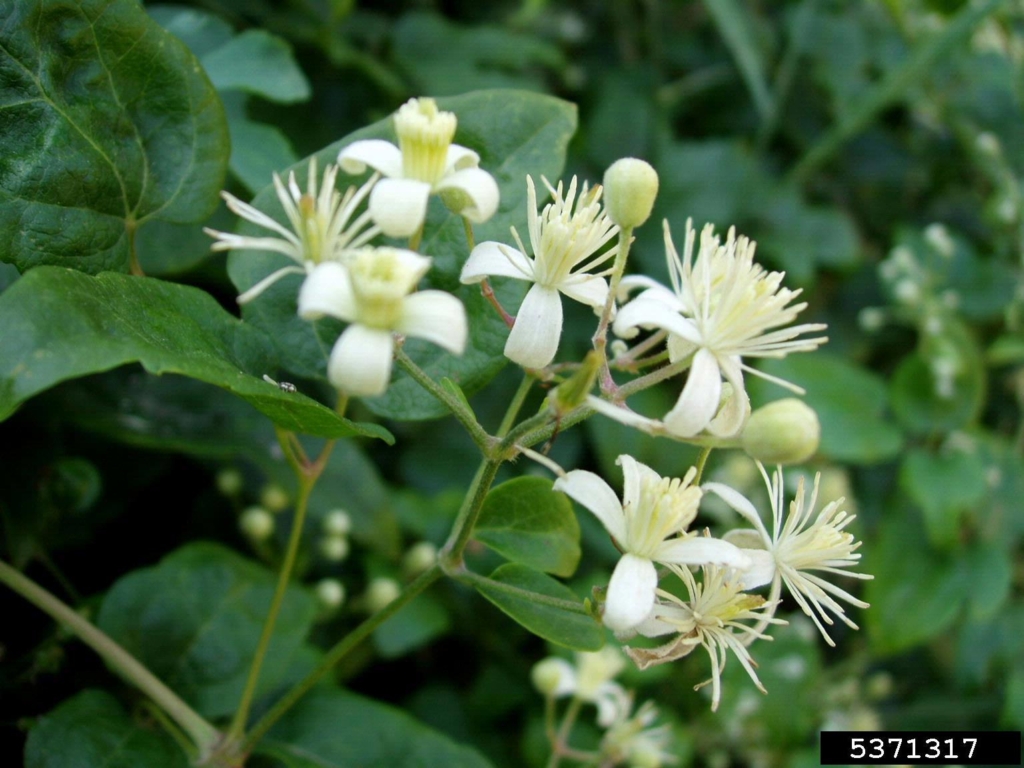
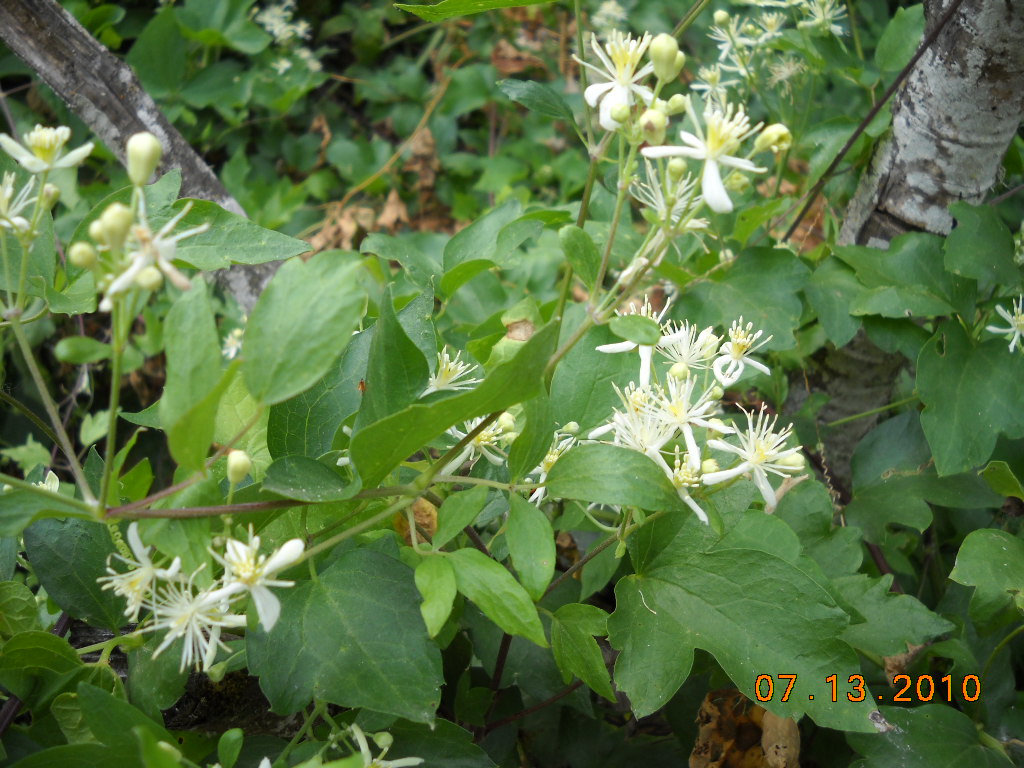
Old man’s beard is an invasive, woody climbing vine that can quickly overtake trees, shrubs, and other vegetation. It is identified by its opposite, compound leaves with usually five toothed leaflets, small creamy-white flowers in late summer, and distinctive clusters of feathery seed heads that persist into winter. While it is related to the ornamental clematis varieties grown in yards and gardens, the flowers are much less showy and the vines are much more aggressive. Native to Europe, it grows in forests, riparian areas, roadsides, disturbed sites, and forest edges, particularly in moist, sunny to partially shaded locations.
Plant Details
| Life Forms | |
|---|---|
| ODA Listing | |
| Soil and Moisture Conditions | |
| Suggested Actions | |
| Shade Preference | |
| Mature Height | 60-90'+ |
| Distribution | Old man's beard is especially widespread in the northern Willamette Valley, and is spreading south into the central and southern valley and coastal counties. It is also spreading eastward along the Columbia River into the Columbia Gorge. |
| Control | Control is most effective when plants are young and before they produce seed. Seedlings can be hand-pulled when the soil is moist, ensuring the roots are removed. Larger vines should be cut near the ground, with rooted stems and stumps treated using an appropriate herbicide according to the label, or carefully excavated to prevent resprouting. Vines growing in trees should be left to die in place rather than pulled down, which can damage branches. Follow-up monitoring and repeated treatment are essential because established plants can resprout and seeds can continue germinating for several years. |
| Disposal Methods | Vines growing in trees: Cut the vines near ground level and leave the upper portions hanging in the trees to dry and decompose naturally. Pulling them down can damage branches and surrounding vegetation. Cut vines without roots or seeds: These can generally be left on-site to dry and decompose, provided they are kept off moist soil and cannot reroot. Avoid leaving stems in contact with wet ground. Rooted stems and crowns: Bag and dispose of these in the landfill or municipal compost to prevent resprouting. Do not leave them on moist soil or add them to backyard compost. Vines with flowers or seed heads: Carefully bag and dispose of them in the landfill or in municipal compost to prevent seed dispersal. Avoid transporting uncovered material, particularly when the feathery seeds are mature. |
| Reproduction and Spread | Old man's beard can spread from seeds or pieces of stem that will reroot in moist soil. |
| Introduced | Old man's beard is native to Europe, northern Africa, and parts of western Asia. It was introduced as an ornamental to Portland between 1950 and 1970. |
| Look Alikes | The native Western white clematis (C. ligusticifolia) and old man's beard look very similar. Western white clematis is less aggressive, less common in the Willamette Valley, and has separate male and female plants, while old man's beard has both pistils and stamens on the same flowers. |
| Impact | In the Willamette Valley, invasive old man's beard (Clematis vitalba) threatens native plant communities, particularly in riparian forests, woodland edges, and disturbed areas. This fast-growing vine climbs into trees and shrubs, forming dense mats that block sunlight, weigh down branches, and can eventually smother native vegetation. It also spreads across the ground, suppressing native seedlings and reducing plant diversity. By displacing native plants, old man's beard degrades wildlife habitat and can interfere with the natural regeneration of forests. Its abundant wind-dispersed seeds allow it to spread rapidly into nearby natural areas, making established infestations difficult to control. |
| More Info |