Parrotfeather
Myriophyllum aquaticum
Plant Description
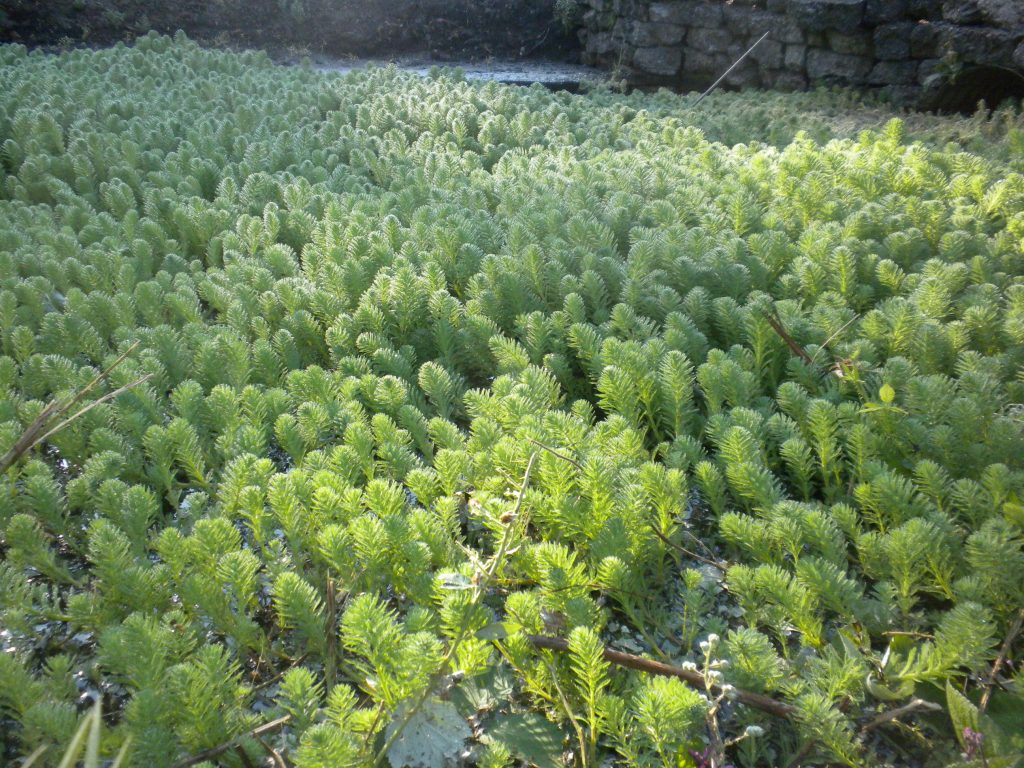
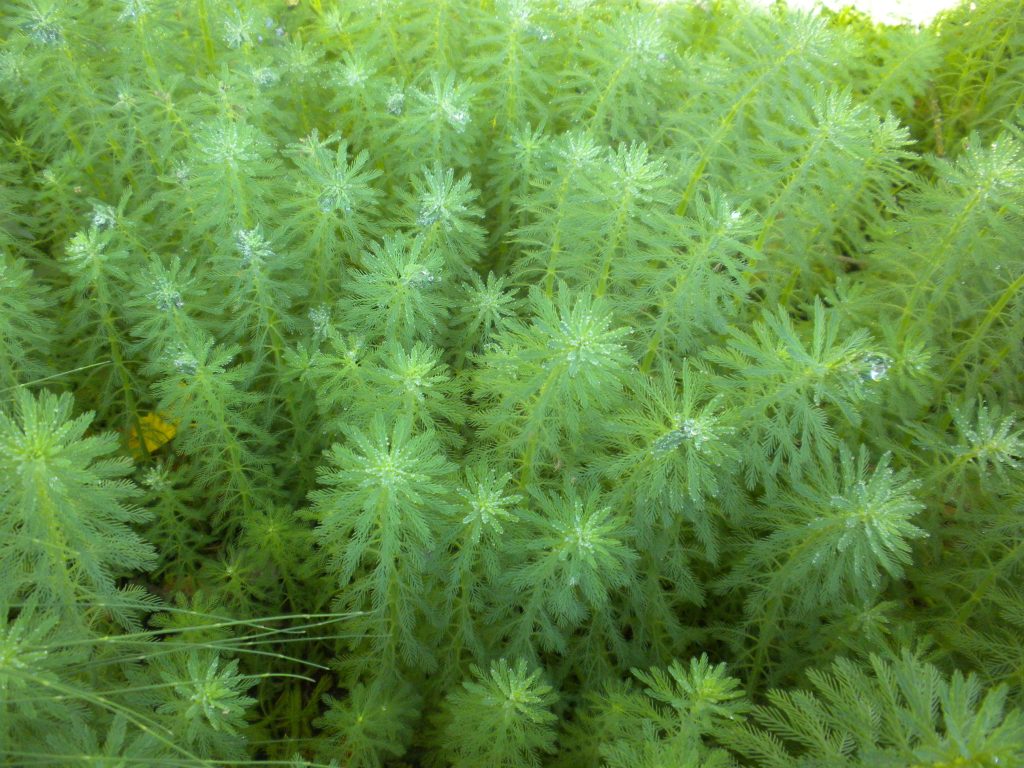
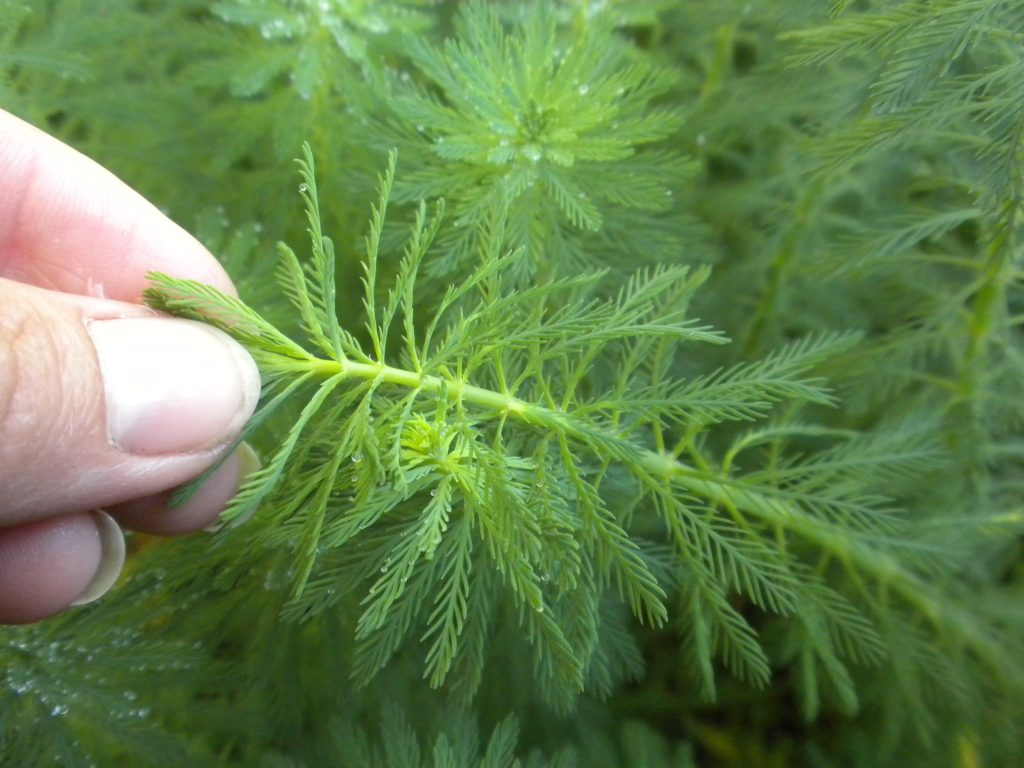
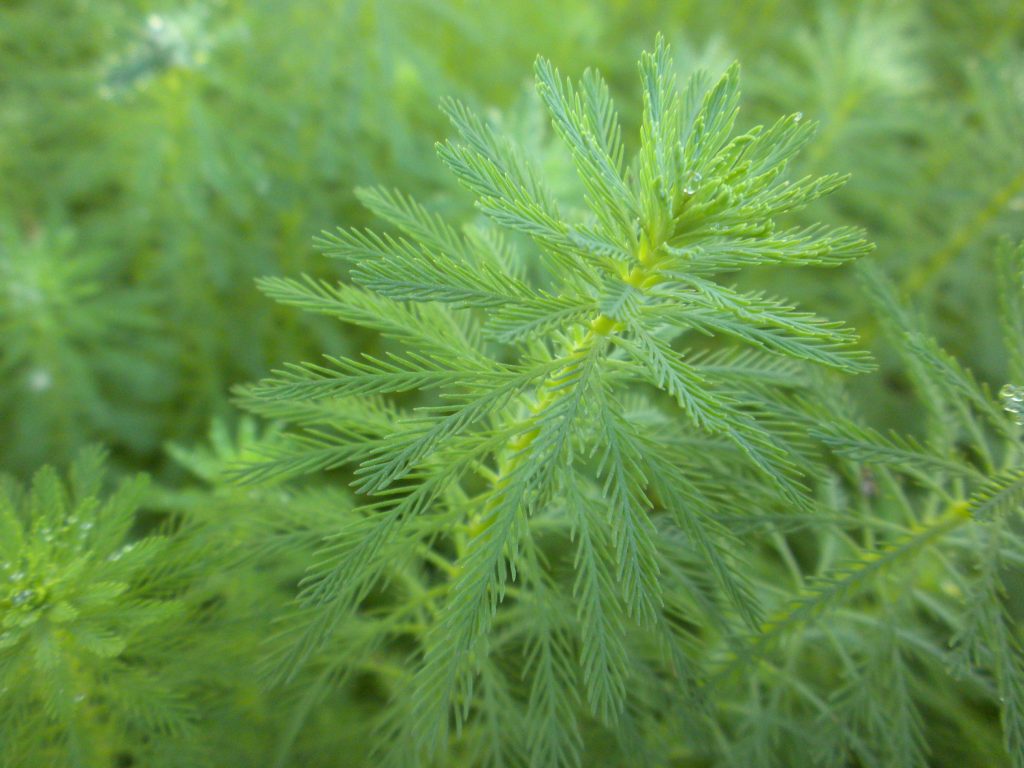
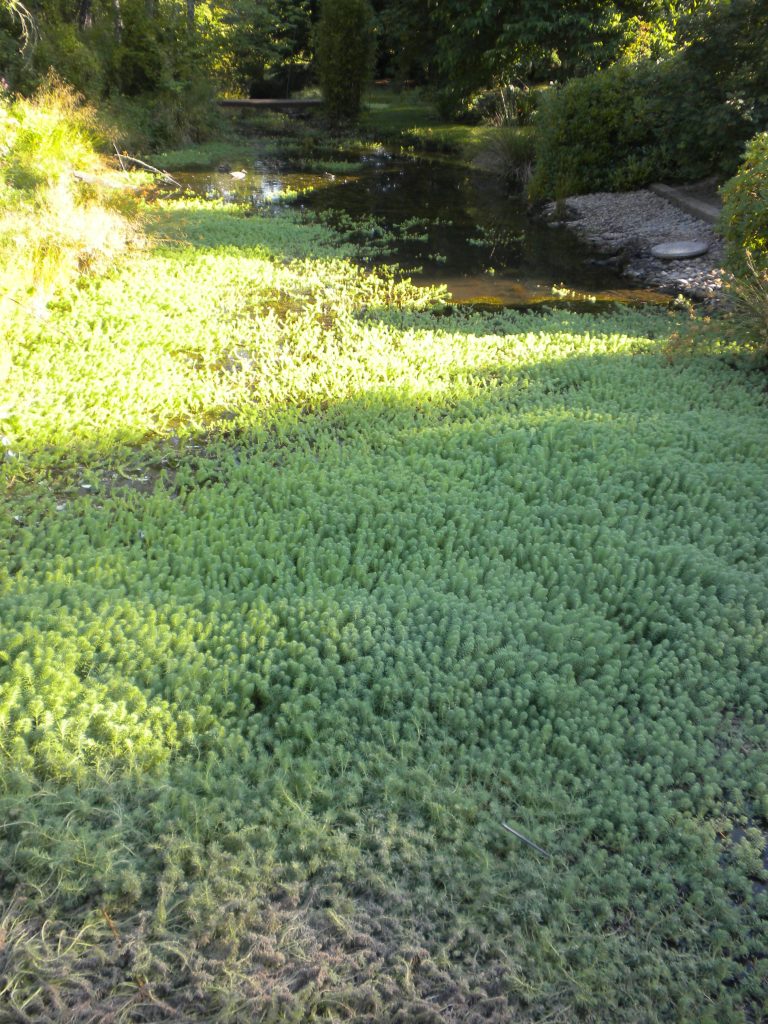
Parrotfeather is an invasive aquatic perennial native to South America that grows in ponds, ditches, canals, and slow-moving waterways. It forms dense mats of feathery blue-green foliage, with stiff emergent stems rising above the water’s surface. Parrotfeather spreads primarily through stem and rhizome fragments, allowing even small pieces to establish new colonies. Dense infestations can crowd out native aquatic vegetation, impede water flow and recreation, alter water quality, and reduce habitat value for fish and wildlife, making early detection and control especially important.
Plant Details
| Life Forms | |
|---|---|
| Habitats | |
| Soil and Moisture Conditions | |
| Suggested Actions | |
| Mature Height | up to 16 feet long |
| Distribution | Found in waterways throughout western Oregon and Washington and in at least 24 other US states. |
| Control | While difficult to eradicate, parrotfeather can be pulled or raked, being careful to completely remove all fragments. Herbicide can only be applied by a licensed aquatic herbicide applicator. |
| Disposal Methods | Be sure to remove all fragments. |
| Reproduction and Spread | Spreads by fragmentation. |
| Introduced | Native to South America, Parrotfeather was introduced to the US around 1890 through the aquatic garden and aquarium trade. |
| Look Alikes | Other milfoils look similar underwater, but only parrotfeather has the distinct feathery, emergent bottle brush whorls. |
| Impact | Clogs waterways, ponds, and ditches. Eliminates native plants, aquatic habitat, and recreation. Reduces agricultural profitability. |
| More Info |
|