In late winter and early spring—when landscapes are still waking up—red-flowering currant (Ribes sanguineum) is already in full bloom. This deciduous shrub is one of the most beloved native landscape plants, an early-season resources for wildlife, and a practical choice for ecological restoration & conservation plantings to support birds and insects.
Red-flowering currants’ nectar-rich flowers appear as early as February in the Willamette Valley (depending on the genetics of each individual shrub), providing one of the first food sources for pollinators after winter. This timing makes it especially valuable for species emerging from dormancy or returning from migration.
Why Plant It
Hummingbirds—particularly Anna’s Hummingbird—are strongly associated with this plant and will aggressively defend blooming shrubs. Native bees, including bumble bees, also rely on their early nectar and pollen. As the season progresses, the plants produce small berries that are consumed by birds and mammals, extending its value beyond the flowering period.
Identification
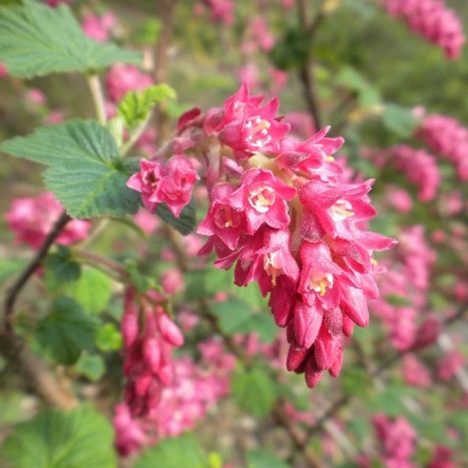
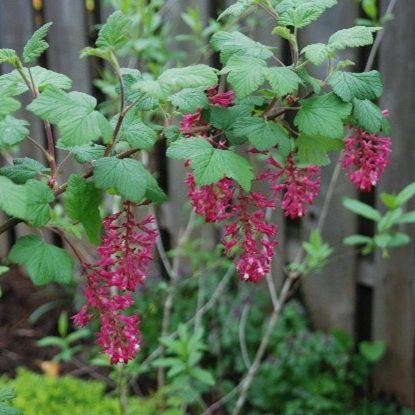
Red-flowering currant is a multi-stemmed deciduous shrub that typically reaches 6–10 feet tall. Leaves are rounded with 3–5 lobes and a slightly rough texture. The most recognizable feature in spring is its drooping clusters of tubular flowers, which range from white or pale pink to deep red. The flowers hang in chains (racemes), giving the shrub a soft, cascading look in bloom. By late summer, the flowers mature to tart, blue-purple berries that are eaten by birds and occasional, adventurous gardeners (usually in jam or sauces).
Habitat & Growing Conditions
This species is highly adaptable and occurs naturally from coastal forests to interior valleys. It performs best in:
- Full sun to partial shade
- Well-drained soils (tolerates clay if not waterlogged)
- Dry to moderately moist conditions
Once established, it is notably drought-tolerant—making it well-suited for low-input landscapes and climate-adapted plantings. It is commonly found along forest edges, open woodlands, and disturbed areas.
Use in Restoration and Landscaping
From a management perspective, red-flowering currant is a strong candidate for both ecological restoration and hedgerow/habitat plantings. It establishes relatively quickly, provides nectar and food for birds and pollinators, increases structural diversity, and can help occupy space that might otherwise be colonized by invasive species.
It is particularly useful in:
- Riparian buffers (upper bank and transition zones)
- Upland edges of wetland systems
- Pollinator hedgerow/habitat plantings
- Urban and suburban native landscaping
Because it leafs out early and casts moderate shade, it can also help suppress light-demanding invasive species during early growing-season windows.

Management Considerations
Red-flowering currant is generally low-maintenance. However, a few considerations are worth noting:
- It can be susceptible to powdery mildew in shaded, low-airflow conditions, and verticillum wilt if it receives too much summer water.
- Browsing by deer may limit establishment in some areas
- Pruning is not usually necessary, but older stems can be removed to improve structure or encourage new growth.
A Practical Native for Changing Conditions
As landowners and land managers adapt to shifting climate patterns and increasing pressure from weeds, species like red-flowering currant offer a reliable foundation. It combines beauty, early phenology, wildlife value, and site tolerance in a way few shrubs do.
Whether used in a backyard planting or a restoration context, Ribes sanguineum delivers gorgeous blooms and wildlife habitat with minimal input—making it one of the most cherished native shrubs in the Pacific Northwest.
About the Author
About the Author
A passion for nature has been a driving force throughout my life, thanks in part to a childhood of camping, hiking, and exploring the Pacific Northwest and beyond. I believe a healthy natural environment supports healthy individuals, families, and communities.