By Rachel Alexander, Certified Little Habitat Project Participant
Like many gardeners, I spend our Oregon winters daydreaming about what I’ll plant once the soil warms up enough to work in the early spring. This year, though, I faced a problem. I’d spent the past few years adding native shrubs, wildflowers, and groundcover to my northeast Salem home. We were running out of space for new additions. So, I decided to take over my church’s parking lot. I’ll go into more detail below, but here’s the quick summary. We used:
- 700 square feet of space
- About $500 for about 200 plant starts
- A few hours of planning
- A 2-hour work party featuring ages 2 to 80+
- 5 Costco pizzas
- Very irregular watering during heat waves
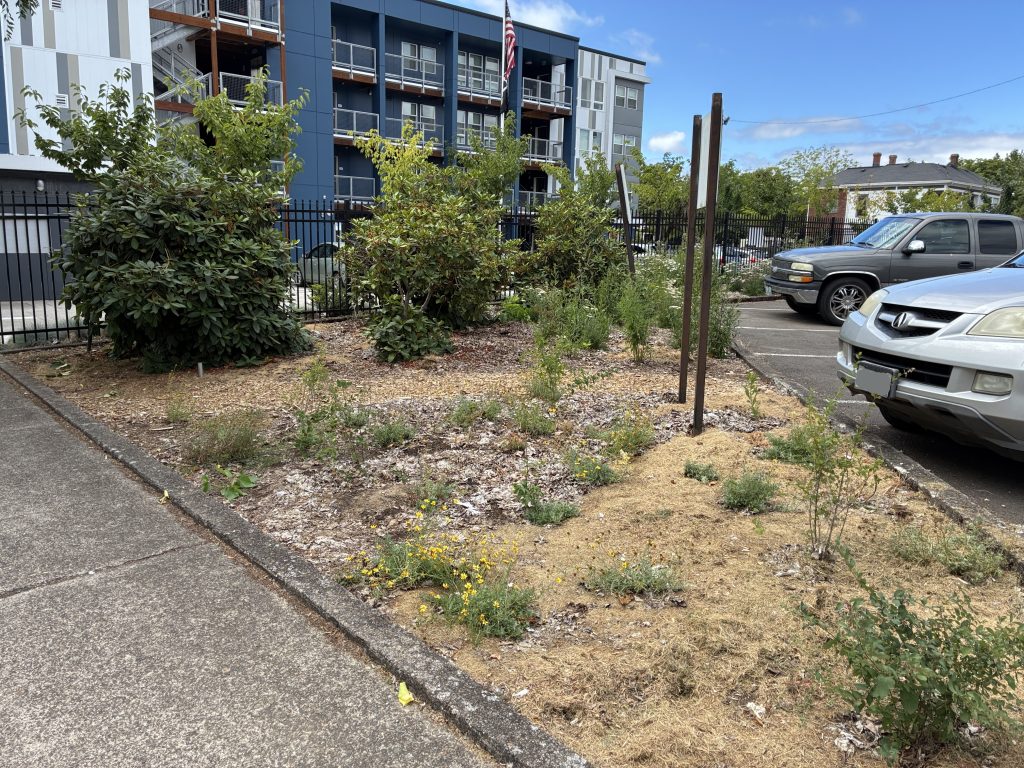
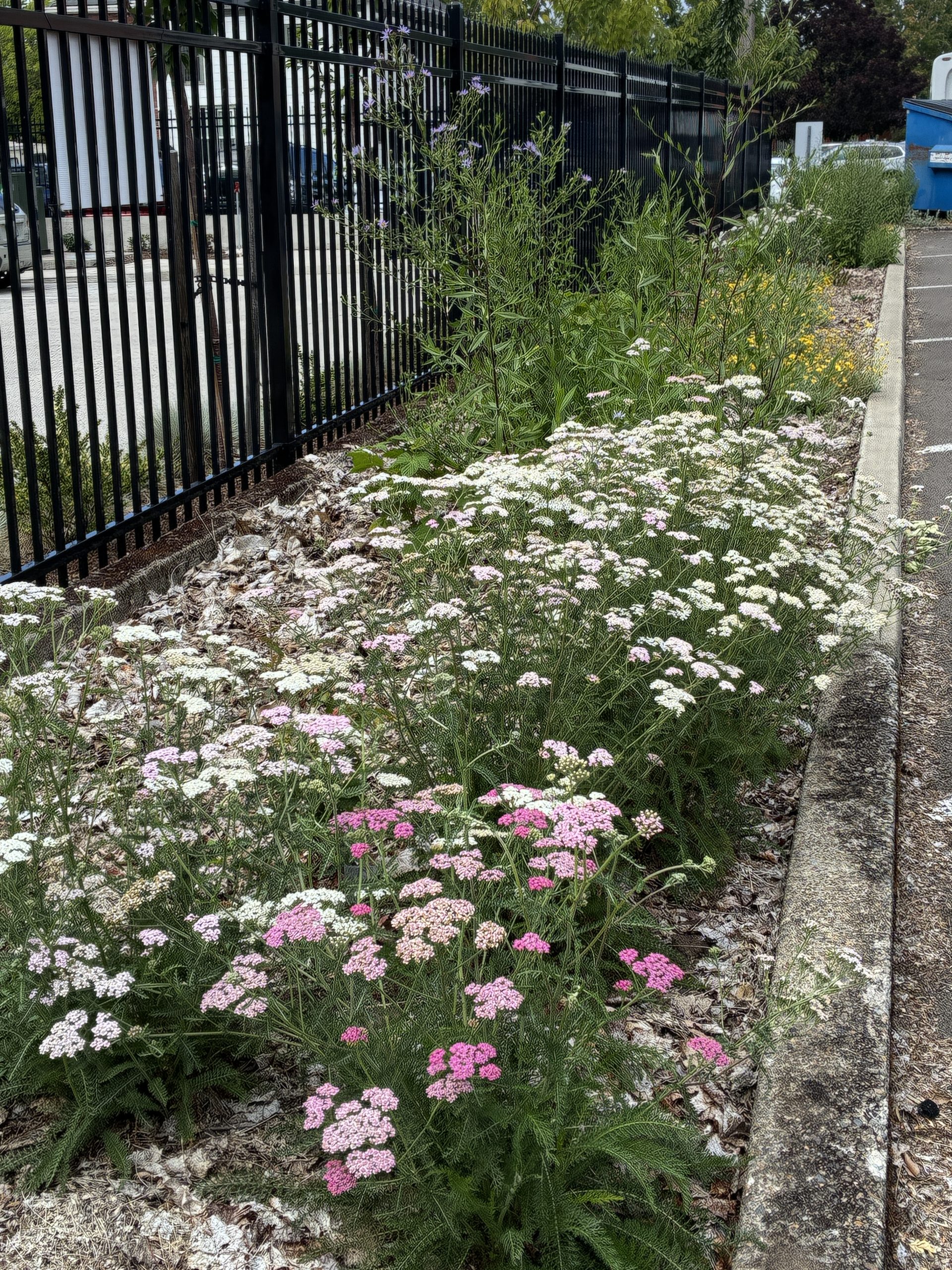
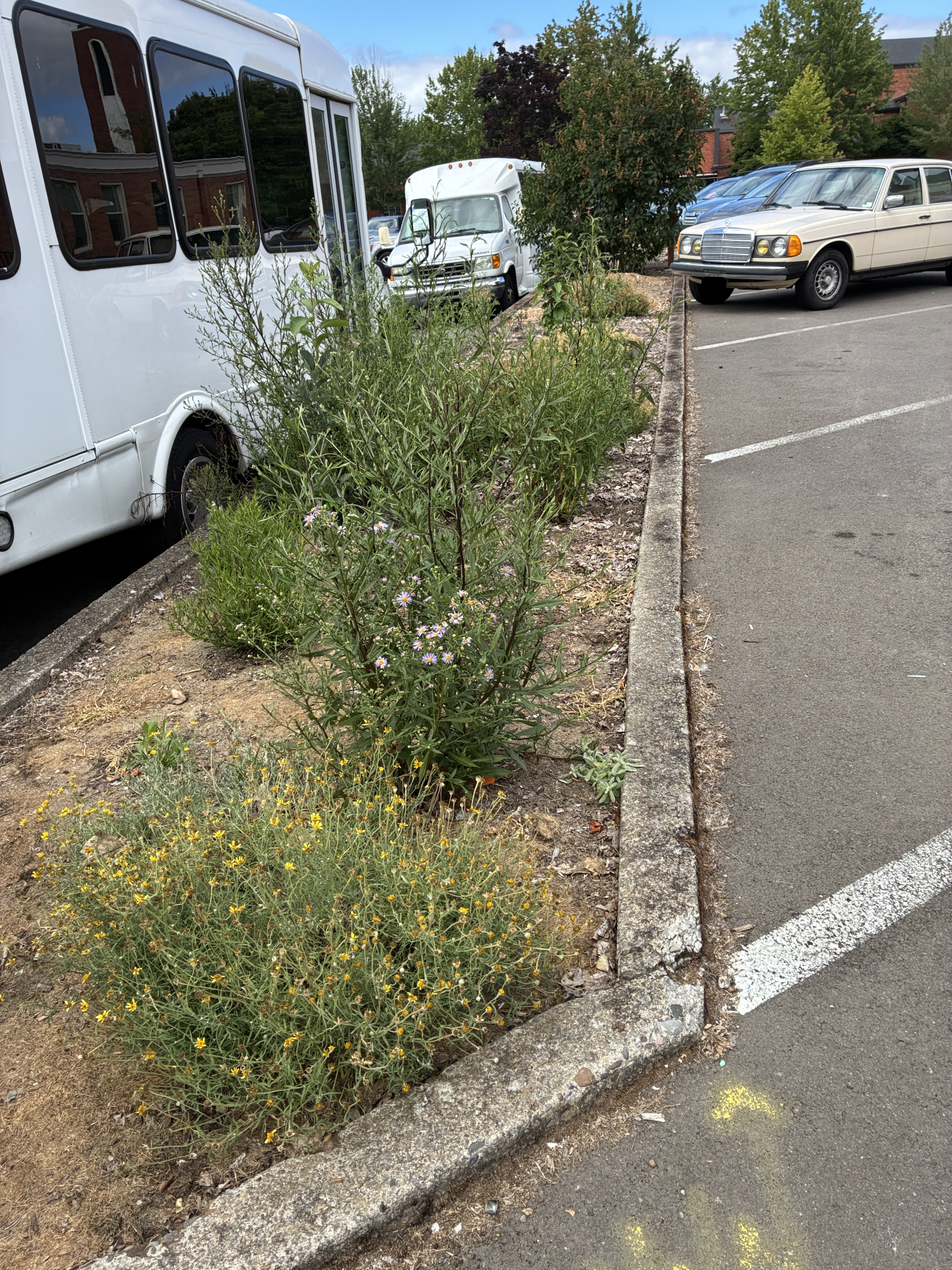
And four months after digging a bunch of baby plants into the ground, we have a blossoming garden bringing color, habitat and liveliness to a neglected corner of downtown Salem.
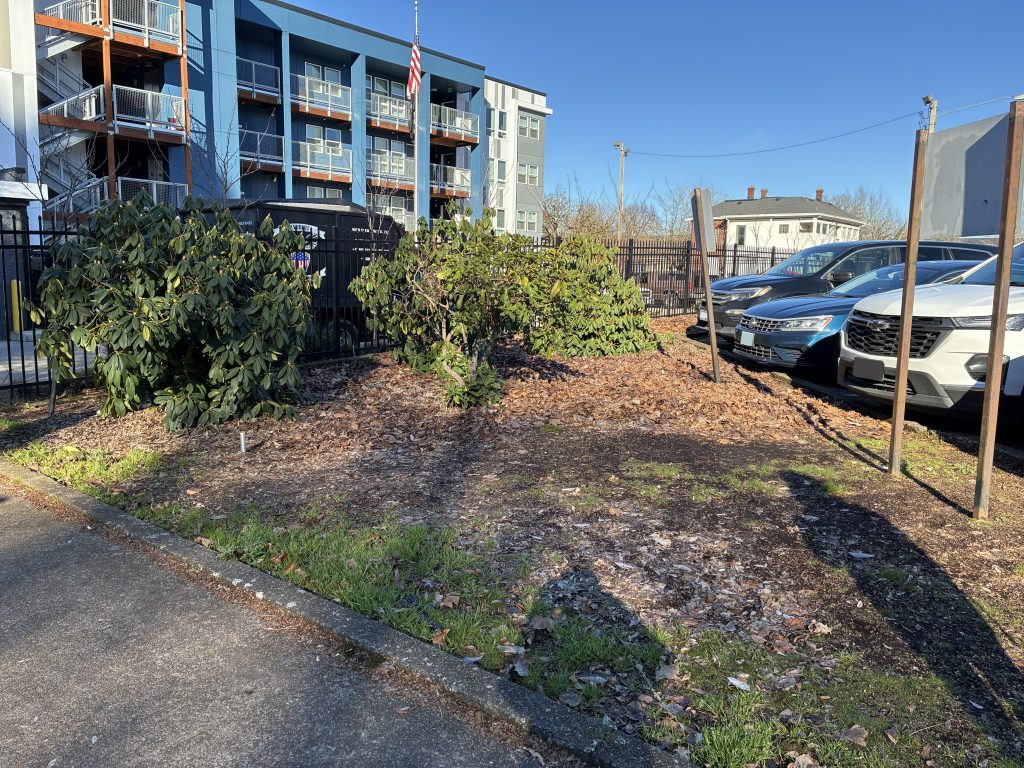
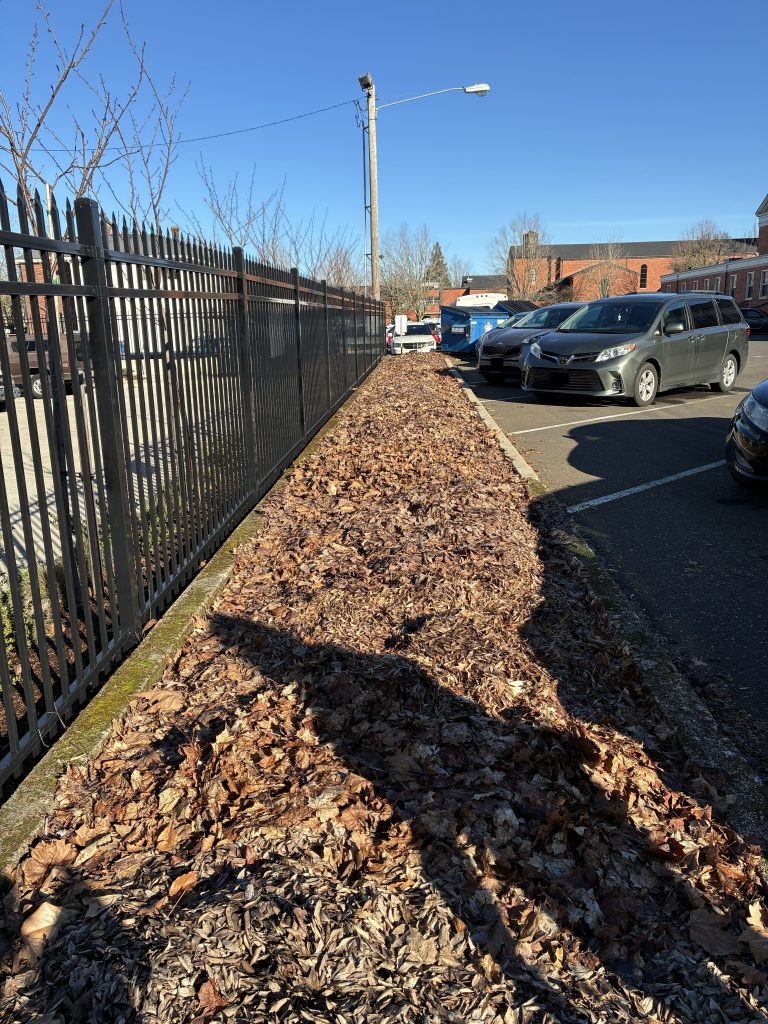
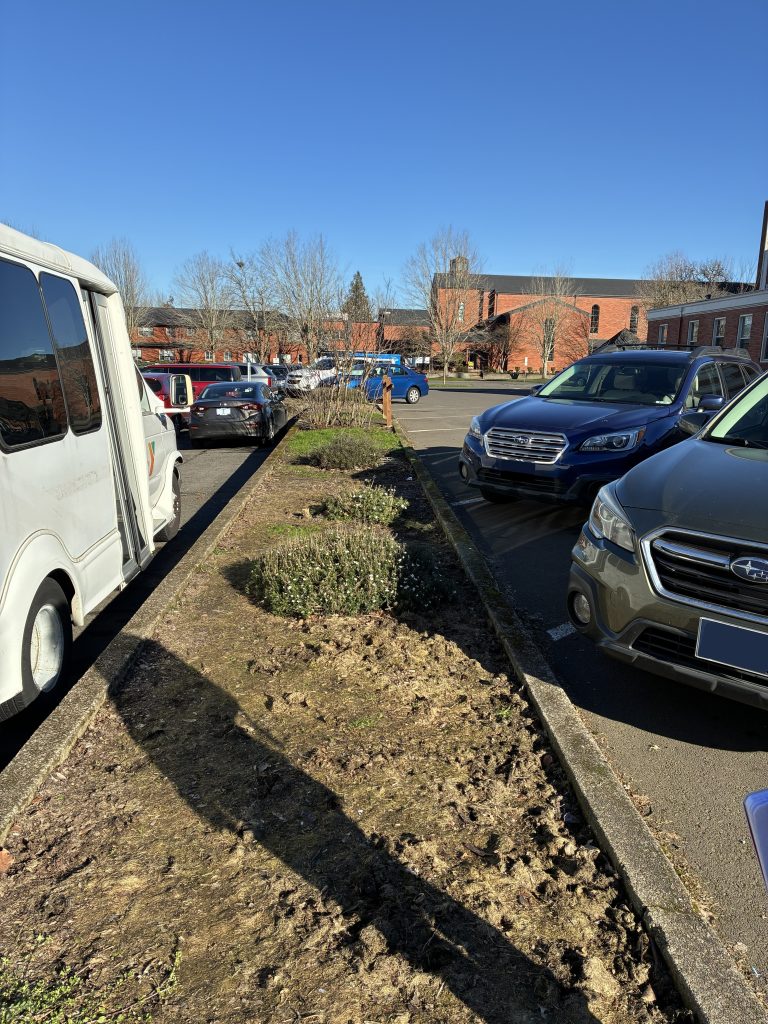
Before
After
Why Plant Native?
The Marion (County) Soil and Water Conservation District does a remarkable job cataloging the benefits of native plants and landscaping for habitat and wildlife. I won’t repeat their work.
Instead, I’ll offer my own observation: Native plants are perfect for people like me who love plants but are also lazy or just bad at gardening.
Do you want a plant you have to carefully water, fertilize on a schedule and maintain while it gets established? In this economy? Or do you want something where you can dig a hole in the ground, cover the roots, give it a little verbal encouragement and let nature take its course?
With native plants, the work is upfront — pick species that make sense for your site and will do well in the microclimate you have. The lovely folks who run the program can help you out. Then you can spend your time drinking coffee or driving to the Coast or writing blog posts to convince your neighbors to do their own native habitat projects.
That means they also work well for institutions that don’t have the time, money or volunteer capacity to care for something requiring regular maintenance.
Here’s the nitty gritty on what we did.
The Project
Salem First Presbyterian Church owns half of a city block in downtown Salem, housing the church building which includes a separate Montessori school.
The west end of the lot has several long, narrow beds of soil that were largely empty aside from a few rhododendron bushes. They border several YMCA parking lots and the Courtney Place Veterans Housing Project. Church volunteers who maintain our grounds had been dumping leaf litter and grass clippings there, so the soil was in good shape — full of happy worms and dark organic matter. That was a huge help in getting started, but don’t fear. plenty of native plants seem to take terrible soil as a personal challenge.
Given the narrow space, lack of irrigation and visibility, I thought the site would work best with a mix of smaller shrubs and wildflowers serving as a pollinator garden. After confirming with our pastor and existing volunteers that I wouldn’t ruffle any feathers planting things there, I met with Soil and Water District (SWCD) staff to talk about what plants made sense. Kristen McAlpine drew up a list of drought-tolerant natives and advised on how far apart to space them.
I took Kristen’s list and checked it against what was currently available at Beaver Lake Nursery. They’re located about an hour outside of Salem and offer wholesale native plants, meaning the per-plant cost is far less than anywhere else I’ve found.
I ordered flats of 25 plants for key Oregon pollinator species:
- Oregon sunshine (Eriophyllum lanatum)
- Douglas aster (Symphyotrichum subspicatum)
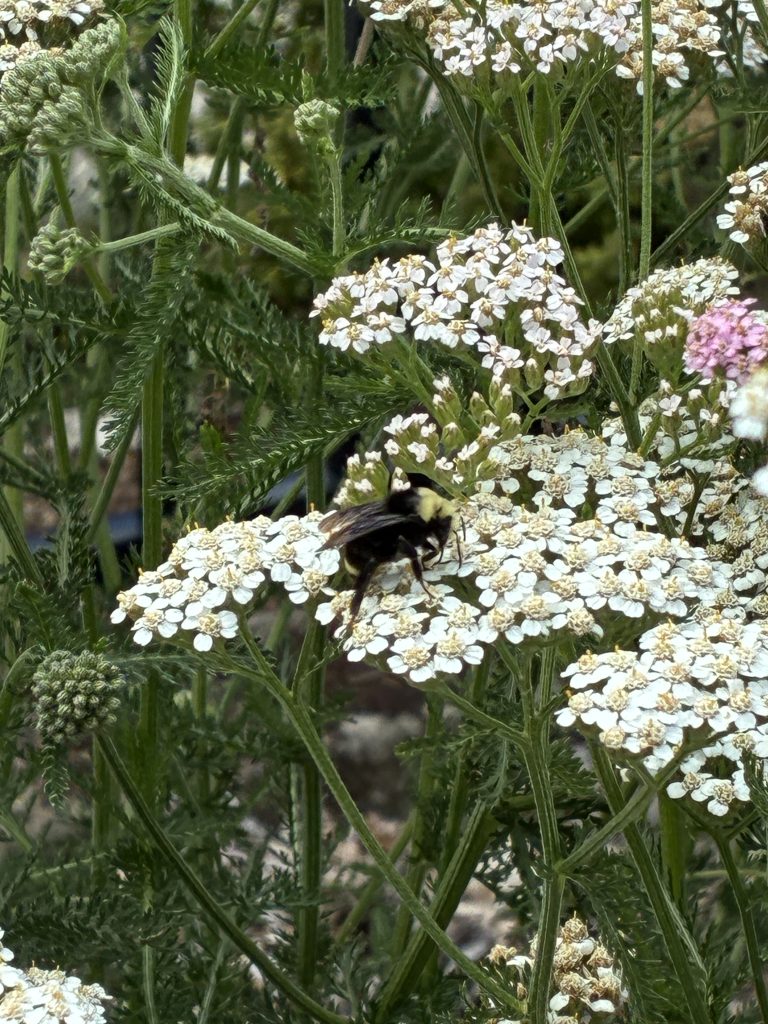
- Common yarrow (Achillea millefolium)
- Common camas (Camassia quamash)
Along with those, I got a mix of shrubs to intersperse:
- Thimbleberry (Rubus parviflorus)
- Tall Oregon grape (Berberis aquifolium)
- Snowberry (Symphoricarpos albus)
- Oceanspray (Holodiscus discolor)
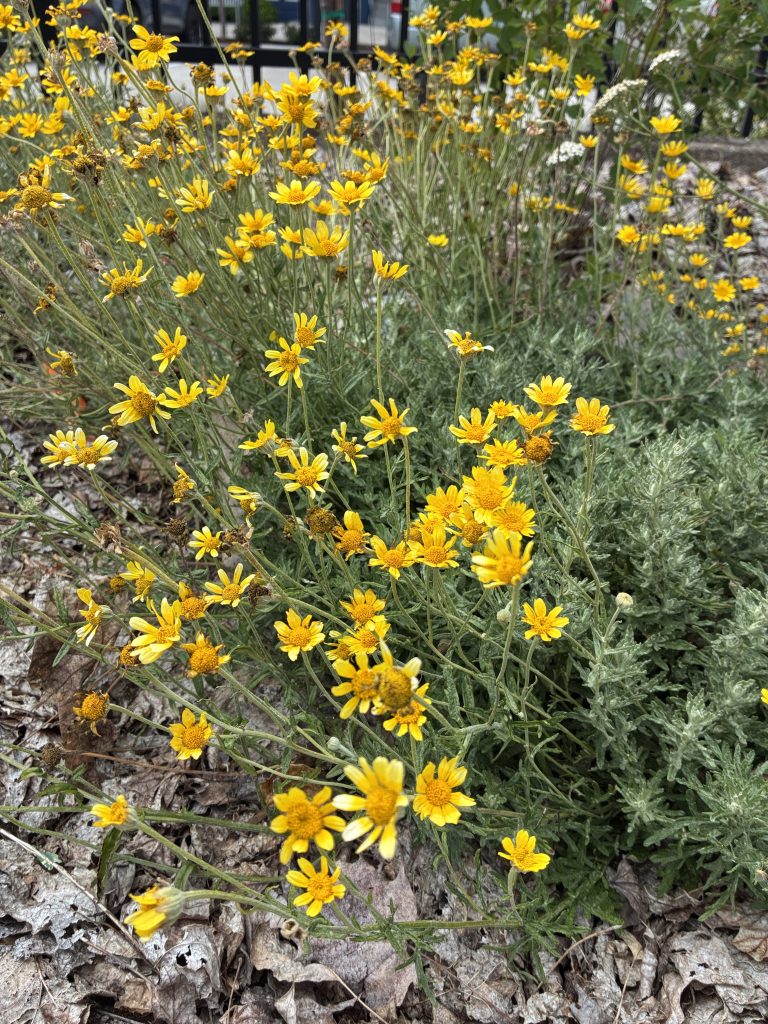
I supplemented the bulk order with a few bareroot plants from the Marion Soil & Water Conservation District Native Plant Sale, including six chokeberry trees and some red flowering currant.
With little irrigation water available and ever-hotter summers, I knew it would be important to get plants as established as possible before spring and summer heat waves. With that in mind, I scheduled a planting party for Sunday, February 15, after our regular service. I picked up our plant order a few days before and laid out the shrubs the night before. Flats of smaller plants were largely left to individual planters to work out.
Planting Party
Aside from building habitat, I wanted this project to encourage community and spark new relationships. My daughter attends Little Friends Montessori School, so I reached out to their parent committee as well as Courtney Place to invite their participation.
The resulting group was about 20 people, mostly from church, but with several school families and veterans helping out as well. Toddlers played in the dirt, teenagers dug in a patch of camas and Oregon sunshine next to our dumpsters, retirees brought pads to kneel on and everyone got some dirt on their hands.
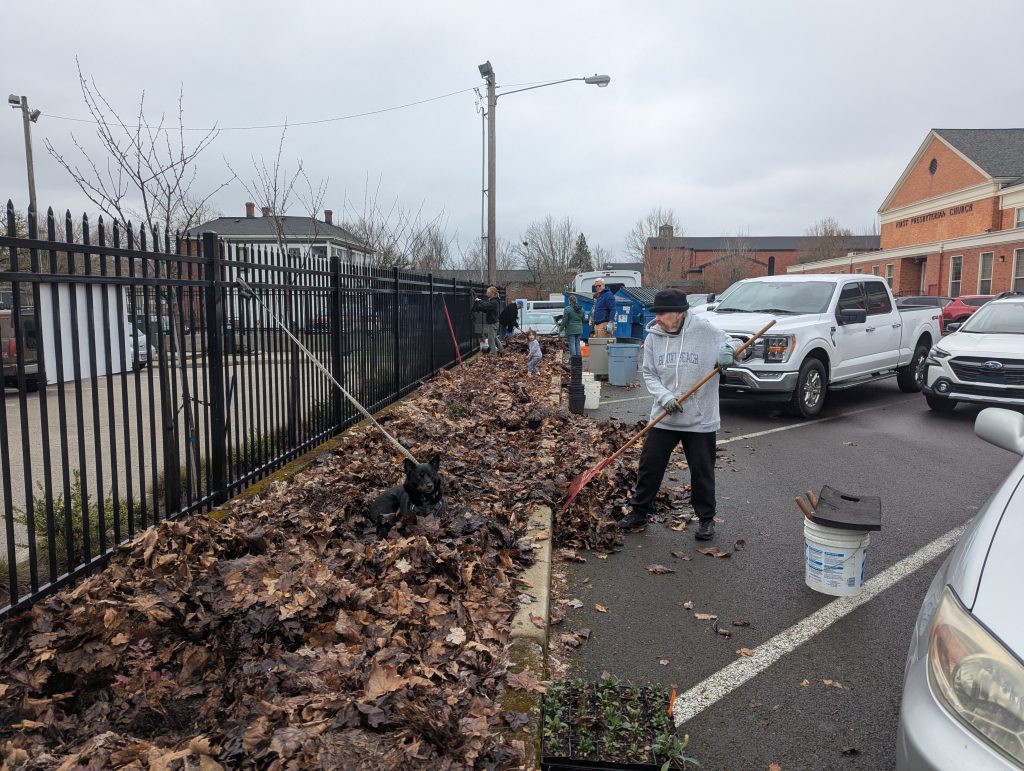
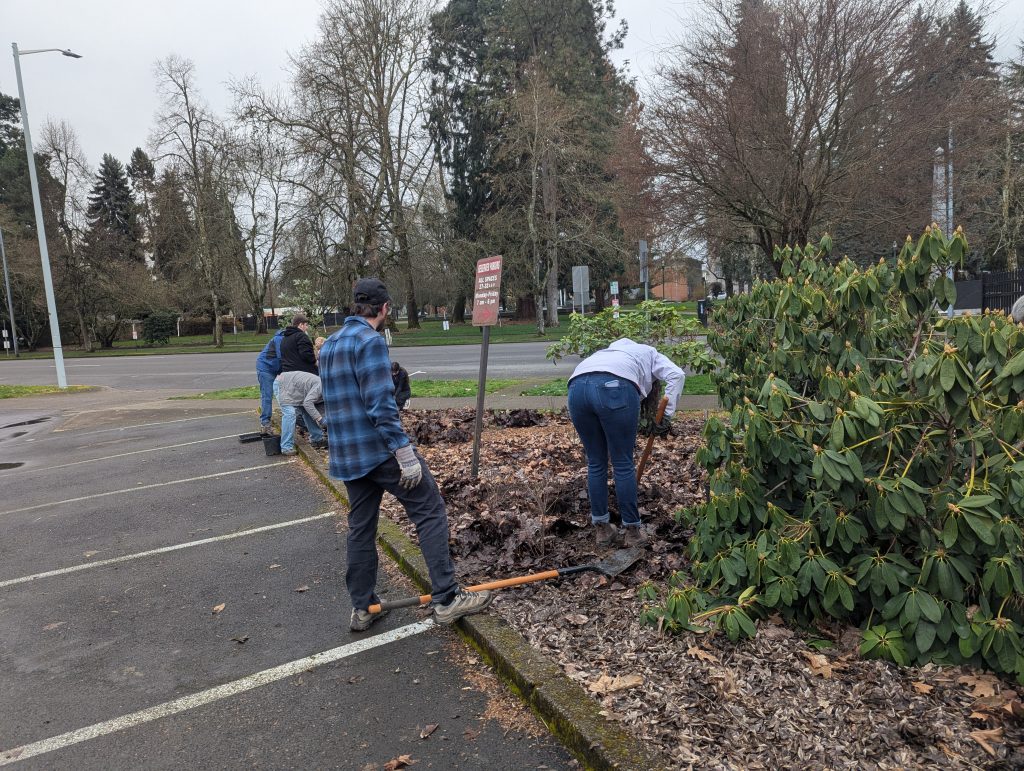
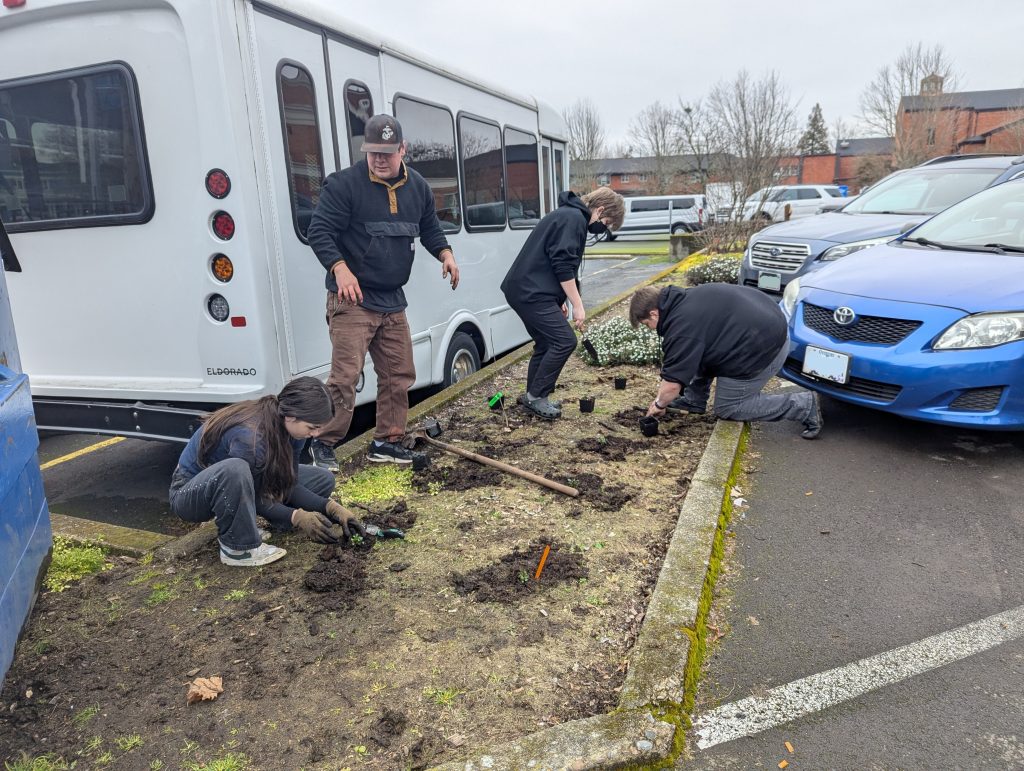
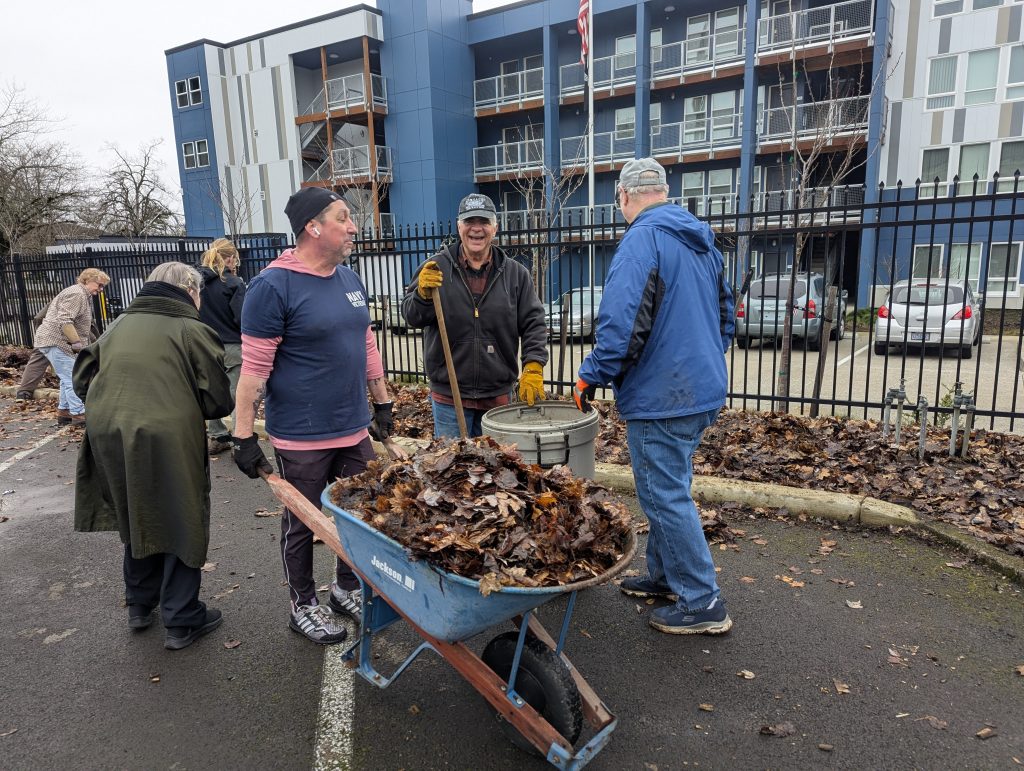
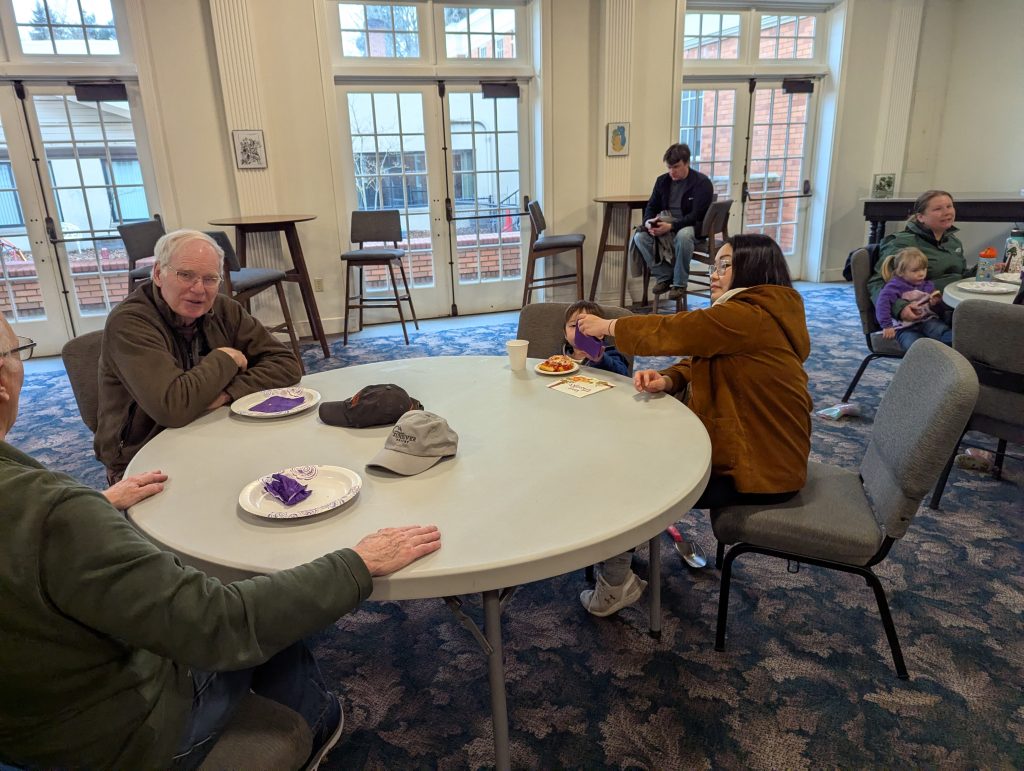
With a good-sized group, we made quick work of the planting — clearing space amid the leaf mulch proved to be the most labor-intensive task. The work and Costco pizza lunch after led to conversations across the groups, with people making connections and sharing ideas for other environmental efforts. During the work and after, I’ve heard joy and pride from the folks who helped at how well the garden is growing and how healthy it looks.
Since the initial planting, I’ve added a few more plants (largely gifts from fellow native plant gardeners, or aspirational plants I couldn’t find a good spot for in my own yard). I aimed to deep water the chokecherries and shrubs once a week when there wasn’t rain, which meant manually walking a hose from spigots across the parking lot and hand-watering specific plants. Since February, I’ve watered the area perhaps three or four times.
The plants have leapt up in that time, with a beautiful succession of blooms — first the camas and Oregon iris a church member donated to the effort, then the yellow sea of Oregon sunshine, and the pink and white yarrow. Oregon grapes are coming on, thimbleberries have put on leaves, and the Douglas aster are standing almost as tall as the well-established rhododendrons.
Start Your Own Habitat
Want to do something similar at your school, church or community space? Marion Soil & Water Conservation District has applications open now through August 23rd, 2026, for free kits to get you started with a Little Habitat project. Learn more and apply here.
I hope to help more institutions do projects like this too. If you want someone to help organize or give advice on a similar effort, reach out to Marion Soil and Water Conservation District’s Urban Conservationist, Kristen McAlpine, and she can connect you with me.