Author: Kristen Duus (Little Habitat Program)
Photo Credits: Kristen Duus and Carol Slavkovsky
Spring is my favorite season! Every spring, as the weather warms and the flowers start to bloom, I excitedly clean and refresh my garden beds and set out birdhouses and bird feeders. Overtime, I have focused my plantings, houses and feeders to accommodate my favorite visitors – hummingbirds and butterflies. Until just a few years ago however, I never thought about our pollinator bees.
Recently I have added mason bees to my list of favorite visitors. When you think of pollinators, chances are honeybees come to mind first. But there are many other types of bees quietly making a huge impact on our environment, including the mason bee.
What are Mason Bees?
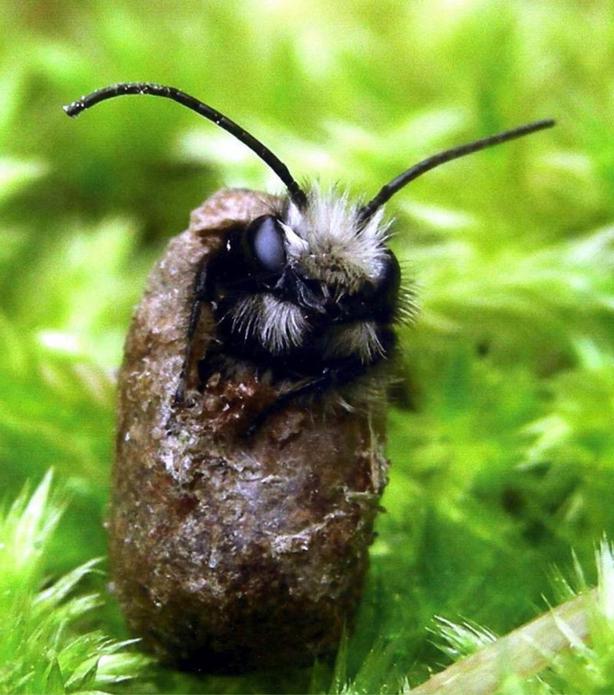
Mason bees are solitary, non-aggressive pollinators that might not make honey, but can make a big impact when it comes to helping gardens, orchards, and wildflowers thrive.
Mason bees get their name from their unique nesting habits. Instead of living together in hives, these bees lay their eggs in small holes — often in hollow stems, wood crevices, or man-made bee houses — and seal each egg chamber with a bit of mud, just like a mason working with bricks.
Mason bees are gentle and rarely sting, only if severely provoked.
Why are Mason Bees important?
Mason bees are incredibly efficient. In fact, one mason bee can pollinate as many flowers as 100 honeybees. Unlike honeybees, which focus on one type of flower at a time, mason bees forage more randomly, which results in better cross-pollination. For gardeners and farmers, that means more blooms, bigger fruits, and healthier plants.
Why are Mason Bee populations declining?
In recent years, awareness about the decline of pollinators like honeybees has grown. Like honeybees, mason bees are deeply affected by the loss of natural habitat. Urban development, intensive agriculture, and landscaping practices have reduced the number of suitable nesting and foraging areas. Without access to native flowers and natural nesting materials—like hollow reeds, holes in wood, or abandoned insect burrows—mason bees struggle to survive. Another major threat is pesticide use. Even small doses of chemicals can impair a mason bee’s ability to navigate, reproduce, or forage efficiently and can make them more vulnerable to disease.
How You Can Help
Even in our small backyard gardens, there are many ways that we can help support mason bees. Planting native flowers, avoiding pesticides, and providing clean, safe nesting materials can make a big difference. Here are a few things you can do to encourage mason bees in your yard:
- Plant Pollinator-Friendly Flowers: Native wildflowers, fruit trees, and herbs like lavender or thyme are all favorites.
- Provide Nesting Sites: These could be natural nesting materials like hollow reeds, holes in wood, or abandoned insect burrows or even easier are a bundle of hollow bamboo sticks or commercially available nesting boxes.
- Leave Some Mud: Since mason bees need mud to seal their nests, having small patches of bare, damp mud nearby is essential.
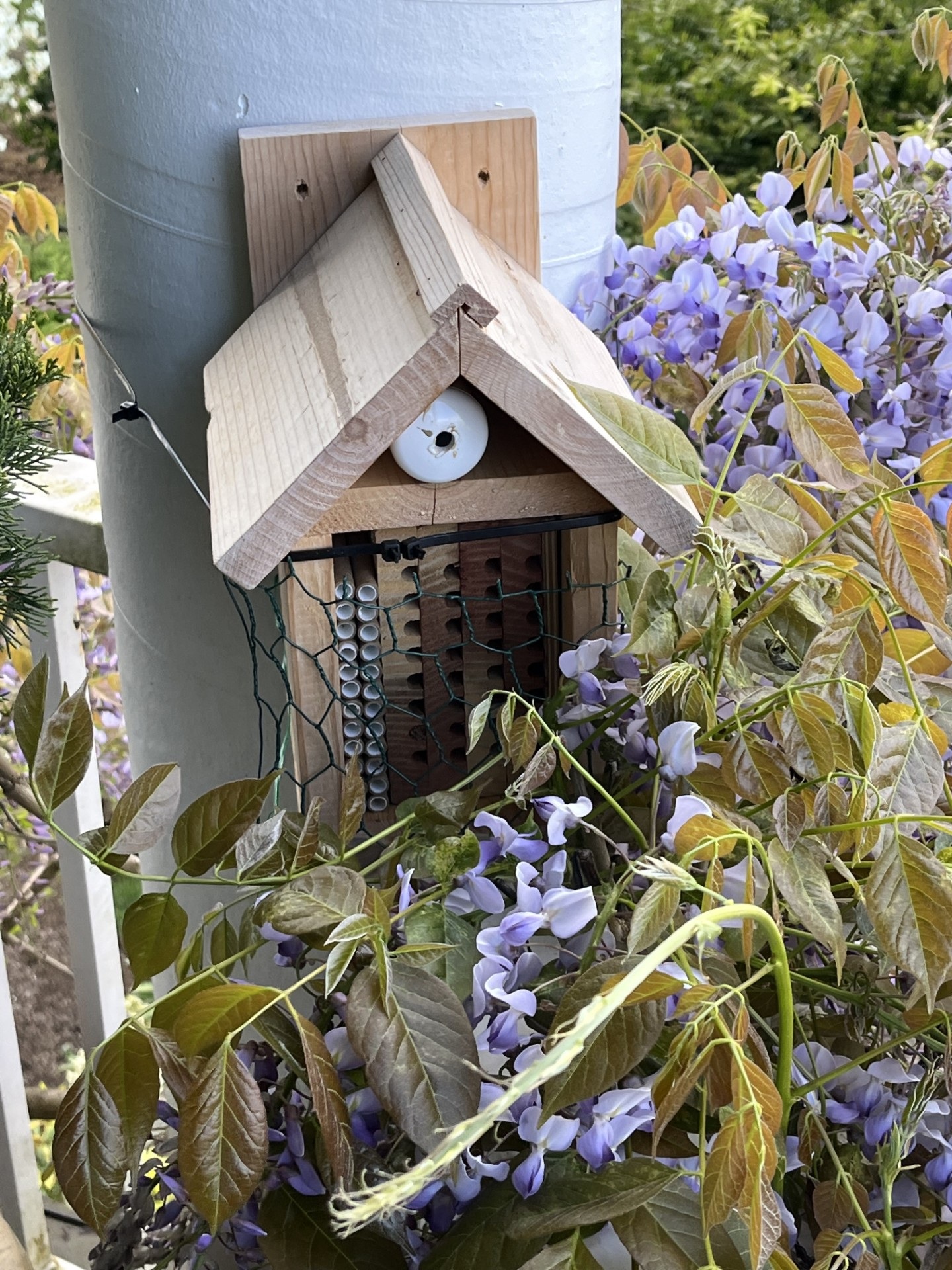
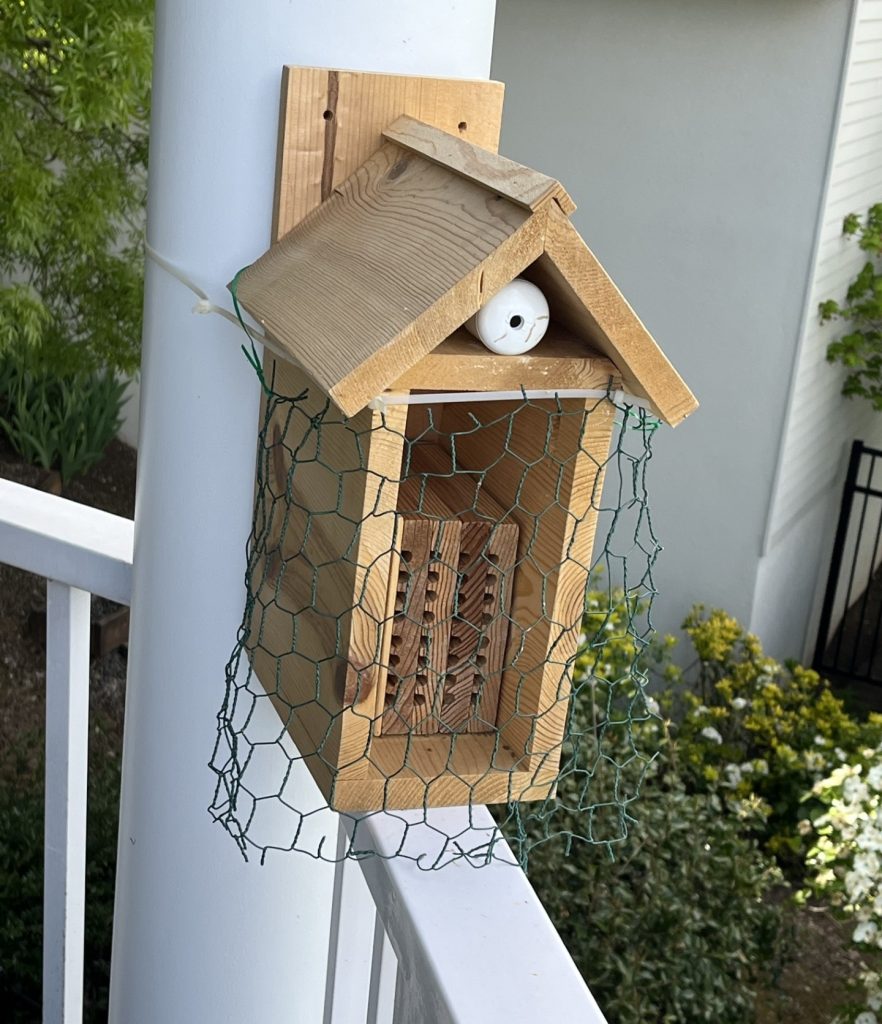
- Set Up a Bee House: A bee house mimics the nesting conditions that mason bees find in nature such as hollow spaces like reeds or drilled wood. You can buy a bee house or make your own using a wooden frame filled with nesting tubes (6-inch tubes with 5/16-inch diameter are ideal).
Place your bee house on a south or southeast facing wall, about 4–6 feet off the ground, sheltered from rain and wind and add wire or netting around the front to help protect the bees from bird predators. Nearby mud is a must—mason bees use it to seal off each egg chamber. Also, keep some flowering plants or trees nearby so they have plenty of pollen and nectar.
- Harvest Mason Bee Cocoons: One of the best ways to ensure your mason bee population stays healthy is by harvesting their cocoons in the fall, once their life cycle is complete.
How to Harvest Mason Bee Cocoons
Move your bee houses inside in early June. Place bee houses and tubes in a paper bag and store in a cool area such as your garage. This gives the mason bees a safe place to spin cocoons.
Wait until late fall (October–November). By this time, the new generation of mason bees has spun cocoons and have gone dormant.
Carefully open the nesting tubes. Gently remove the contents, separating the cocoons from mud and debris.
Clean the cocoons. Soak them in a mixture of cool water, dish detergent and bleach and gently rub to remove mites or dirt. Then let them dry on a towel. (Check a reputable site such as Linn County Master Gardeners for exact instructions).

Store safely. Keep the cocoons in a ventilated container in your refrigerator (35-40°F) until spring. This protects them from predators and fluctuating outdoor temps.
Release the cocoons. In early spring, place the cocoons back near your bee house to emerge when the weather warms.
With just a little effort, you can support pollination in your garden and help a vital native species thrive.