
Western Hemlock
Tsuga heterophylla
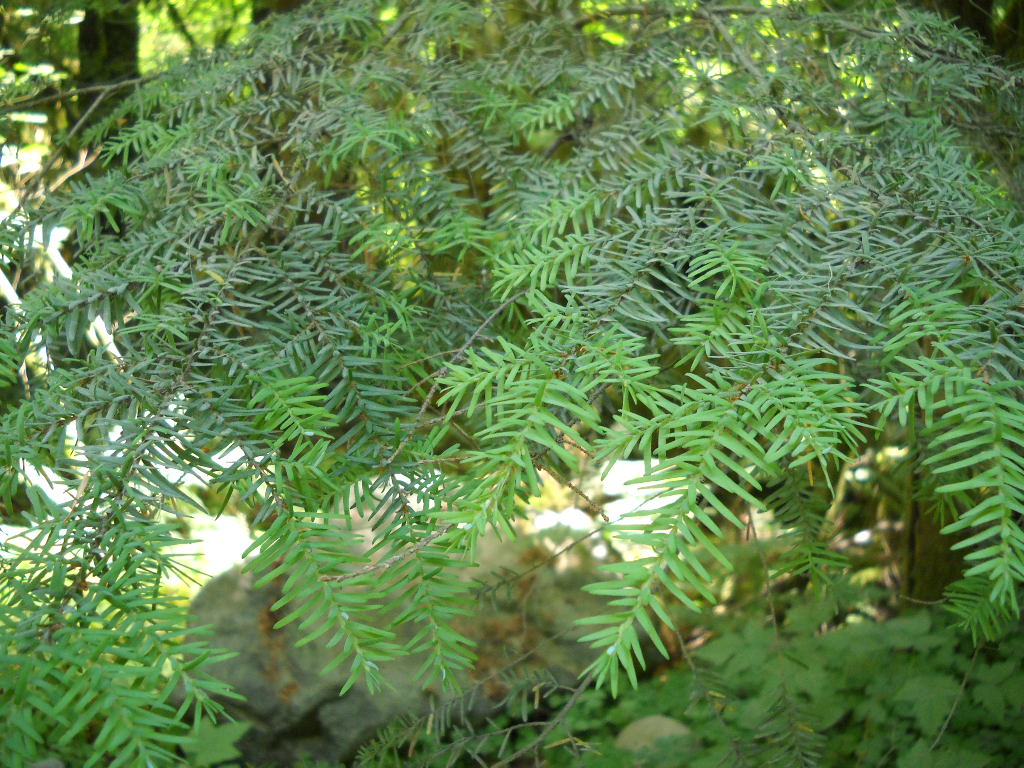
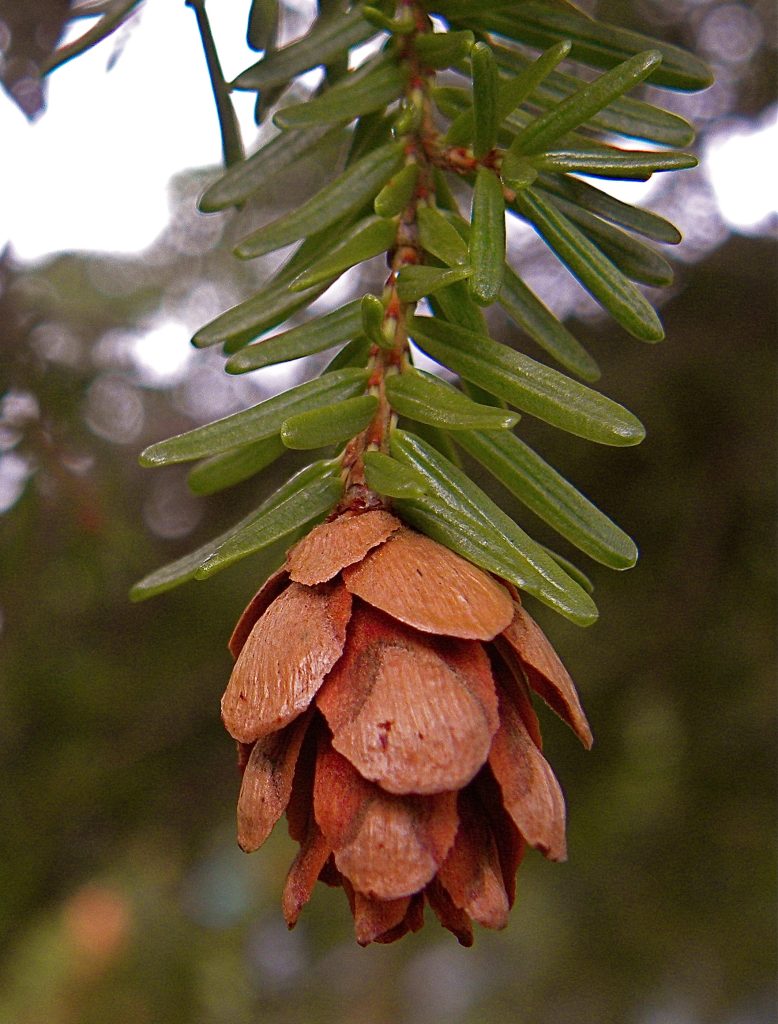
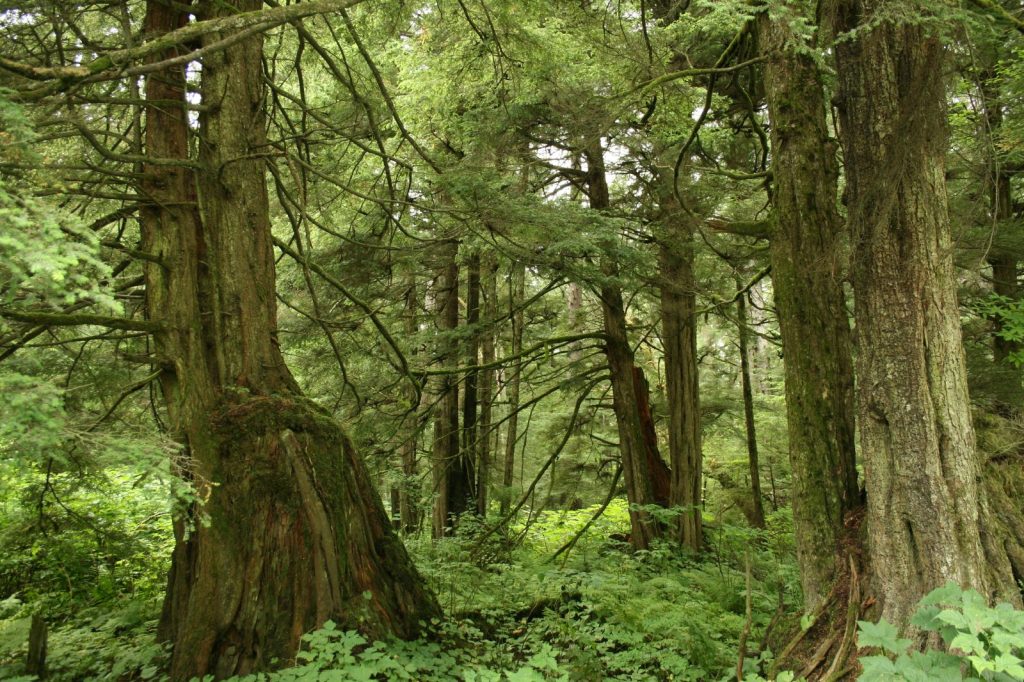
Plant Description
Western hemlock is a large, long-lived conifer native to the Pacific Northwest. It has a narrow, conical crown and a characteristic drooping leader. Its flat, dark green needles with lighter undersides and small, pendant cones distinguish it from other conifers. Western hemlock thrives in moist, shaded forests, often forming dense stands in lowland and montane environments. The seedlings prefer to develop under shade in rich, moist environments. In the forest they frequently grow on nurse logs, using the nutrients from decaying trees to support their establishment. It plays a crucial ecological role by providing habitat for wildlife, especially during the winter, by stabilizing soil along streams and rivers, and by contributing to forest succession and nutrient cycling. It has many traditional medicinal and cultural uses and is valued for its high-quality lumber.
Western hemlock is best suited to the Coast & Cascade Mountain Ranges, where it establishes in the cool, moist understory of mature forests. It is struggling in the Willamette Valley.
Plant Details
| Life Forms | |
|---|---|
| Habitats | |
| Soil and Moisture Conditions | |
| Special Uses | |
| Shade Preference | |
| Mature Height | 50-200’ |