
Stinging Nettle
Urtica dioica
Plant Description
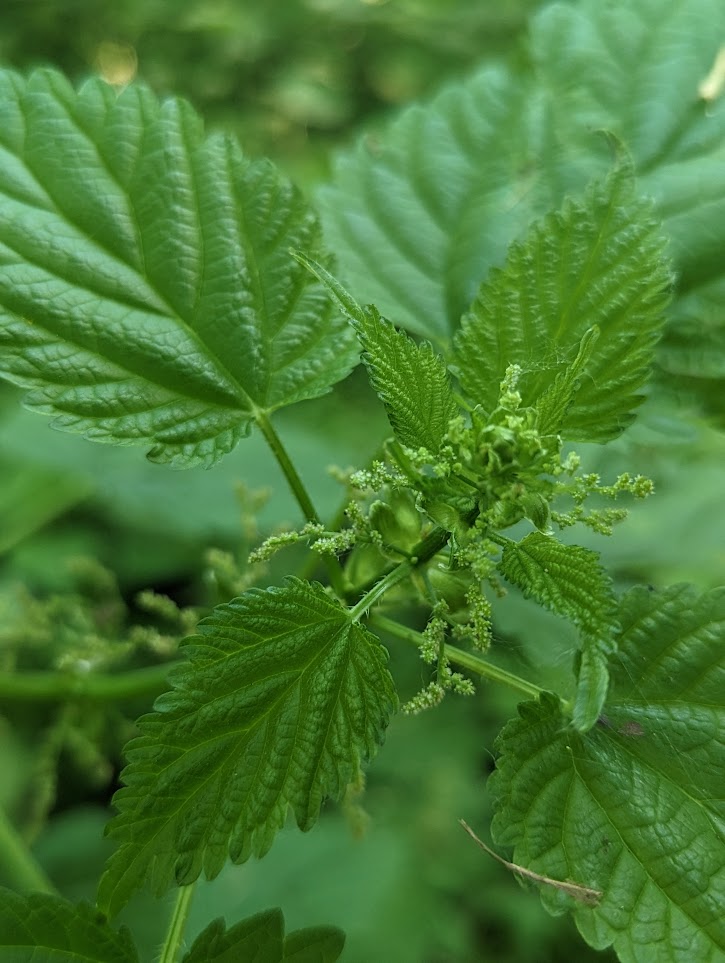
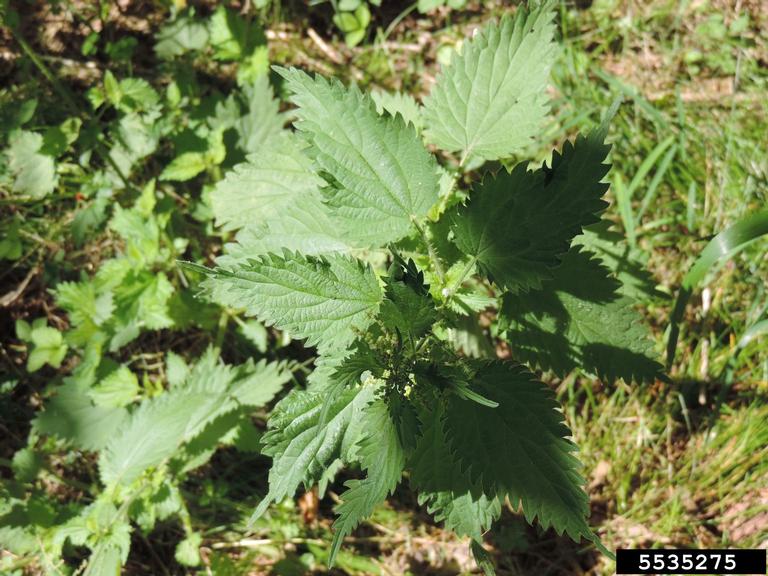
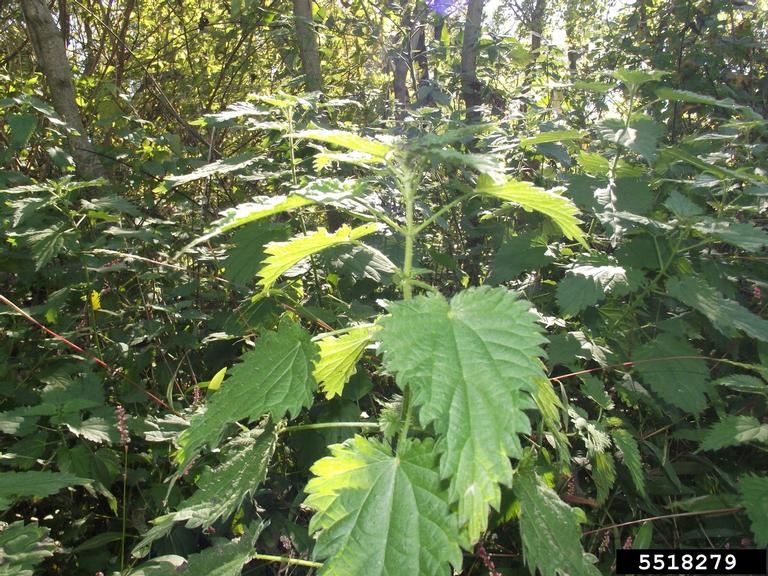
Urtica dioica (stinging nettle) is a perennial herb native to temperate regions worldwide, commonly found in moist, nitrogen-rich soils along streams, forest edges, and disturbed areas. It grows in clumps with tall, serrated, dark green leaves covered in tiny stinging hairs that release irritants when touched. In summer, it produces clusters of small, greenish flowers that provide nectar for a variety of pollinators. Ecologically, U. dioica supports insects, including butterfly larvae, and stabilizes soils in riparian zones. Culturally, it has been used for centuries by Indigenous peoples and traditional communities for food, medicine, and fiber. The young leaves can be cooked or steeped for teas rich in vitamins and minerals, while the stems provide strong fibers for cordage, textiles, and nets. Its medicinal applications include treatments for joint pain, allergies, and inflammation. Nettles are also used in phytoremediation, where they remove heavy metals and pollutants from contaminated soil.
Plant Details
| Life Forms | |
|---|---|
| Habitats | |
| Soil and Moisture Conditions | |
| Special Uses | |
| Shade Preference | |
| Mature Height | 3-7' |